



Leading Off
CA Redistricting
California politicians are in for an uncertain few months as sitting U.S. representatives and non-incumbents alike try to make plans without knowing which House map they'll be running under next year.
This question will only be answered on Nov. 4, when Democrats aim to call a special election asking voters if they want to temporarily replace the state's current congressional map with new boundaries drawn to counter a planned Republican gerrymander in Texas.

However, the sheer cost of running for office in California, as well as the state's not-too-distant June 2 primary, means that most congressional hopefuls can't afford to pause their campaigns or wait until November before launching new ones.
As a result, many would-be candidates are talking about running for what we long ago dubbed "Schrödinger's seat"—a district that may or may not come into being, but one that candidates are nonetheless eyeing.
Multiple members of Congress from both parties are trying to figure out what to do next in this volatile situation.
Democratic Rep. Ami Bera is among them. According to KCRA, Bera is considering challenging GOP Rep. Kevin Kiley in the proposed 3rd District rather than running in the 6th District, which shares a number with the suburban Sacramento constituency he currently represents—and more than half of its current residents. (Only around a third of Bera's constituents would wind up in the 3rd.)
Under the current lines, the 3rd District favored Donald Trump while the 6th is reliably Democratic. The draft map, by contrast, would dramatically change things. The proposed 3rd would have backed Kamala Harris 55-44, which is slightly higher than her 54-45 margin in the revamped 6th.
Bera didn't rule anything out when asked, saying, "I intend to continue representing the Sacramento region in the next Congress." Kiley, for his part, both predicted that voters would reject the remap and that he would "win reelection to the House regardless of the proposed changes to my district."
Other members of the state's delegation, though, are already considering what to do if Kiley is wrong and Californians side with Democratic Gov. Gavin Newsom this fall.
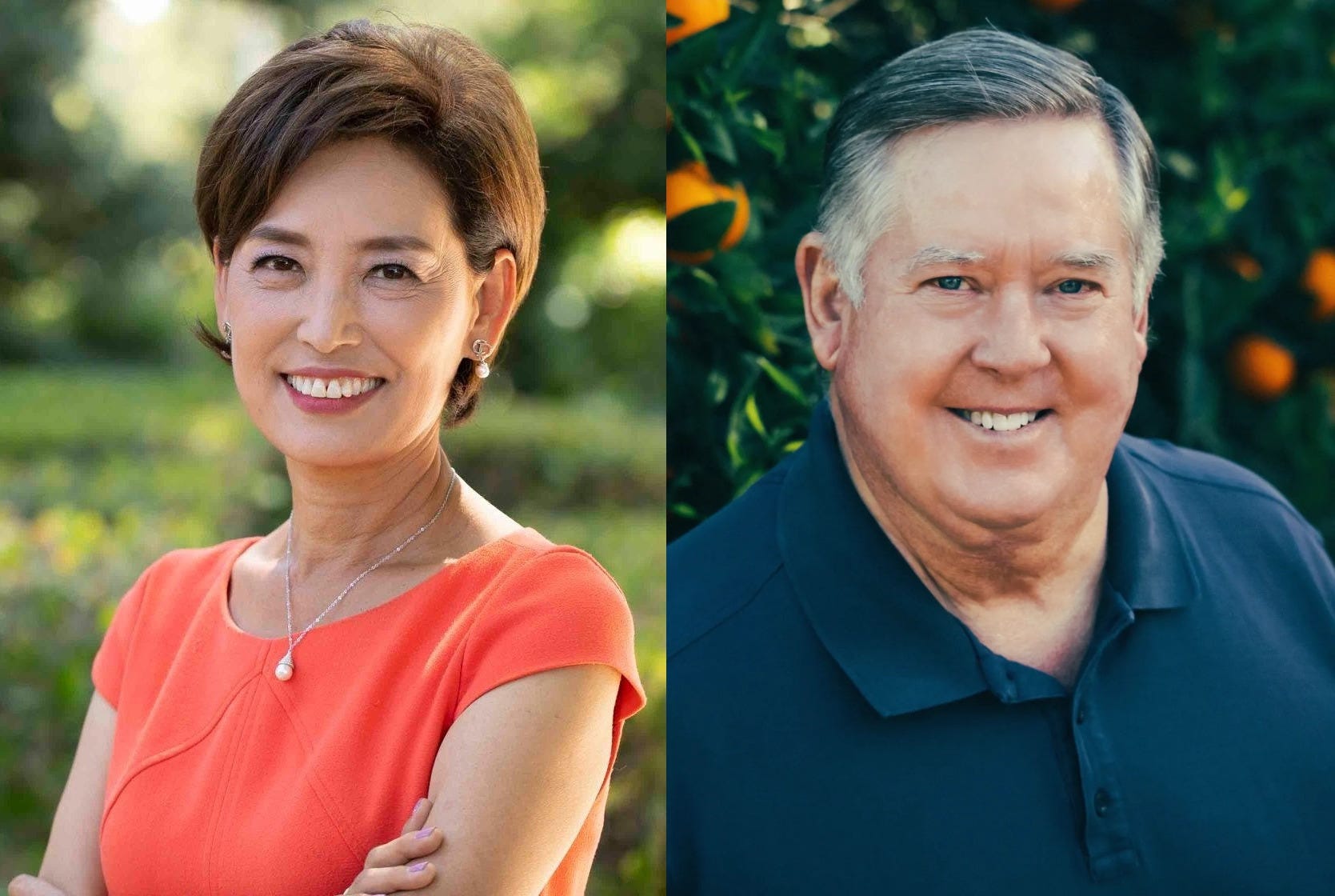
Both Politico and the Orange County Register relay chatter that Reps. Young Kim and Ken Calvert could face off in the proposed 40th District, which Democrats drew to be reliably red to make other seats in Orange and Riverside counties more winnable.
The revised 40th would include about half of Calvert's current 41st District. (The proposed 41st District would not include any of the turf he currently serves.) Kim, who represents the existing 40th, would represent about a third of the redrawn seat.
A consultant for Calvert told Politico the longtime congressman was "not interested in hypotheticals like that," which is far from a no. A spokesperson for Kim, meanwhile, informed the Register that she "plans to run for reelection and is focused on delivering results for her community as she stands up against Sacramento's unconstitutional power grab."
These members of Congress (and others in the state's delegation) can likely afford to wait until November, but candidates who lack the benefits of incumbency don't have that same luxury. As a result, some potential contenders are already saying where they'll run if the new map goes into effect.
Businessman Brandon Riker, who is one of several Democrats challenging Calvert in the current 41st District, says he'll continue running to represent Palm Springs in the House. That city would be relocated to the proposed 48th, whose current iteration is represented by Republican Rep. Darrell Issa; under the new map, it would transform from deep red to light blue.
Other Democrats who hadn't planned to run for Congress are now eyeing new potential districts.
Audrey Denney, an agriculture consultant who challenged GOP Rep. Doug LaMalfa in 2018 and 2020 in the red 1st District, tells the Sacramento Bee she'll run if voters approve the new map.
While Denney faced long odds in the last incarnation of the 1st, which largely resembles the northeastern California constituency LaMalfa represents today, things would be very different if Newsom gets his way. The proposed 1st would have favored Harris 54-42, a 37-point shift to the left from Trump's 61-36 showing in the existing version.
Denney, however, may need to get past a powerful Democrat before she can take on LaMalfa again.
KCRA's Ashley Zavala reports that state Senate President Pro Tem Mike McGuire, who represents Mendocino County and other parts of the North Coast region, ensured the 1st was redrawn "specifically for him in exchange for his support of the redistricting plan." McGuire's team did not respond to Zavala's request for comment.
Other Democrats across the state have also expressed new interest in House campaigns, though none have been as explicit about their intentions as Riker and Denney.
Ammar Campa-Najjar, a Navy Reserve officer who lost to Issa in 2020, says he's "seriously considering" challenging the congressman again in the proposed 48th. Campa-Najjar, though, acknowledged the "redistricting news is sudden," and said he didn't want to "rush the decision."
At least one prominent Democrat, though, has reportedly decided not to run in the new-look 48th.
Politico writes that former federal prosecutor Will Rollins, who lost tight races to Calvert in both 2022 and 2024, had thought about taking on Issa last week after he learned where his base in Palm Springs would wind up. Rollins, however, told supporters on Sunday he's decided not to run for the House again, according to the publication.
Other Democrats are biding their time as they wait to see what incumbents will do. Zavala reports that Assembly Speaker Robert Rivas "intends to run" for the safely blue 18th District if Democratic Rep. Zoe Lofgren, who is 77, retires.
This constituency, which currently includes both Lofgren's San Jose base and areas Rivas serves in the Salinas Valley, would barely change even though mapmakers could have shifted several Democratic-leaning areas to the 22nd to further weaken GOP Rep. David Valadao.
"The maps don't have anything to do with Assemblymembers or their districts," Rivas' spokesperson told Zavala in a statement. The speaker's team, however, didn't address whether he might run for the 18th when Lofgren steps aside.
Celebrate The Downballot’s first birthday with us by taking 25% off our annual subscription rate!
Gain access to exclusive subscriber-only content like our special redistricting guides, our private Discord server, our weekly livestream Q&As, and more!

Redistricting Roundup
IN Redistricting
The pressure to further gerrymander their state's congressional map continues to mount on Indiana Republicans, but lawmakers have so far stood firm against the demands of Donald Trump and his allies.
According to Politico, Trump's political team is considering supporting primary challengers against GOP legislators who oppose a redraw, several of whom have spoken out against the idea. Charlie Kirk, an influential conservative activist, publicly echoed Trumpworld's threat this week.
At the same time, all seven Republicans in the state's House delegation have come out in favor of pursuing a new map. However, Indiana's senior senator, Todd Young, told Politico's Adam Wren that he "supports our state legislators and trusts their judgment on redistricting."
Many of those legislators met on Monday to discuss the push, though the meeting seems to have been inconclusive. State House Speaker Todd Huston would only tell the Indiana Capital Chronicle that "we had a good conversation" while emphasizing that his caucus is "still talking."
Indiana lawmakers are also set to visit the White House on Aug. 26. The state's primary is in early May, with the candidate filing deadline three months earlier.
Senate
ME-Sen
Graham Platner, an oyster farmer who served in the Marines and Army National Guard, announced Tuesday that he was entering the Democratic primary to take on Republican Sen. Susan Collins—and that he won't drop out if Gov. Janet Mills joins him.
"I don't think that running the same old, tired playbook is going to work," Platner told Maine Public Radio. The candidate, who is seeking office for the first time, added, "There's an anti-establishment angst in the country that I think is well-founded."
Platner, in a separate interview with Politico, also said he wouldn't vote to keep Chuck Schumer on as the party's leader in the Senate.
"The next leader needs to be one of vision and also somebody who is willing to fight," he said. "And I am not seeing either of those things coming out of the current Democratic leadership in the Senate."
Platner, though, used his announcement video to focus on his opposition to Collins, who was first elected in 1996.
"I'm not fooled by this fake charade of Collins' deliberations and moderation," he tells the audience. "The difference between Susan Collins and Ted Cruz is that at least Ted Cruz is honest about selling us out and not giving a damn."
Platner joins former congressional staffer Jordan Wood, who announced his own campaign in April. Several other prospective Democrats are waiting for Mills, whom Schumer and his allies are trying hard to recruit, to announce her plans.
TX-Sen
Attorney General Ken Paxton leads Sen. John Cornyn 44-39 in a new poll of next year's Republican Senate primary from Texas Southern University—a tightening compared to Paxton's 43-34 margin in a May survey from the same school.
In a hypothetical three-way matchup that also includes Rep. Wesley Hunt, Paxton holds a 35-30 edge on Cornyn, with the congressman at 22%. Hunt has yet to decide on a bid, but he's floated himself as a more electable alternative to Cornyn who can rescue the GOP from the troubled attorney general. However, in a one-on-one race, Paxton would still beat Hunt 43-36.
Except for a recent Emerson College survey that showed Cornyn up just 1 point, Paxton has led in every public poll of the primary, though usually by larger margins than the one Texas Southern now gives him.
On the Democratic side, former Rep. Colin Allred would lead state Rep. James Talarico 50-43 and Rep. Julian Castro 52-41 but would trail former Rep. Beto O'Rourke 58-38. All of these scenarios remain speculative, though, as Allred is the only one of the four who's actually kicked off a bid.
Governors
AK-Gov
Former state Sen. Tom Begich tells the Alaska Beacon that he'd drop his bid for Alaska's open governorship if former Rep. Mary Peltola, a fellow Democrat, decides to join the race.
Begich, who announced his campaign on Monday, is currently the only notable Democrat running in the top-four primary. Alaska's candidate filing deadline is not until the start of June of next year.
OH-Gov
Former Rep. Tim Ryan will decide by Sept. 30 if he'll enter the Democratic primary for governor of Ohio, his team tells ABC6. Ryan would face Amy Acton, a former state health director who has had the Democratic side to herself since January.
It also remains to be seen whether businessman Vivek Ramaswamy, who has Donald Trump's endorsement, will face any notable opposition for the GOP nomination. Lt. Gov. Jim Tressel has yet to make a decision, and he doesn't sound like he's in any hurry to do so.
"Well, I haven't raised any money," Tressel told reporters earlier this month at an event with executives from Amazon. "I've been busy at things like this because I see you guys all the time. Today is 'Amazon,' and it became 'Intel,' but it's not 'Jim Tressel's future in this world."
VA-Gov, VA-LG, VA-AG
A new poll shows Democrat Abigail Spanberger maintaining a lead in this fall's race for governor of Virginia as Republican Winsome Earle-Sears deals with yet another story about her party's unhappiness with her.
Roanoke College finds Spanberger ahead 46-39 with 14% undecided in the race to succeed termed-out GOP Gov. Glenn Youngkin. That margin is notably closer than the 43-26 advantage Spanberger enjoyed in the school's May poll, though Earle-Sears' gains largely come as a result of winning over the large batch of previously uncommitted Republicans.
Roanoke also gives Democrats a 3-point edge in both of Virginia's other statewide races, though with a large pool of undecideds. Ghazala Hashmi edges out John Reid 38-35 in the contest to succeed Earle-Sears as lieutenant governor, while Jay Jones outpaces Attorney General Jason Miyares 41-38.
And these numbers might actually be even better for Democrats than they appear. In an accompanying memo, the pollster noted that its survey "was statistically weighted to match the 2021 Virginia exit poll," which it points out "was a good year for Republicans."
2025 is not likely to look the same way. Roanoke's new poll was released the same day that the conservative National Review published a piece allowing some of Earle-Sears' many intraparty critics to vent about what they believe is a lackluster effort.
Just how bad is it? According to sources who spoke with writer Audrey Fahlberg, Earle-Sears has been reluctant to fundraise or even campaign.
Fahlberg reports that the GOP nominee at one point blocked off as many as two or three "personal admin days" per week on her calendar. Former Del. Chris Saxman told Fahlberg, "I've had people call me from around the country, asking: 'Why won't she call me?'"
One call Earle-Sears did make reportedly did not go well either.
Earle-Sears and Reid went months without speaking after Youngkin tried to pressure Reid to drop out over sexually explicit online posts shared by an account purportedly tied to the candidate. Reid, though, successfully withstood what he called "a coup against a gay man whom they didn't want to be their nominee but didn't have the guts to run against."
The two ticketmates finally communicated by phone in June, and Fahlberg, who received a recording of the conversation, says that Reid tried to assure Earle-Sears he didn't blame her for Youngkin's attempt to push him out. Fahlberg quotes Reid saying, "If you're not trying to blackmail me, then I don't think you ever have anything to worry about."
Earle-Sears, though, responded to this olive branch by interjecting, "You don't think I have any trepidation about speaking to you when you've had private conversations that have ended up in the newspaper?" Fahlberg writes that Earle-Sears, who also expressed her unhappiness that the conversation was being taped, abruptly hung up after just nine minutes.
The two feuding camps are nevertheless trying to present a united front. In a follow-up post on social media, Fahlberg said two campaigns responded to her inquiries by making "a big show of posting a joint video on Sat smiling and nodding while holding a sign bearing all 3 GOP candidates' names."
Saxman, though, doesn't believe the reconciliation is real.
"You can't deny the body language," he said. "When I speak to groups around the state, it's one of the first things that comes up: 'What's her problem with John Reid? Why won't she campaign with him?'"
Celebrate The Downballot’s first birthday with us by taking 25% off our annual subscription rate!
Gain access to exclusive subscriber-only content like our special redistricting guides, our private Discord server, our weekly livestream Q&As, and more!
House
IA-02
Democratic state Rep. Lindsay James, who'd been eyeing a bid against Republican Rep. Ashley Hinson, kicked off a bid for Congress on Tuesday.
In her kickoff, James called out the "impossible choices" Iowans have had to make due to the escalating cost of living and took aim at the GOP budget that Donald Trump has called his "big beautiful bill."
"Nearly 27,000 people across Iowa's 2nd Congressional District are at risk of losing their health care due to this bill," James told the Des Moines Register. "People are already struggling to make ends meet, living paycheck to paycheck, and now they're at risk of losing vital health care."
James, who is also an ordained Presbyterian pastor, is the third notable Democrat to enter the race. She joins retired Army nurse Kathryn Dolter and nonprofit founder Clint Twedt-Ball, who is also a Methodist pastor. Donald Trump carried the 2nd District, which is based in northeastern Iowa, 54-44 last year as Hinson won by a wider 57-42 margin.
IL-17
Farmer Julie Bickelhaupt just became the first notable Republican to announce a campaign against Democratic Rep. Eric Sorensen in Illinois' 17th District in the western part of the state.
Kamala Harris carried this constituency 52-47, according to calculations by The Downballot. Sorensen scored a wider 54-46 victory last year in the 17th, which includes parts of Rockford, the Quad Cities area, and Bloomington.
NH-01
Businesswoman Hollie Noveletsky, who'd been considering another bid for New Hampshire's open 1st District, says she's still looking at the race and has stepped down from her position as vice chair of the state GOP as she weighs her options.
Noveletsky lost last year's Republican primary to Russell Prescott, a former member of the state's unique Executive Council, by a 26-24 margin. Prescott has said he's also thinking about another try after falling to Rep. Chris Pappas 54-46 in 2024. Pappas is the consensus Democratic choice to succeed retiring Sen. Jeanne Shaheen.
TX-35
With the passage of the Texas GOP's new congressional gerrymander imminent, Republican candidates are starting to express interest in running for Democratic-held districts that would be made redder under the map.
Bexar County Commissioner Grant Moody released a statement this week saying he was considering a bid for the revamped 35th District, while the San Antonio Report adds that Kyle Sinclair, the vice chair of the Bexar County GOP, has also been eyeing the race.
The 35th is currently a Democratic vote sink that connects deep-blue turf in San Antonio and Austin via a skinny corridor that runs along Interstate 35. The transformed version would bear almost no resemblance to its predecessor, turning into a conservative district that wraps around San Antonio and pulls in rural red turf from surrounding constituencies.
Democratic Rep. Greg Casar, who represents the 35th, has said he would not run there if the new map becomes law. Instead, he's likely to run for the Austin-based 37th, which would likely set up a clash with a fellow Democratic incumbent, longtime Rep. Lloyd Doggett.
Attorneys General
MO-AG
Missouri Attorney General Andrew Bailey said Monday evening that he would resign next month to take a post in the FBI. The next day, Gov. Mike Kehoe announced that he was choosing former U.S. Attorney Catherine Hanaway to replace him. All three are Republicans.
Hanaway, who took last place in 2016 in the four-way primary for governor, will be the third Missouri attorney general in a row elevated to the post through an appointment. She'll also be the first woman to serve in the position. Hanaway won't need to face voters until 2028.
Judges
OH Supreme Court
Ohio Supreme Court Justice Pat Fischer on Tuesday ended his campaign to unseat fellow incumbent Jennifer Brunner days after a state GOP screening committee recommended that the party endorse Court of Appeals Judge Ron Lewis instead.
Fischer, who is 68, hoped to delay the state's mandatory retirement limit by defeating Brunner next year, something he could legally do because Ohio allows judges to complete their terms if they turn 70 while in office. But his gambit did not impress GOP leaders, so Fischer will now have to step aside once his term ends in 2028.
Brunner, though, will still face a tough campaign next year as Republicans try to win the last seat they don't hold on the seven-member court. The full state party is set to endorse a candidate on Sept. 5, and Signal Ohio's Andrew Tobias writes that the screening committee's decision "is very influential in that process."
While winning the endorsement doesn't guarantee victory in next year's primary, Tobias notes that it can have a major impact in a race where voters usually know little about the candidates.
Editors Note: This Digest incorrectly spelled Ohio Supreme Court Justice Pat Fischer’s name as Pat Fisher.
David Binder, a prominent CA Dem pollster, has the redistricting amendment up 57-35: https://www.usatoday.com/story/news/politics/2025/08/20/california-redistricting-newsom-poll/85737469007/
I made this Maryland gerrymandering possibility that I call an 8-0 BTG (Break the Glass) map. All incumbents live in their districts and Kamala Harris won 50.1%-47.7% in MD-01 (update: now 50.5%-47.3%): https://davesredistricting.org/join/6c6271c4-a9cf-4792-bb3f-29c5fd81bd6b
Granted MD Dems will need to make some...adjustments to make this possible, but it's good to be ready if and when things escalate. I also did this for fun.
UPDATE: Edited map to establish road contiguity in MD-01 in Harford County. I also made the 1st and 2nd a bit bluer.