A high-pressure effort to bully Indiana Republicans into passing a new congressional gerrymander ended in failure on Thursday when the GOP-dominated state Senate rejected a map that would have eliminated the state’s two Democratic seats.
The final vote was a lopsided one. All 10 Democrats joined with 21 Republicans to oppose the plan, while just 19 GOP senators supported it, meaning that more Republicans voted against the map than for it. The state House, which is also controlled by the GOP, approved the proposal last week, though a dozen Republicans dissented.
A message from our sponsor, Grassroots Analytics:
Grassroots Analytics has doubled the AI technology that powers Quiller’s content engine.
This recent feature release – or “Ink Drop” – is the latest step in GA’s commitment to offering progressive campaigns, nonprofits, and organizations the most cutting-edge technology to power their work.
In this key update, we’ve doubled the language power behind Quiller’s inner workings, without sacrificing any data privacy, quality, or value standards.
Ready to get started? Quiller is now 50% off an annual subscription or 25% off a six-month subscription by December 31. Sign up now →
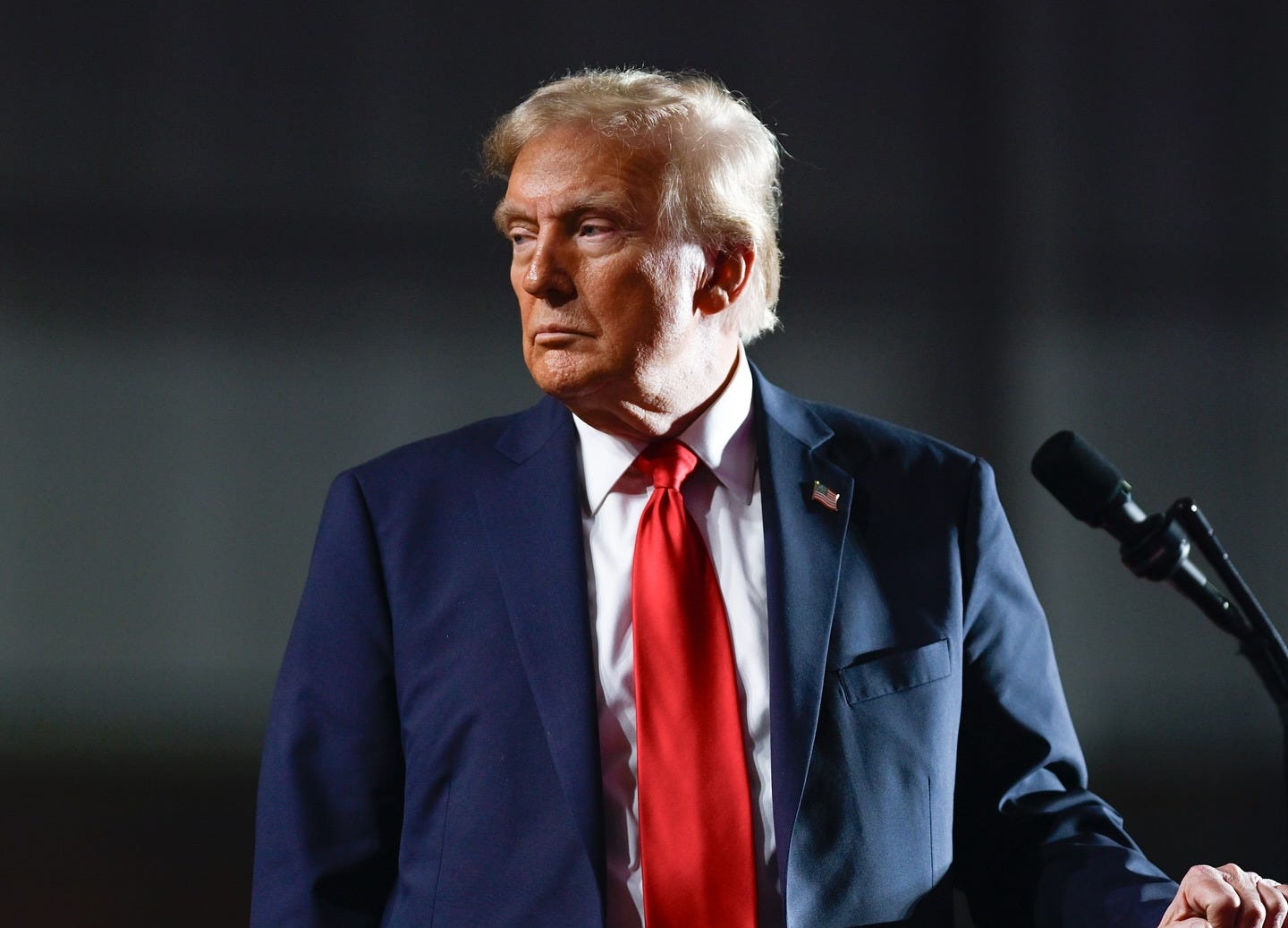
The outcome was a humiliation for Donald Trump, whose aides and allies deployed extreme tactics to bend Republican lawmakers to their will. The threats reached a fever pitch just before the vote when Heritage Action, an affiliate of the Heritage Foundation, posted an over-the-top warning on social media.
“President Trump has made it clear to Indiana leaders: if the Indiana Senate fails to pass the map, all federal funding will be stripped from the state,” the account claimed. “Roads will not be paved. Guard bases will close. Major projects will stop. These are the stakes and every NO vote will be to blame.”
Lacking carrots, other MAGAworld figures opted for sticks. Most notably, just weeks before his death, conservative activist Charlie Kirk threatened to back primary challengers against recalcitrant incumbents. Those threats never let up, with Trump himself amplifying them the night before the vote.
“Anybody that votes against Redistricting, and the SUCCESS of the Republican Party in D.C., will be, I am sure, met with a MAGA Primary in the Spring,” Trump wrote. “Rod Bray and his friends won’t be in Politics for long, and I will do everything within my power to make sure that they will not hurt the Republican Party, and our Country, again.”
Bray is the Senate president whose caucus resisted demands for a congressional redraw, even though many members were the target of violent efforts at intimidation, including swatting and bomb threats.
The pressure campaign backfired, though, with multiple Republicans citing it in explaining why they were opposed to revisiting the map. One, state Sen. Jean Leising, echoed a common refrain when she said her constituents had complained about receiving “extremely negative texts, phone calls and mailers.”
Another GOP senator, Greg Walker, was even more enraged when he was summoned to the White House over the summer.
“I refused, but the underling who reached out to me is trying to influence the election on my dime,” Walker told The Republic. “That individual works for me. He works for you. He’s on my payroll, he’s on your payroll, and he’s campaigning on company time. That’s a violation of the Hatch Act. He’s a federal employee. He works in the White House. But does anyone care about the rules anymore? Not that I can tell.”
Sen. Mike Bohacek, meanwhile, objected vociferously after Trump called Minnesota Gov. Tim Walz “seriously retarded” in a social media post. Noting that his daughter has Down syndrome, he responded, “This is not the first time our president has used these insulting and derogatory references and his choices of words have consequences.”
Sen. Vaneta Becker, though, put it most succinctly.
“I think that Indiana people are logical and they don’t want to be bullied,” she told WNIN. “And I think this looks like and feels like bullying, and I don’t think Hoosiers respond well to bullying.”
Love The Downballot’s redistricting coverage? Support our work by upgrading to a paid subscription!
Republican Attorney General Catherine Hanaway tweeted on Thursday that Missouri’s new GOP-drawn congressional gerrymander was “officially in effect,” a claim that supporters of a referendum to repeal the map immediately said was “false.”
Two days earlier, the organization leading the campaign against the new districts, People Not Politicians, submitted more than double the necessary signatures to qualify its referendum for the ballot—a move that organizers say automatically suspends the map until a vote can be held.
The group also said that the last time a veto referendum was deployed in Missouri, to successfully roll back anti-union legislation in 2018, GOP officials announced that the challenged law was immediately suspended upon the submission of signatures.
People Not Politicians also noted that in a recent court filing, Hanaway acknowledged that if organizers “succeed in collecting the necessary signatures, the Missouri Constitution will prevent the new map from taking effect until a referendum occurs.”
It’s not clear whether election administrators plan to actually implement the new map or accept filings from candidates based on it, but if they do, further litigation is likely.
“[T]here are thankfully still judicial checks in Missouri, but we have some state elected officials who do not seem to care about what the constitutional requirements of their office are and require them to do,” Richard von Glahn, the executive director of People Not Politicians, told The Downballot podcast this week. “And so we’ll see them in court.”
TN Redistricting
The Tennessee Supreme Court upheld maps for both chambers of the state legislature in a new ruling issued this week, finding that the House plan did not violate the state constitution’s rules regarding the splitting of counties and that a plaintiff challenging the numbering scheme for Senate districts lacked standing.
Senate
IA-Sen
The Democratic Senatorial Campaign Committee has been “warning consultants” not to work with either military veteran Nathan Sage or state Sen. Zach Wahls, Elena Schneider reports in Politico.
Schneider’s sources say they believe the DSCC wants state Rep. Josh Turek, who is the third and final notable Democratic candidate in the race, to be the party’s nominee for Iowa’s open U.S. Senate seat, though the committee has not made an endorsement.
The news follows several months of chatter that Turek, who won two gold medals and a bronze playing wheelchair basketball at the Paralympics, was the favored candidate of national Democrats.
Turek, Sage, and Wahls are competing in the June 2 primary in the contest to succeed Republican Sen. Joni Ernst. Rep. Ashley Hinson, by contrast, faces minimal opposition in her bid for the GOP nomination.
Governors
MN-Gov
MyPillow founder Mike Lindell, who is one of the most infamous conspiracy theorists in the nation, announced Thursday that he would enter the packed Republican primary for the right to take on Minnesota Gov. Tim Walz.
“[M]y whole campaign is not going to be about the [voting] machines,” Lindell told the Minnesota Star Tribune in an interview in which he called Dominion Voting Systems and Smartmatic “criminal enterprises.”
Lindell’s comments came five months after a jury found him liable for defaming a Dominion employee he’d attacked as “a traitor to the United States” and ordered him to pay $2.3 million in damages. Lindell has said he plans to appeal. Smartmatic, meanwhile, is currently waging a separate defamation lawsuit against him.
But well before he became known for spewing far-right lies across multiple platforms—he operates a social media site called LindellTV—the new candidate made a name for himself as the spokesperson for his pillow company.
At one point, Lindell had grown so omnipresent thanks to his non-stop advertising for MyPillow that the Star Tribune dubbed him “Minnesota’s quirkiest celebrity” in 2018. The following year, he even unintentionally generated national attention when police in a small Minnesota community investigated a call about a “deranged person standing outside in the cold hugging a pillow,” only to find it was actually a cardboard cutout of Lindell.
Over the years, the “MyPillow guy” became a prominent advocate for Donald Trump and was also the subject of frequent speculation that he might run for office in Minnesota as a Republican. Following Trump’s loss to Joe Biden in 2020, though, he became closely associated with efforts to overturn the election by spreading conspiracy theories about the race.
Until now, Lindell had always passed on seeking office, apart from a campaign to chair the Republican National Committee in 2023 that drew meager support. With his latest move, though, he joins a crowded field of Republican candidates eager to take on Walz.
“These guys haven’t lived what I live,” Lindell said of his intraparty competitors. That’s likely true in one sense: Lindell registered to vote in Texas in 2023, and he was still living there in April when he first began talking about running for governor back in his home state.
Lindell, who told the Star Tribune in September that he’d reestablished residency in Minnesota, is now trying to become the first Republican elected statewide since 2006, when Tim Pawlenty won his second and final term as governor. The GOP is hoping there’s enough voter fatigue with Walz, who would be the first governor to serve three consecutive four-year terms, to give them an opening to break its long losing streak.
Lindell, though, may be the wrong person to take up the task in a state Trump lost three times. Walz’s team eagerly blasted the newest Republican candidate as “a snake oil salesman caught up in multiple legal fights who wants to bring Trump extremism to Minnesota.”
WI-Gov
Nonprofit head Joel Brennan, who previously served as Democratic Gov. Tony Evers’ secretary of administration, announced Thursday that he was joining the packed race to replace his old boss.
While Brennan’s only prior run for office appears to have been in 2003, when he unsuccessfully sought the Democratic nomination in a special election for the state Senate, he’s long been an influential figure in Wisconsin.
Brennan was serving as CEO of Milwaukee’s Discovery World science museum in 2018 when Evers, who had just won a tight contest for governor, picked him to lead the state’s Department of Administration—a role that the Associated Press says made him Evers’ “top aide.”
Brennan left that position in 2021 to run the Greater Milwaukee Committee, a prominent local civic organization that he’s now parting ways with to run for governor. He’s argued that the extensive connections he’s forged in both the public and private sectors will help distinguish him from the other Democrats running to replace Evers, who announced his retirement in July.
Brennan is the last major Democrat who was still publicly considering whether or not to enter the Aug. 11 primary, which expanded just a week ago when former Lt. Gov. Mandela Barnes launched his own campaign.
The field already included Sara Rodriguez, Mandela’s successor as lieutenant governor; Milwaukee County Executive David Crowley; state Rep. Francesca Hong; former state cabinet member Missy Hughes; and state Sen. Kelda Roys.
The GOP lineup is considerably smaller, with Rep. Tom Tiffany going up against Washington County Executive Josh Schoemann. The Republican primary, though, may not be set just yet.
Former Gov. Tommy Thompson has expressed interest in reclaiming the post he left behind more than two decades ago, while there’s ongoing speculation that wealthy businessman Tim Michels, who lost to Evers in 2022, could run again.
Eric Hovde, another well-heeled businessman who narrowly failed to unseat Sen. Tammy Baldwin last year, could also jump in. Wisconsin GOP chair Brian Schimming told the Milwaukee Journal-Sentinel in June that he believed Hovde was considering and had “the benefit of time” to decide. There’s been no word about Hovde’s plans since then, though Wisconsin Public Radio still mentioned him as a possible contender this week.
Candidate filing closes on June 1, which is one of the latest deadlines in the country, so it may be some time before the race fully takes shape.
Republican Lt. Gov. Jay Collins told Florida Politics on Thursday that he would not run for Congress, a day after the site’s publisher, Peter Schorsch, tweeted that unnamed Collins allies were “urging him to abandon plans to run for Governor and instead mount a primary challenge” against scandal-ridden Rep. Cory Mills.
Collins has yet to announce whether he’ll run for Florida’s open governorship, but he’s sounded likely for months despite polls showing him badly trailing Rep. Byron Donalds in next year’s GOP primary. An unnamed source tells Florida Politics that Collins is “100%” on what he’ll do next, though they didn’t say when an announcement might come.
MD-06
Former Rep. David Trone announced Thursday that he would challenge Rep. April McClain Delaney in the June 23 Democratic primary for Maryland’s 6th District, a blue-tilting seat that the wealthy Trone gave up last year to wage an unsuccessful campaign for the Senate.
Trone, who is the founder and owner of the Total Wine chain of liquor stores, told the Washington Post’s Erin Cox that he was reentering politics because his successor was “not fighting Trump.” Trone in particular faulted McClain Delaney for supporting the Laken Riley Act, which empowers the Trump administration to deport undocumented immigrants who haven’t been convicted of criminal charges.
“It was a really horrendous bill and, you know, not one other person in the Maryland delegation was with MAGA and with Trump but the incumbent,” he argued.
McClain Delaney had her own choice words about her new opponent.
“David Trone thinks I should ‘step aside’ so he can have his old office back after he abandoned the district to run and lose for Senate. He has the arrogance of a Trump,” she said in a statement. “On behalf of my district, I stand up to bullies.”
McClain Delaney ended September with almost $600,000 stockpiled as she seeks a second term representing the 6th District, which includes Western Maryland and the northwestern D.C. exurbs. But while the congresswoman is wealthy—she spent almost $4 million of her own money on her 2024 campaign—there’s little question that Trone can far outspend her.
Trone, who told Cox he’d shell out “whatever it takes to win” again, has proven over the last decade that he’s willing and able to deploy staggering sums for his campaigns. However, he’s discovered more than once that a huge financial advantage doesn’t guarantee victory.
Trone emerged on the political scene in 2016 when he competed in a crowded Democratic primary for the open 8th District. But while he spent more of his own money than any House candidate in history—$13.4 million in total, or $17.6 million adjusted for inflation—he lost 34-27 to Jamie Raskin, a state senator with extensive labor support and a devoted following among local progressives.
Trone’s heavy spending reaped greater rewards for him two years later, though, when he ran to replace McClain Delaney’s husband, Rep. John Delaney, in the neighboring 6th District, when Delaney waged an ill-fated bid for president. This time, Trone poured in more than $11 million, which was enough to assure him a 40-31 victory over Del. Aruna Miller (now Maryland’s lieutenant governor) in the Democratic primary. From there, he went on to win three terms.
But Trone outdid himself last cycle when he spent $62 million of his fortune to finance his quest to succeed retiring Democratic Sen. Ben Cardin—a record amount of self-funding for a Senate primary. Trone began running TV ads a full year before the election, and polls showed him beating Prince George’s County Executive Angela Alsobrooks for most of the race.
But while Alsobrooks had no hope of matching Trone dollar for dollar, she benefited from extensive support from Maryland’s political establishment.
Alsobrooks and her allies at EMILYs List waited until the crucial final weeks of the campaign to air TV commercials, and their timing proved perfect. She wound up beating Trone 53-43, and her victory over Republican Larry Hogan in the fall made her the first Black woman to represent Maryland in the upper chamber.
McClain Delaney, a former official with the U.S. Commerce Department, won a busy primary that year, and she went on to defeat Republican Neil Parrott 53-47 in the general election as Kamala Harris was carrying the 6th by a similar 52-46 spread.
Parrott, who lost to Trone in 2020 and 2022, said in January that he’d set up an “exploratory campaign” for a potential fourth bid, but neither he nor any other notable Republicans have announced a campaign.
NC-01
Rocky Mount Mayor Sandy Roberson announced Thursday that he was dropping out of the busy March 3 Republican primary to take on Democratic Rep. Don Davis in North Carolina’s 1st District, a constituency the GOP-dominated legislature just made considerably harder for Davis to win.
Roberson, who self-funded $2 million through the end of September, withdrew just over a week before the Dec. 19 candidate filing deadline.
NC-04
Durham County Commissioner Nida Allam announced Thursday that she would seek a rematch against Rep. Valerie Foushee, who defeated her in a competitive 2022 primary for North Carolina’s safely blue 4th District.
Allam, who began her second effort with endorsements from figures like Sen. Bernie Sanders and progressive groups like the Justice Democrats, argued that Foushee had done little to help her constituents.
“She has been in office for three years,” the challenger told the local alt-weekly INDY Week. “What has been accomplished?”
Foushee and Allam first faced off after Democratic Rep. David Price decided to retire following a long career representing the college towns of Durham and Chapel Hill. Outside groups aligned with the hawkish pro-Israel group AIPAC and the crypto sector spent heavily on Foushee’s behalf, helping to power her to a 46-37 victory.
Foushee went on to easily win the general election, a victory that made her the first Black woman to represent the area in Congress. But while the new congresswoman secured renomination last year without opposition, Allam thinks that Democrats are now ready for change.
“I’m not taking a cent from AIPAC, crypto mega-donors, or corporate PACs,” Allam, who would be the first Muslim to represent North Carolina in Congress, said in her launch video. “You can’t serve them and fight for working families.”
Foushee, whose team informed INDY in August that she would not accept contributions from AIPAC going forward, responded to Allam’s challenge by defending her record in office.
“You can look at my record to show that I am not just paying lip service to our shared progressive values but instead working to advance legislation like the ICE Badge Visibility Act, the Dignity for Detained Immigrants Act, and the Block the Bombs Act,” she told the publication.
NY-15
Assemblymember Amanda Septimo announced Thursday that she would oppose Rep. Ritchie Torres in the June Democratic primary for New York’s 15th District, a safely blue constituency based in the Bronx.
Septimo did not mention the incumbent in her launch video but instead called for “leaders who aren’t afraid to stand up and say when things aren’t working.” The challenger also indicated that she won’t focus her campaign on Torres even as she called for new representation.
“‘Hey, Ritchie is terrible’ is not a thing that I plan to be talking about,” she told Politico. “I’m not running against Ritchie Torres. I’m running for the Bronx.”
Former Assemblymember Michael Blake and Dalourny Nemorin, a public defender and local community board member, were already running against the congressman in next year’s primary. The presence of so many challengers on the ballot may make it easier for Torres to secure renomination, since he could survive with only a plurality of the vote rather than a majority.
VA-05
Former Rep. Tom Perriello has received an endorsement from former Gov. Ralph Northam, a fellow Democrat who decisively defeated Perriello in the 2017 primary for governor.
“We need a fighter who will ensure all communities—rural and urban—have access to quality affordable health care,” Northam said of his one-time rival. “That fighter is Tom Perriello.”
Earlier this week, Perriello unexpectedly announced a comeback bid to reclaim Virginia’s 5th District, a conservative constituency that Virginia Democrats are hoping to redraw.
But while Perriello is the favorite to face Republican Rep. John McGuire, he doesn’t have the June primary to himself. Albemarle County Supervisor Mike Pruitt, who began running against McGuire in July, told Cville Right Now this week that he’ll continue his campaign.
Legislatures
NC State Senate
Donald Trump endorsed Senate President Pro Tempore Phil Berger for renomination on Wednesday evening, but the GOP’s supreme master wasn’t able to drive Berger’s primary foe out of the race.
“Sam Page is GREAT, he has been a longtime supporter, but I really want him to come work for us in Washington, D.C., rather than further considering a run against Phil,” Trump wrote on Truth Social of the Rockingham County sheriff who is challenging Berger. Page, however, wasn’t biting.
“I’m committed to upholding conservative values here in North Carolina and ending the corruption and liberal policies Phil Berger has pushed for years,” he posted on social media. “I will defeat Phil Berger on March 3.”
Trump’s intervention on behalf of Berger, who has led the Senate since 2011, comes two months after the legislature passed a new congressional gerrymander intended to flip Democratic Rep. Don Davis’ 1st District. CBS 17 reported in September that Trump would endorse Berger if Berger championed the new map, but the lawmaker denied any quid pro quo with the White House.
Mayors & County Leaders
Washington, D.C. Mayor
Mayor Muriel Bowser is calling on her supporters to back Councilmember Kenyan McDuffie as her preferred successor, even though McDuffie has not yet announced if he’ll run to succeed the retiring incumbent.
“If you like me, you’re going to love Kenyan,” Bowser told the D.C. Economic Club in comments quoted by News4. “Wink, wink.”
McDuffie would face Councilmember Janeese Lewis George, a self-described democratic socialist who has clashed with Bowser, in the June 16 Democratic primary. Lewis George announced her campaign at the start of the month, and she currently faces no serious opposition.
IL-Sen (D): Public Policy Polling (D) for the Democratic Lieutenant Governors Association (pro-Juliana Stratton): Raja Krishnamoorthi: 32, Juliana Stratton: 20, Robin Kelly: 9. (Sept.: Krishnamoorthi: 33, Stratton: 18, Kelly: 8.)
OH-Sen: Emerson College: Jon Husted (R-inc): 49, Sherrod Brown (D): 46. (Aug.: 50-44 Husted.)
ME-02: Pan Atlantic Research (D) for Joe Baldacci: Paul LePage (R): 44, Joe Baldacci (D): 43. The release did not include numbers testing any other declared or potential Democratic candidates. Baldacci has not yet announced a bid..
Indiana Republican state legislators standing up to Trump, Vance, and threats to funding is the most hopeful news involving Republicans since maybe Raffensperger.
If only Republicans in Congress showed a little spine.
I would love to see detailed reporting on the MAGA threats that were voiced against Indiana lawmakers and their families – both before and in the aftermath of the failed gerrymandering vote.
Surely the threats by Heritage Action alone ought to be a basis for legal action and severe political repercussions!






Indiana Republican state legislators standing up to Trump, Vance, and threats to funding is the most hopeful news involving Republicans since maybe Raffensperger.
If only Republicans in Congress showed a little spine.
I would love to see detailed reporting on the MAGA threats that were voiced against Indiana lawmakers and their families – both before and in the aftermath of the failed gerrymandering vote.
Surely the threats by Heritage Action alone ought to be a basis for legal action and severe political repercussions!