



Leading Off
Redistricting
Republicans throughout the South are barreling ahead with plans to dismantle majority-Black districts in time for the November midterms following last week’s Supreme Court ruling eviscerating the Voting Rights Act. The rush has generated major confusion, upended election calendars, and sparked multiple legal challenges.
Leading the charge is Louisiana Gov. Jeff Landry, who announced the day after the court’s ruling in Louisiana v. Callais that he was canceling the state’s May 16 House primaries. That would allow Republicans to overhaul one or both of the state’s two predominantly Black congressional districts, both of which are represented by Black Democrats, and impose a new map this year.
Opponents, however, have already filed multiple lawsuits seeking to block Landry’s order, including one that 6th District Democratic Rep. Cleo Fields is seeking to join.
Right behind Landry are his counterparts in Alabama and Tennessee.
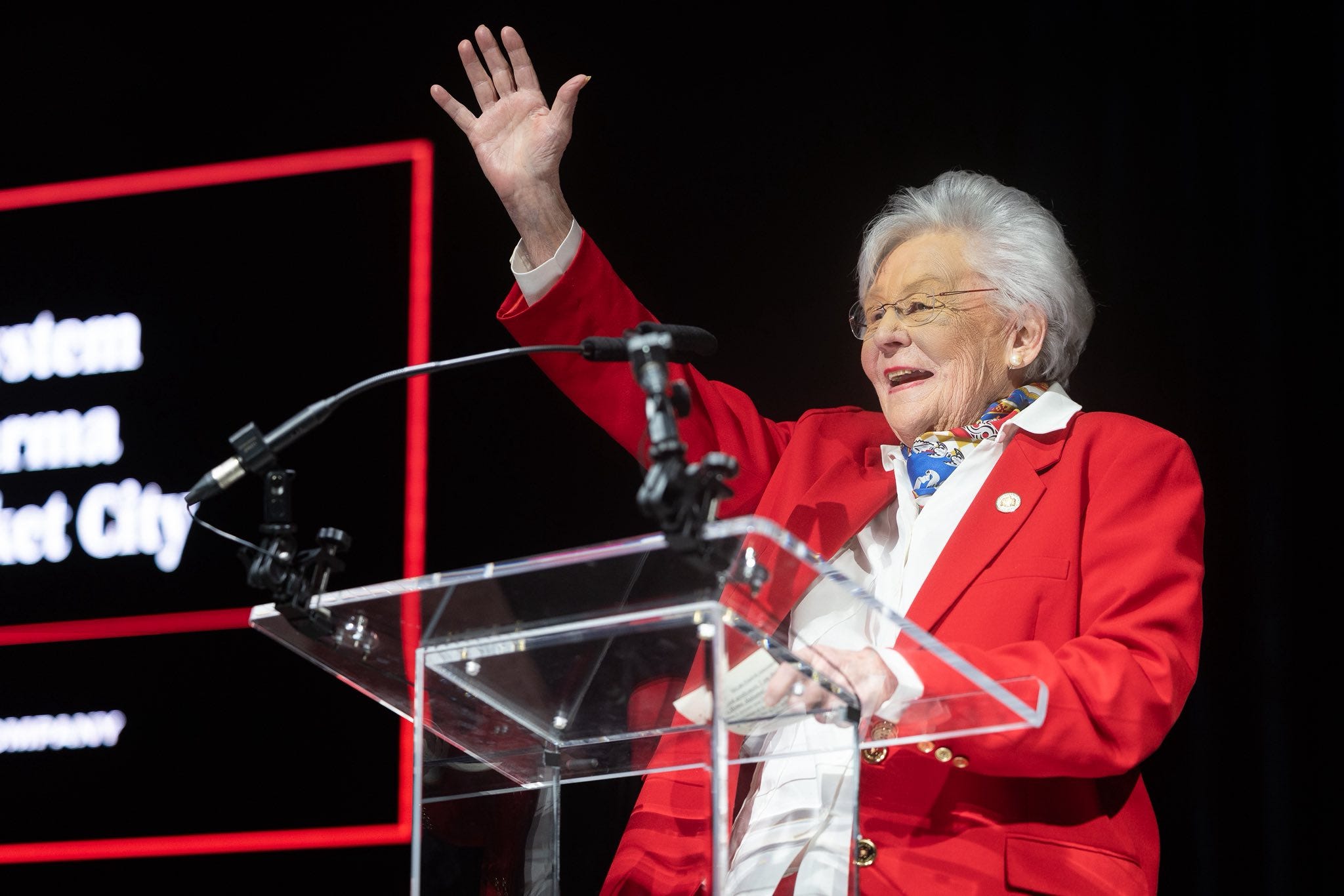
After initially saying on Wednesday that she would not convene a special session of the legislature to revisit the state’s map, Alabama Gov. Kay Ivey reversed herself two days later and called a session for Monday.
The state faces a major obstacle to any remap, though. As part of still-ongoing litigation that recently prompted the creation of a second congressional district where Black voters could elect their preferred candidates, Alabama remains under injunction regarding its ability to redraw its lines.
However, immediately after Callais was handed down, Republican officials asked the Supreme Court to expedite consideration of a previous request to lift all such injunctions. Should that request be granted, GOP lawmakers could eliminate both of Alabama’s majority-Black districts—something leaders of both chambers of the legislature have said they’re eager to do.
“While there are no guarantees that Alabama’s now unlawful, court mandated roadblock will be removed in time, we have a responsibility to give our state a fighting chance to send seven republican members to Congress,” wrote House Speaker Nathaniel Ledbetter and Senate President Pro Tem Garlan Gudger in a joint statement.
The two also said they would “set a contingency plan in place for our state’s primary elections,” which are scheduled for May 19. Ivey, meanwhile, asked lawmakers to prepare arrangements for special elections in the event the map changes, setting up the possibility of two sets of primaries this year.
Meanwhile, Tennessee Gov. Bill Lee ordered legislators to head back to the state Capitol on Tuesday “to formally review the state’s congressional map” and asked them to enact any changes “as soon as possible.”
Republicans will have the opportunity to disassemble the heavily Black 9th District in Memphis, which has long been represented by Rep. Steve Cohen, a white Democrat who has always been elected with substantial support from Black voters. The state’s primary is set for Aug. 6.
The situation is less clear in other similarly situated states. South Carolina Gov. Henry McMaster posted on X on Friday that “it would be appropriate” for lawmakers to “ensure” that the state’s “congressional map still complies with all requirements of federal law and the U.S. Constitution.”
However, Senate Majority Leader Shane Massey reiterated his longstanding opposition to mid-decade redistricting in an interview with South Carolina Public Radio.
“I think we need to be careful about this because in an effort to go to 7-0, we very well could go to 5-2,” he said. The state’s delegation is currently split 6-1 in favor of Republicans, with the majority-Black 6th District represented by longtime Democratic Rep. Jim Clyburn.
GOP leaders in Mississippi, meanwhile, have remained mum. The state has already held primaries this year, though given the willingness of their brethren in Louisiana and Alabama to run roughshod over already-scheduled elections, Mississippi Republicans may be inclined to take their chances.
Gov. Tate Reeves recently called a special session of the legislature for May 20 to address the map used to elect justices to the state Supreme Court, which a federal court ruled last year violated the Voting Rights Act. It’s not clear whether any action is needed now following the VRA’s demise, but Reeves could add congressional redistricting to the agenda.
And in Georgia, Gov. Brian Kemp ruled out a special session to redraw the state’s map on Friday but said in a statement that new districts would be needed “before the 2028 election cycle.” The Atlanta Journal-Constitution reported, however, that Democratic and Republican lawmakers both expect a remap before Kemp leaves office because the GOP could lose November’s race to succeed him, and possibly the battle for control of the legislature as well.
As for Florida, Gov. Ron DeSantis’ newly passed map already took a hammer to the state’s previously VRA-protected districts. Finally, in Texas, Republicans successfully targeted four Latino districts with last year’s gerrymander by nominally complying with the VRA while still making each constituency much redder. They could seek to manipulate those districts further, but primary runoffs are underway, likely putting off any further machinations for now.
The Downballot is fanatically devoted to covering overlooked elections, but maintaining this level of dedication isn’t easy with just two full-time staff. We need to achieve financial sustainability so that we can one day achieve human sustainability.
If you’d like to help us reach our goals and ensure The Downballot can stick around for many years to come, then we hope you’ll consider upgrading to a paid subscription. We ask for just $60 a year—$5 a month—from our supporters. Thank you.

Redistricting Roundup
MO Redistricting, MO Ballot
Supporters of a referendum to veto Missouri’s new GOP-drawn congressional map won another legal battle late last week when a state appeals court removed ballot summary language it concluded was misleading.
In March, a lower court determined that the original summary language, which had been drafted by Republican Secretary of State Denny Hoskins, violated state law. The court therefore rewrote the summary to say that the GOP’s map “repeals Missouri’s congressional plan, and replaces it with new congressional boundaries that keep more cities and counties intact, and are more compact.”
Referendum proponents characterized the ruling as a victory but nonetheless appealed. They succeeded in convincing the state’s Court of Appeals to strip out even more verbiage. The summary now specifies that the map “repeals Missouri’s existing congressional plan, and replaces it with new congressional boundaries that keep more counties intact.”
Hoskins has not yet said whether he plans to appeal to the state Supreme Court. However, the two sides will soon square off there in a different dispute over whether the map should have been suspended once opponents submitted signatures for their referendum last year. The justices will hear oral arguments in that matter on May 12.
Senate
KY-Sen
The Republican primary for Kentucky’s open Senate seat was completely upended in the span of less than an hour on Friday evening when Donald Trump intervened to push wealthy businessman Nate Morris out of the race and endorsed Rep. Andy Barr over his only remaining serious rival, former state Attorney General Daniel Cameron.
At 6:43 PM, Trump posted on Truth Social that he’d “had a great meeting with Mr. Nate Morris” and “asked Nate to step aside from that Race to take a role in my Administration as an Ambassador.” Sixteen minutes later, he gave his blessing to Barr.
Half an hour after that, Morris dutifully obliged and got behind Barr, too, though there’s been no information about what sort of diplomatic post Trump has promised him. Senate Majority Leader John Thune and National Republican Senatorial Committee Chairman Tim Scott went on to endorse Barr on Monday morning.
Barr is now the heavy favorite to succeed retiring Sen. Mitch McConnell, though he still faces opposition in the May 19 primary from Cameron, the GOP’s unsuccessful 2023 nominee for governor. But while Cameron began the race with a wide lead in the polls, he lost ground as he struggled to raise money or attract major support during what had been a nasty primary between Barr and Morris.
Governors
GA-Gov
Former Atlanta Mayor Keisha Lance Bottoms on Friday publicized an endorsement from former President Joe Biden ahead of the May 19 Democratic primary for Georgia’s open governorship. Biden, who is making his first endorsement since he left office, praised Bottoms’ tenure leading the state’s largest city and subsequent service in his administration.
Bottoms is one of seven Democrats competing to replace Republican Gov. Brian Kemp, who is termed out. Every publicly released poll has shown her well ahead of her rivals, but most surveys have found her short of the majority she’d need to avoid a runoff.
MN-Gov
State Rep. Kristin Robbins announced Friday that she was dropping out of the Republican primary for governor of Minnesota. Several other Republicans remain in the race, but the eventual nominee will have a challenging time against Democratic Sen. Amy Klobuchar, who enjoys a huge lead in both the polls and in fundraising.
House
FL-09
Democratic Rep. Darren Soto announced Friday that he’d seek reelection to central Florida’s 9th District, which Gov. Ron DeSantis radically redrew in an attempt to unseat the congressman.
DeSantis’ new gerrymander eviscerated Soto’s district, a predominantly Latino constituency that had previously been protected by the Voting Rights Act and backed Kamala Harris by a 51-48 margin. Now its eligible voting population is majority-white, and it would have favored Donald Trump 58-41.
Soto expressed optimism that the courts would stop the new map from being used, but he argued that he could still win even if they do not.
“There’s a lot of Democrats and independents who did not show up the last couple elections,” he told Central Florida Public Media. “But I can tell you, in the … new proposed seat, Trump is actually underwater by two, three points, according to new polls … because the economy is struggling in a lot of these areas, right? So it’s tough, but winnable.”
Soto is sure to face serious GOP opposition. One Republican, Osceola County Commissioner Ricky Booth, has already told Florida Politics he’s interested in running. Consultants aligned with former state Rep. Mike de la Rosa also inform the site that he’s considering as well.
Soto made his plans known the same day that Democratic Rep. Kathy Castor released a statement confirming she’d run again in the 14th District, a Tampa-area constituency that also became considerably redder under the new map.
By contrast, Democratic Reps. Lois Frankel, Jared Moskowitz, and Debbie Wasserman Schultz, whose South Florida districts were all overhauled, have yet to announce their plans.
Wasserman Schultz said Friday she plans to seek reelection but hadn’t decided which district she’ll run in, while Moskowitz made similar comments earlier in the week. The 77-year-old Frankel has not yet said whether she’ll run for another term, though she’s hinted she might.
FL-15
Florida Gov. Ron DeSantis’ new gerrymander just made life considerably tougher for one of his most loyal allies in Congress.
Hernando County Commissioner Steve Champion announced Thursday that he would wage a primary campaign against Republican Rep. Laurel Lee, whom DeSantis appointed secretary of state three years before she was elected to represent the previous version of the 15th District in 2022.
“Washington has failed the American people,” Champion said in a statement kicking off his entry into the August primary for the revamped 15th.
Champion, who owns what he calls “one of the largest firearms retailers in Hernando County,” had little reason to challenge Lee before last week. His home county was located entirely in the 12th District under the map DeSantis rammed through in 2022. That constituency has long been represented by Republican Rep. Gus Bilirakis, who’s never struggled to win during his 20-year career in the House.
But everything changed after DeSantis unveiled a new map that made Lee’s seat, which had been a long-shot Democratic target, considerably redder by incorporating more conservative turf—including Hernando County. While that was ostensibly good news for Lee, who soon announced she would seek reelection in the modified district, any worries she might have had about losing the general election now loom much greater in the primary.
That’s because, thanks to DeSantis’ overhaul, the incumbent now represents just 36% of the residents of the new 15th District, meaning most residents have never seen Lee’s name on the ballot before. They may, however, have heard about her two years ago, when Donald Trump waged an angry but failed crusade to drive the congresswoman, who was the only member of Florida’s House delegation to endorse DeSantis’ doomed presidential bid, out of office.
“Any great MAGA Republicans looking to run against Laurel Lee in Florida’s 15th Congressional District?” Trump wrote on Truth Social in the spring of 2024. “IF SO, PLEASE STEP FORWARD!”
A few expressed interest, including far-right influencer Laura Loomer and the conspiracy theorist who tweets under the handle “DC_Draino,” but only a few little-known Republicans filed to challenge her. Trump later did an about-face and endorsed Lee, who then easily won both the primary and general election.
Lee has been a loyal Trump ally since then, and he rewarded her with an endorsement in October. The congresswoman has also proven to be a strong fundraiser, finishing March with $1.7 million stockpiled.
Champion, though, believes that Lee’s time in Congress will be anything but an asset for her as she tries to win in unfamiliar territory.
“It is time to restore accountability, defend our constitutional freedoms, and bring real-world leadership to a system consumed by bureaucracy and political self-interest,” he said on social media. “I am ready to take that fight to Congress.”
GA-13
Republican Gov. Brian Kemp has picked July 28 as the date for the special election to replace Rep. David Scott, who died last month, in Georgia’s safely Democratic 13th Congressional District.
All the candidates will run on one ballot rather than in separate primaries, and candidates need to win a majority of the vote to avert a runoff on Aug. 25. Officials did not announce a candidate filing deadline, but in the special election for the 14th District earlier this year, the deadline was seven weeks out. That would place the deadline for the upcoming race in early June.
In the contest for a full two-year term, Scott and six others submitted paperwork to run in the May 19 primary ahead of the filing deadline, which passed two months ago. Scott will remain on the May 19 primary ballot, but votes cast for him will not be counted.
KY-06
Former state Sen. Ralph Alvarado received Donald Trump’s endorsement on Friday ahead of the busy May 19 Republican primary for Kentucky’s 6th District, which Rep. Andy Barr is giving up to run for the Senate.
Alvarado, who was named as Tennessee’s health commissioner after serving as then-Gov. Matt Bevin’s running mate during his failed 2019 reelection campaign, is one of the five Republicans competing to represent this constituency in central Kentucky.
State Rep. Ryan Dotson is the only other candidate in the primary who has held elected office. The rest of the field consists of retired pharmaceutical executive Greg Plucinski; farmer Adam Perez Arquette, who had self-funded close to $1.7 million through March; and Steve Shannon, a nonprofit executive who hasn’t reported raising anything.
Seven Democrats are also running to flip this conservative seat that could nonetheless be in play in November. Most notably, the House Majority PAC, the top pro-Democratic House super PAC, has reserved close to $700,000 in fall ad time for this race.
The main candidates are former federal prosecutor Zach Dembo, businesswoman Erin Petrey, former state Rep. Cherlynn Stevenson, and David Kloiber, a former member of Lexington’s governing body.
NY-12
Crypto billionaire Chris Larsen tells the New York Times that he plans to spend $3.5 million to help Assemblyman Alex Bores in the packed and expensive June 23 Democratic primary for New York’s open 12th District.
The first ad from Larsen’s You Can Push Back PAC highlights attacks on Bores by a rival group linked to OpenAI. The narrator tells the audience, “They’re attacking Alex Bores for writing the toughest AI safety law in the country.”
Grab Bag
Where Are They Now?
A federal jury convicted former Rep. David Rivera on Friday for failing to register as a foreign agent for Venezuelan President Nicolas Maduro’s government. Rivera, who was convicted alongside consultant Esther Nuhfer, will be sentenced in July.
Rivera, a Republican who served in the Florida House of Representatives before he was elected to Congress in 2010, was the subject of numerous corruption allegations during his time in politics.
These included, but were by no means limited to, allegations that he participated in a scheme to elevate a straw candidate during his failed 2012 reelection campaign, though federal prosecutors dropped charges related to that case last year.
Poll Pile
GA-Sen (R): The University of Georgia for the Atlanta Journal-Constitution:
Mike Collins: 22, Buddy Carter: 13, Derek Dooley: 11, other candidates 1% each, undecided: 54.
Oct.: Collins: 30, Carter: 20, Dooley: 12.
The "logic" of the Roberts Court is truly sickening. It's unconstitutional to use race as a factor in preventing discrimination, but the Jim Crowers are allowed to use race so long as it isn't their "primary" motivation. Which of course is nigh impossible to prove, since they can just say that they're motivated by partisanship, which is totally fine, even encouraged, despite the fact that partisan Gerrymanders are highly pernicious to Democracy. It really feels like the Calvinball Court.
Landry got spanked by a federal judge over the weekend who declared his racist law unconstitutional and allowed the duly elected Calvin Duncan to assume office today.
https://www.nola.com/news/politics/calvin-duncan-orleans-clerk-ruling/article_721cb604-c963-4830-bf1b-12a4cc1a2816.html