



Leading Off
OH-07
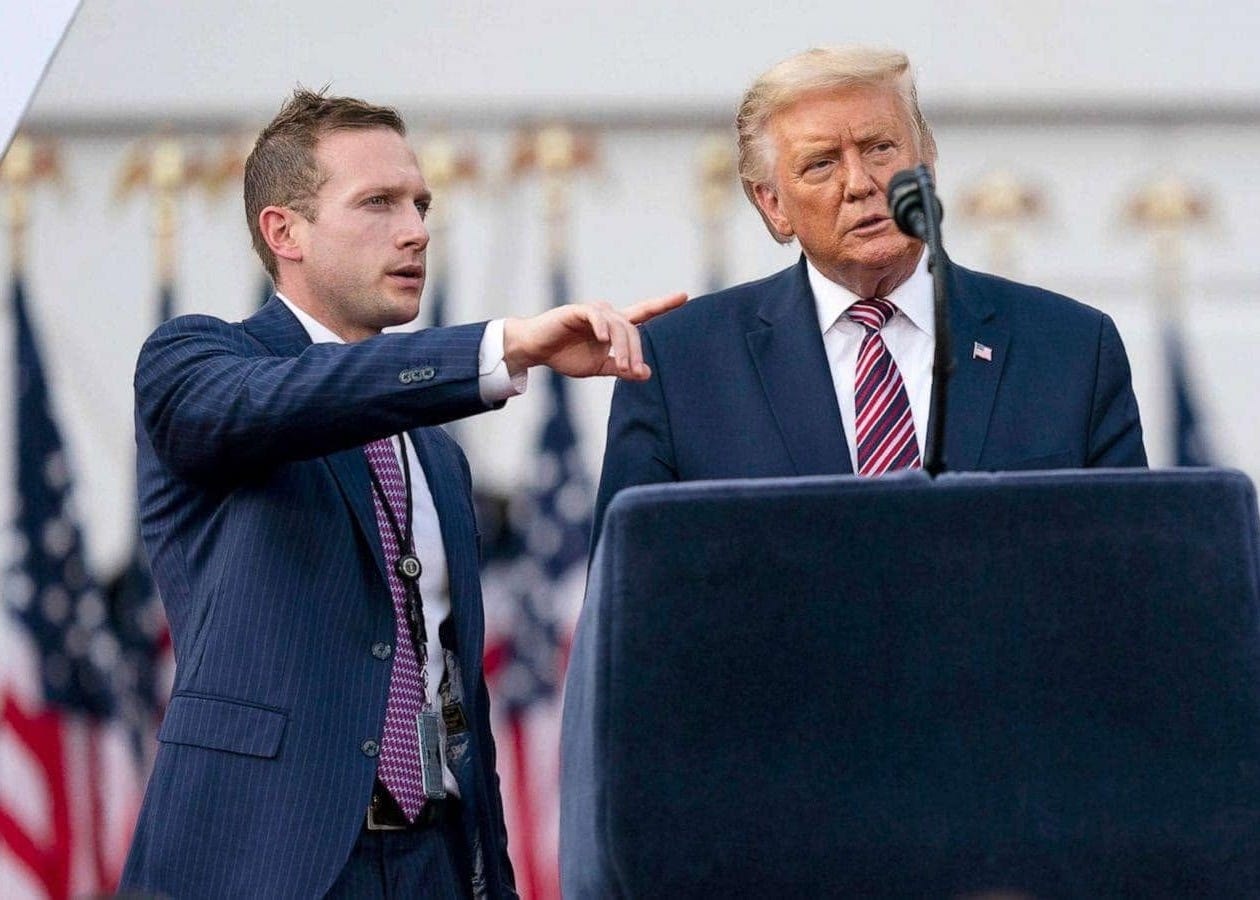
The House Ethics Committee announced on Tuesday that it was investigating Republican Rep. Max Miller over accusations of “domestic violence and abuse or illegal drug use,” allegations that have circulated for years but received a surge in attention in recent months thanks to new reporting.
In May, the Daily Mail, a British tabloid, reported that Emily Moreno had alleged that Miller, her former husband, had subjected her to years of physical abuse, which included throwing scalding water at her. Miller denied the charges, calling them “nothing but lies,” then filed a defamation suit against Moreno, who is the daughter of Ohio Sen. Bernie Moreno.
Further stories followed, including a CNN report from June featuring videos of police interviews with Moreno and Miller as part of an investigation into how their two-year-old daughter suffered a broken collarbone. Moreno also accused Miller of holding a gun to her head while she changed their daughter’s diaper. Miller denied these accusations as well, and no charges were filed.
The public battle escalated in recent days when Bernie Moreno, a fellow Republican, finally went public on Sunday, saying in a post on X that Miller “should not serve in the House.” The following day, CNN reported that unnamed “allies” of Donald Trump had pressed him to ask Miller to abandon his bid for reelection.
Trump, who has a pattern of standing by supporters accused of abuse, was publicly unmoved. At a White House event on Monday, he told reporters, “I know Max. He’s a good person. I mean, I always thought he was a very good person. And I’m going to let the families figure that out.” Miller worked on Trump’s first campaign in 2016 and later served in a variety of administration roles before winning election to Congress in 2022.
On a phone call with Miller that same day, though, Trump reportedly told the congressman that “things aren’t looking good” and said he’d face a challenging bid for a third term, according to Axios. Trump, however, did not call on Miller to step aside.
Republicans fear, though, that the badly wounded congressman may see his brief career come to an end in November if he remains on the ballot.
The deep-pocketed House Majority PAC has reserved nearly $1.2 million in fall TV time that could be used in Ohio’s Cleveland-area 7th District on behalf of Democrat Brian Poindexter, a union ironworker, and a June poll for Poindexter found Miller up just 44-43.
If the incumbent were to withdraw, local GOP leaders would have until Aug. 10 to select a replacement. Miller, though, has shown no interest in doing so. In a livestream on Sunday, he declared, “I’m not dropping out of this race, and I’ll win in November.”
Miller’s intraparty detractors, however, are unlikely to stop pushing for his departure as long as there’s still time to change his mind.
And they got a new reason to keep up their pressure campaign in the wee hours of Wednesday when Rep. Chuck Edwards, a North Carolina Republican embroiled in an unrelated scandal, announced he was ending his own reelection campaign. See our NC-11 item below for more on Edwards’ departure.
Results Recaps
All race calls and estimates of the proportion of the vote that’s been tabulated come from the Associated Press unless otherwise noted. You can also check out our cheat-sheet that summarizes the outcomes in every key race, as well as any contests that remain uncalled.
Kansas
KS-Sen (D) (57-41 Trump)
Pastor Adam Hamilton handily won the Democratic nomination despite more than $2 million in outside spending for one of his opponents and will now take on Republican Sen. Roger Marshall in the fall.
Hamilton, whose 24,000-member congregation makes his the largest United Methodist church in the country, has proven to be a strong fundraiser and walloped Marshall in the most recent quarter. Democrats hope Hamilton’s religious background and moderate profile can help put this seat in play, but there’s been no recent polling, and Democrats last won a Senate race in Kansas in 1932.
KS-Gov (R & D) (57-41 Trump)
State Senate President Ty Masterson, who won the GOP primary by a wide margin thanks to Donald Trump’s endorsement, will face Democratic state Sen. Cindy Holscher, the upset winner in the Democratic race, in the race to succeed term-limited Democratic Gov. Laura Kelly.
Kelly long ago endorsed state Sen. Ethan Corson, who racked up a considerable financial advantage thanks to his establishment connections. But Holscher became an ardent critic of tax incentives for new data center construction and also opposed a taxpayer-funded deal to bring the Kansas City Chiefs across the state line from Missouri, measures that Corson supported. Holscher went on to beat Corson 49-39.
Masterson, however, will likely be the favorite in November on account of Kansas’ conservative lean, though there’s been no polling.
KS Ballot (57-41 Trump)
Kansas voters resoundingly defeated a GOP-backed amendment that would have reshaped the state Supreme Court. The “no” side leads 62-38 as of Wednesday morning, with KMBC estimating that 89% of the vote has been tabulated.
The amendment would have radically changed the way justices are chosen by replacing the current merit-based system of appointments with statewide partisan elections that Republicans believed would move the court to the right. That in turn could have jeopardized a landmark 2019 ruling in which the court found that the state constitution protects the right to an abortion.
Michigan
MI-Sen (D) (50-48 Trump)
Former Wayne County health director Abdul El-Sayed holds a 48.6 to 47.4 advantage over Rep. Haley Stevens with an estimated 95% reporting in the Democratic primary for Michigan’s U.S. Senate race.
NBC has called the race for El-Sayed, and he declared victory early Wednesday. The Associated Press and most other media outlets, however, have not issued a projection, nor has Stevens conceded.
The Democratic nominee will take on former Rep. Mike Rogers, who had no opposition in the Republican primary, in what will be a closely watched general election.
MI-Gov (D & R) (50-48 Trump)
Democrat Jocelyn Benson and Republican John James will face off in the general election to succeed Democratic Gov. Gretchen Whitmer, who cannot seek a third term.
Benson, who was elected secretary of state in 2018 as Whitmer was winning the governorship, dispatched Genesee County Sheriff Chris Swanson in an 83-17 blowout.
James, a two-term congressman who secured Donald Trump’s endorsement in June, outpaced wealthy businessman Perry Johnson 50-35. Johnson, who spent over $30 million of his own money, tried in vain to capitalize on James’ missteps on the campaign trail, including the congressman’s infamous spring vacation to the Caribbean when the Department of Homeland Security remained shut down.
Every recent poll has shown Benson leading James, who was the GOP’s unsuccessful Senate nominee in 2018 and 2020 prior to his election to the House. There’s no consensus, though, on precisely how much of an advantage Benson has in her contest to lead this perennial swing state.
MI-01 (R) (60-39 Trump)
Republican Rep. Jack Bergman had no trouble winning renomination for a sixth term representing Michigan’s Upper Peninsula and the northern reaches of the Lower Peninsula. A trio of local state legislators made news in February when they yanked their endorsements of Bergman after he sided against their preferred candidate in a state Senate race, but it did him little damage at the polls.
Bergman will face a rematch this fall against Democrat Callie Barr, an attorney he defeated 59-38 in 2024. Barr, who beat two intraparty opponents, raised more than $800,000 through mid-July for her longshot effort to flip the 1st District, a once competitive constituency that zoomed hard to the right after Donald Trump became the face of the Republican Party in 2016.
MI-07 (D) (50-49 Trump)
Climate activist William Lawrence, a vocal progressive who co-founded the Sunrise Movement, defeated two more moderate opponents to secure the Democratic nomination for Michigan’s 7th District.
Lawrence’s candidacy promoted serious consternation among many Democrats, who fear he may be too liberal to unseat freshman GOP Rep. Tom Barrett in this swingy seat based around the state capital of Lansing. Republicans agreed and spent $1.7 million meddling on his behalf in the primary.
But Lawrence was also aided by his rivals, former diplomat Bridget Brink and former Navy SEAL Matt Maasdam, who fought one another and ignored him for most of the race. In the end, Lawrence won with a 44% plurality while Brink took 29% and Maasdam 28%—an almost even split.
Despite their nominee’s perceived flaws, Democrats are unlikely to write this race off. The House Majority PAC previously reserved millions in fall TV time that could be used for this race. While reservations can be canceled, the district’s swingy nature and the overall political environment still make it a tempting target for Democrats.
DCCC chair Suzan DelBene, whose committee did not take sides in the primary, also released a statement following Lawrence’s victory touting the new nominee as someone who “has spent his life siding with working families to stand up to corporate power and corruption that Barrett has enabled.”
MI-08 (R) (50-48 Trump)
Tom Smith, a former General Motors engineer who dropped out of the Republican primary last month, holds a 50-33 advantage over Navy veteran Amir Hassan, Donald Trump’s endorsed candidate to take on Democratic Rep. Kristen McDonald Rivet.
The AP has not called the race even though an estimated 99% of the vote has been tabulated, possibly due to uncertainty about what happens next for the GOP nomination.
Smith, who has not reported raising any money, released a statement on July 16 declaring that he was leaving the contest and endorsing Al Lemmo, the third GOP candidate on the ballot.
Smith did not let Trump’s support for Hassan, a former prison guard at Guantanamo Bay, deter him from dubbing the perceived frontrunner “possible Trojan Horse candidate and lifelong Democrat Amir Haneef Hassan.”
But while Republican voters agreed Hassan was an unacceptable choice, just 16% of them backed Lemmo. Smith, who remained on the ballot despite dropping out, does not appear to have said anything publicly in the hours since his unexpected—and unwanted—victory.
Hassan, for his part, badly trailed McDonald Rivet in fundraising in his quest to flip the 8th District, a swing seat based in the Flint and Tri-Cities areas. Major outside groups on both sides, though, were still preparing for a competitive race: The congresswoman’s allies at House Majority PAC this spring reserved $4.2 million in ad reservations in Flint, while the conservative Congressional Leadership Fund booked $2.5 million.
MI-10 (R & D) (52-46 Trump)
The race for Republican Rep. John James’ swingy seat in the Detroit suburbs will pit Army National Guard officer Mike Bouchard against former prosecutor Christina Hines.
Bouchard romped to the GOP nomination on the strength of Donald Trump’s endorsement and the name he shares with his well-known father, Oakland County’s longtime sheriff. Hines, meanwhile, decisively defeated two other candidates to win the Democratic nod.
James had a history of close races before deciding to run for governor this year, making his decision to run for governor a frustrating one to many Republicans, including Trump. His district is bound to be another battleground this fall.
MI-11 (D) (57-41 Harris)
State Sen. Jeremy Moss comfortably secured the Democratic nod in Michigan’s 11th District, a reliably blue seat in the northwestern Detroit suburbs that Rep. Haley Stevens left behind to run for the Senate. Should Moss prevail in the fall as expected, he’d be the state’s first LGBTQ member of Congress.
MI-13 (D) (69-28 Harris)
State Rep. Donavan McKinney holds a 51.6 to 48.4 edge over Rep. Shri Thanedar with an estimated 73% of the vote tabulated as of Wednesday morning. The AP has not projected a winner in the closely watched Democratic primary for Michigan’s 13th District, a safely Democratic constituency that includes much of Detroit and its southwestern suburbs.
Missouri
MO-01 (D) (78-20 Harris)
Rep. Wesley Bell easily prevailed in a rematch with former Rep. Cori Bush, whom he ousted in the Democratic primary two years ago, winning this time by a 59-37 margin.
It’s a very different outcome from 2024, when Bell, boosted by heavy spending from AIPAC, unseated Bush by a much smaller 51-46 spread. Bush, a vocal critic of Israel, once again sought to make the country a central issue, as AIPAC once again came to Bell’s aid. Despite the changing political landscape, though, she was unable to do so.
MO-05 (R) (58-40 Trump)
State Sen. Rick Brattin, who received a last-second endorsement from Donald Trump, had little trouble capturing the Republican nomination for Missouri’s redrawn 5th District, but whether it remains in use in November is an open question.
Opponents of the new GOP gerrymander are seeking to qualify a referendum for the ballot that would not only repeal the map but also make it retroactively null and void. Should they succeed (see our MO Redistricting item below for more), it’s very unclear how the state might proceed, since it would mean that Tuesday’s House primaries were held using an unlawful map.
Whatever happens, though, longtime Democratic Rep. Emanuel Cleaver has said he’ll seek reelection no matter which boundaries are used.
MO-06 (R) (63-36 Trump)
Former conservative radio host Chris Stigall beat Kansas City Councilman Nathan Willett 44-34 in the Republican primary for Missouri’s open 6th District in the northern part of the state. Stigall had the endorsement of Rep. Sam Graves, who announced his retirement in the spring just days before candidate filing closed, as well as support from a well-funded outside group.
MO Ballot (58-40 Trump)
Like their brethren across the state line in Kansas, Missouri voters emphatically spurned two Republican-authored constitutional amendments that would have made enormous changes to state government.
Amendment 4 would have made it all but impossible to pass citizen-sponsored initiatives in the future by requiring that they win a majority not only statewide but also in every congressional district. Republicans scheduled a summertime vote on this proposal in the hopes of thwarting other measures they dislike that may appear on the November ballot.
Amendment 5, meanwhile, would have eliminated the state’s income tax and allowed the GOP-dominated legislature to replace lost revenues with regressive sales taxes.
Voters rejected Amendment 4 by a gigantic 80-20 margin and shot down Amendment 5 by an even wider 83-17 spread. According to the Missouri Independent, both measures lost in all eight of the state’s congressional districts.
Virginia
VA-01 (D) (52-47 Trump)
Henrico County Commonwealth’s Attorney Shannon Taylor, who had the backing of the DCCC, easily won the right to take on Republican Rep. Rob Wittman in the general election for Virginia’s 1st District.
The pro-Democratic House Majority PAC has already reserved more than $2 million in fall TV time for this race, which is a top Democratic pickup target. A key reason why: this constituency in the Richmond suburbs was one of just 19 nationwide that moved to the left—albeit only slightly—in the 2024 presidential election.
Washington
WA-03 (50-47 Trump)
Democratic Rep. Marie Gluesenkamp Perez will face off against state Senate Minority Leader John Braun in what should be a difficult November battle, but she’ll have reason to feel good if the results of the top-two primary hold fast.
With an estimated 53% of the vote counted, Gluesenkamp Perez and three other Democrats have combined for 56%, while Braun and two minor Republicans together have just 42%. Two years ago, by contrast, Republicans ran out to a 52-46 advantage in the primary, yet Gluesenkamp Perez nonetheless won the general election 52-48.
WA-04 (59-38 Trump)
Yakima County Commissioner Amanda McKinney, who had Donald Trump’s endorsement, will square off against Air Force veteran John Duresky, the lone Democrat in the primary, in the November race to succeed retiring GOP Rep. Dan Newhouse.
Given the conservative lean of the 4th District, which is based in central Washington, McKinney will be the heavy favorite.
WA-05 (54-43 Trump)
Republican Rep. Michael Baumgartner appears likely to get his desired rematch campaign against the Democrat he easily beat in 2024 rather than an unpredictable general election contest against an independent.
With an estimated 52% reporting, Baumgartner is well in front with 48% as Democrat Carmela Conroy leads independent Nate Powell 21-14 for the second general election spot. The AP has not yet issued a call in the race for second place.
Redistricting Roundup
MD Redistricting, MD Ballot
Both chambers of Maryland’s Democratic-dominated legislature voted on Tuesday to place an amendment on the November ballot that would make it easier for lawmakers to eliminate the state’s last Republican congressional district in time for the 2028 elections.
The amendment clarifies that the state constitution’s criteria for drawing electoral districts, which include compactness, contiguity, and regard for “natural boundaries and the boundaries of political subdivisions,” apply only to maps for the legislature and not for Congress.
It further specifies that no part of the constitution “provides applicable criteria for the boundaries of a congressional districting plan.” In 2022, a state judge struck down a Democratic-drawn map on the grounds that it violated the state constitution as a partisan gerrymander. If voters approve the new amendment, such a ruling would no longer be possible.
That would clear the way for Democrats to pass a new map making the state’s deep-red 1st District solidly blue without worrying that such an effort might again get invalidated. They could also shore up the 6th District, which has at times been competitive. Maryland’s six other districts are all safely Democratic.
MO Redistricting, MO Ballot
Republican Secretary of State Denny Hoskins announced on Tuesday that he would not allow a referendum seeking to overturn Missouri’s new GOP-drawn congressional map to appear on the November ballot, calling the effort unconstitutional.
The group backing the referendum, People Not Politicians, immediately responded by filing a lawsuit in state court.
“Secretary of State Hoskins is making a last desperate attempt to silence the people’s voice in Missouri,” Richard Von Glahn, the organization’s executive director, said in a statement. “We’ve fought back against politicians for the last year, and we won’t stop now.
“There are more than enough signatures, verified by election authorities, to qualify the referendum,” he continued. “Courts have consistently held that Congressional redistricting is subject to state constitutional provisions including the right to a referendum. People will have the final say in November and the chance to vote no to politicians desperate power grabs.”
At a press conference, Hoskins acknowledged that the “number of signatures” turned in by the map’s opponents was not at issue. Rather, he said that the state constitution “does not authorize a referendum on congressional redistricting passed by the Missouri General Assembly.”
In the 1920s, though, Missouri voters rejected a congressional map in a landslide by means of a similar referendum.
Hoskins also asserted that the federal constitution prohibits such referenda due to a clause that states, “The Times, Places and Manner of holding Elections for Senators and Representatives, shall be prescribed in each State by the Legislature thereof.”
However, in a 2023 decision known as Moore v. Harper, the U.S. Supreme Court rejected an argument that state lawmakers have unfettered power over elections under this clause.
In its suit, People Not Politicians rejected both of Hoskins’ contentions. The plaintiffs argue that all laws passed by the legislature, except for emergency legislation and appropriations bills, can be subject to referendums.
They also cite Moore, in which the court said that it previously had “embraced the core principle … ‘that redistricting is a legislative function, to be performed in accordance with the State’s prescriptions for lawmaking, which may include the referendum and the Governor’s veto.’”
Senate
SC-Sen
Allies of Rep. Russell Fry are going negative on Rep. Ralph Norman, one of his rivals in next week’s special GOP primary to pick a replacement nominee for the late Sen. Lindsey Graham.
A super PAC called the Palmetto Leadership Fund has spent more than $1 million on the race to date, most of it on positive ads boosting Fry. But as CNN’s Patrick Svitek flagged, the group is now running a spot that accuses Norman of having “hired illegal immigrants,” a story that first emerged during his first unsuccessful bid for Congress back in 2006.
Two other candidates have also benefited from heavy outside spending: appointed Sen. Darline Graham, who’s received a $920,000 boost from a super PAC that previously supported her brother, and former Rep. Mark Sanford, whose allies at the American Leadership Action Fund have poured in more than $1.4 million on his behalf.
If no one takes a majority on Tuesday, the top two vote-getters will advance to a runoff on Aug. 25. The field had featured nine candidates, but a 10th got added on Tuesday, when a judge ordered that Danny Ford II, the son and namesake of the legendary former football coach at Clemson, be restored to the ballot.
The winner will take on Democrat Annie Andrews in November.
SD-Sen
Democrat Julian Beaudion announced Tuesday he was ending his campaign against Republican Sen. Mike Rounds, a move that leaves independent Brian Bengs as Rounds’ main rival. Beaudion, who also filed paperwork with election officials to withdraw, said in a statement he would not back either of his now-former rivals.
Bengs, an attorney and Air Force veteran, was the Democratic nominee against GOP Sen. John Thune in the 2022 contest for South Dakota’s other U.S. Senate seat. Thune won in a 70-26 blowout, and his caucus would name him majority leader two years later.
But Bengs, who last year announced he would challenge Rounds as an independent, released polling this spring arguing he could beat the senator if Beaudion stepped aside. Rounds led just 44-40 in a one-on-one matchup against Bengs, according to an internal poll conducted in late May by the Democratic firm Public Policy Polling.
Rounds, who served as governor before his election to the Senate in 2014, had a much wider 56-31 advantage over Beaudion in that same survey. Things were similar in a three-way race: PPP found Rounds outpacing Bengs 43-23, with Beaudion in third with 18%.
But while Beaudion told Politico just last week that he was “not considering dropping out of the race,” he did just that on Tuesday. His departure came shortly after the Democratic nominees for Senate in Nebraska and Idaho removed their names from the ballot in races where serious independent candidates are campaigning against Republican incumbents.
Governors
MS-Gov
Attorney General Lynn Fitch announced on Tuesday that she would join next year’s Republican primary for Mississippi’s open governorship, a bid that could make her the first woman to ever lead the state.
After serving two terms as state treasurer, Fitch ran to succeed Democrat Jim Hood as the state’s top law enforcement officer in 2019 after Hood decided to seek the governor’s mansion. She easily prevailed, making her Mississippi’s first Republican attorney general since Reconstruction, then won a second term four years later.
Fitch joins two other notable Republicans who are hoping to replace GOP Gov. Tate Reeves, who cannot run for a third term due to term limits: former state House Speaker Philip Gunn and state Agriculture Commissioner Andy Gipson. Several others are also in the mix, while one prominent Democrat, former Public Service Commissioner Brandon Presley, hasn’t ruled out another try after narrowly losing to Reeves three years ago.
VT-Gov
A super PAC backing former nonprofit CEO Aly Richards’ bid to become Vermont’s next governor is spending heavily to boost her campaign ahead of next week’s Democratic primary.
According to VTDigger, the group, called Time for Change, has put more than $200,000 behind digital ads and text messages to support Richards, a one-time aide to former Gov. Peter Shumlin who’s best known for leading the child advocacy group Let’s Grow Kids.
That figure might not stand out elsewhere, but compared to the sums Richards and her intra-party rival, economist Amanda Janoo, have raised, it’s considerable. As of Aug. 1, Richards had brought in just shy of $440,000 for her campaign while Janoo had raised a little over $300,000.
Even more notable is that there’s any third-party spending at all. Republican Gov. Phill Scott, who is seeking a sixth two-year term, has long been a daunting obstacle. In 2024, for instance, he crushed his Democratic foe 73-22. The fact that the Democratic nomination to challenge him this year seems like a prize worth winning to an outside group is a distinct change from past cycles.
And there’s at least one other data point suggesting Scott might finally be vulnerable. A survey last month from the University of New Hampshire found the governor leading both of his opponents, but his share of the vote was well below 50. In that poll, Scott had a 43-35 advantage over Richards and a similar 44-33 edge on Janoo.
House
IL-04
Chicago Alderman Byron Sigcho-Lopez has filed a lawsuit in federal court seeking to have his name placed on the November ballot in Illinois’ 4th Congressional District after officials disqualified him last month for failing to submit enough signatures.
Sigcho-Lopez, a Democrat, had sought to run as an independent after Rep. Chuy Garcia engineered his retirement to ensure that only his preferred successor—his chief of staff, Patty Garcia—could enter the Democratic primary. (The two Garcias are not related.) In the safely blue 4th District, winning that primary would normally be tantamount to winning election.
To participate in the general election, though, independent House candidates in Illinois must gather signatures equal to at least 5% of the number of people who voted in the previous election for the district they’re seeking. For the 4th, that figure was 10,816 signatures.
Patty Garcia, by contrast, had to collect just 697 signatures to run in the Democratic primary—0.5% of the number of votes won by the highest vote-getter from that party in the prior general election. That was Chuy Garcia, who prevailed in a landslide with 139,343 votes.
Sigcho-Lopez said he submitted more than 17,000 signatures, but election officials determined that only 9,594 were valid and therefore voted not to certify him for the ballot. The same fate befell another Democrat running as an independent, political operative Mayra Macias. A third such candidate, Lyons Mayor Chris Getty, did not have his signatures challenged.
In his complaint, Sigcho-Lopez attacked Illinois’ signature requirement for independent candidates as needlessly burdensome and is asking the court to declare it unconstitutional. Macias told the Chicago Tribune that she’s considering joining the suit but described its odds of success as “unlikely.”
NC-11
Embattled Republican Rep. Chuck Edwards is ending his campaign for a third term, he announced on X at 3:32 AM ET Wednesday morning.
“After much prayer and reflection, I’ve decided to withdraw from my re-election campaign,” the congressman wrote. “I will complete my current term.”
Edwards’ departure came after the House Ethics Committee on Monday recommended that he be censured after finding “substantial reason to believe” he had sexually harassed two young female aides and created a hostile workplace.
CNN reported the following day that GOP leaders in the House were urging Edwards to pull his name from the ballot so North Carolina Republicans could choose a new nominee. The story said that Republicans were “still sorting out the procedural questions of replacing him on the ballot.”
Democrats are fielding Jamie Ager, a farmer who has raised more than triple what the congressman has brought in so far this cycle. North Carolina’s 11th District, based in the western part of the state, backed Donald Trump 54-45 in 2024.
TN-05
Republican Gov. Bill Lee on Tuesday endorsed Charlie Hatcher’s campaign to deny renomination to scandal-ridden Rep. Andy Ogles, a move that came two days before Tennessee’s Thursday primaries.
Ogles retains Donald Trump’s support in his effort to fend off Hatcher, who resigned as Lee’s agriculture commissioner last year to run for the 5th District.
Poll Pile
AL-Sen: yes. every kid.:
Barry Moore (R): 47, Everett Wess (D): 32.
TX-Sen: Texas Southern University:
James Talarico (D): 47, Ken Paxton (R): 45, Ted Brown (L): 2.
AL-Gov: yes. every kid.:
Tommy Tuberville (R): 49, Doug Jones (D): 41.
TX-Gov: TSU:
Greg Abbott (R-inc): 49, Gina Hinojosa (D): 43, Pat Dixon (L): 3.
FL-11 (D): MDW Communications for James Pericola:
James Pericola: 33, Royal Webster: 7, Dan Williams: 5.
FL-11: MDW:
Joe Strada (R): 42, Pericola (D): 42.
The memo did not mention results for any other potential general election matchups.
MA-06 (D): Global Strategy Group for Dan Koh:
Koh: 34, John Beccia: 15, Tram Nguyen: 14, Jamie Belsito: 6, all others 4% or less.
TX-15: Normington Petts for House Majority PAC:
Bobby Pulido (D): 51, Monica De La Cruz (R-inc): 45.
TX-AG: TSU:
Mayes Middleton (R): 46, Nathan Johnson (D): 41, Tom Oxford (L): 3.
TX-LG: TSU:
Dan Patrick (R-inc): 46, Vikki Goodwin (D): 39, Anthony Cristo (L): 3.
TX Comptroller: TSU:
Don Huffines (R-inc): 46, Sarah Eckhardt (D): 39, V. Alonzo Echavarria-Garza (L): 2.
TX Land Commissioner: TSU:
Dawn Buckingham (R): 45, Benjamin Flores (D): 40, Neill Snider (L): 2.
TX Railroad Commissioner: TSU:
Bo French (R): 44, Jon Rosenthal (D): 41, Arthur DiBianca (L): 2.
This Digest has been corrected to say the Kansas City Chiefs are moving from Missouri to Kansas, not vice versa.
It has also been corrected to include the correct date for a potential Republican primary runoff in South Carolina. That contest would be on Aug. 25, not Aug. 28.
It also incorrectly stated that Michigan Republican Amir Hassan is Muslim. Hassan has said he was raised Christian and later converted to Islam but told the Midland Daily News he’d “rededicated myself to Christ” in April.
Stevens concedes and offers her support.
https://x.com/HaleyforMI/status/2085003959530377513?s=20
AP/NY Times call MI 13 for McKinney.