



Leading Off
MD-05
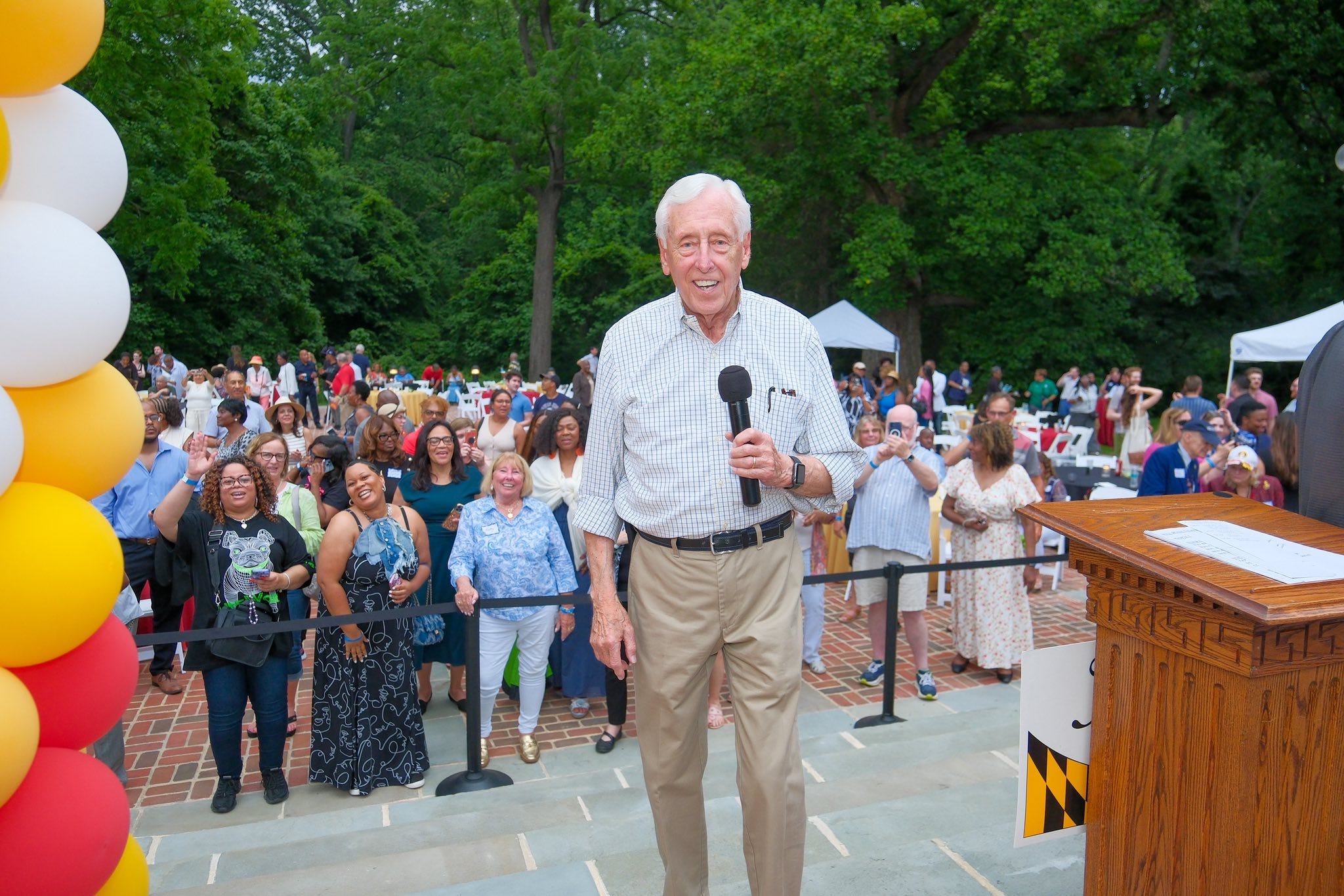
Rep. Steny Hoyer’s decision not to seek reelection means that Maryland’s 5th Congressional District will have its first new representative in over four decades, and several local Democrats could take advantage of this rare opportunity.
But while there’s little question that Hoyer’s longtime constituency, which stretches from the Washington suburbs to the southwestern tip of the state, will remain safely Democratic territory, it could look quite a bit different this fall—both geographically and demographically.
Gov. Wes Moore has not given up trying to pass a new congressional map to counter Republican gerrymandering in other states, despite the continuing opposition of Senate President Bill Ferguson, a fellow Democrat. If Moore wins out, though, a new map could make the 5th, which currently has a small white plurality, into a majority-Black district.
For now, though, Hoyer’s would-be successors have just under seven weeks to decide whether they want to run for Congress ahead of the Feb. 24 candidate filing deadline. The primary is set for June 23.
Del. Nicole Williams confirmed she would “think seriously” about whether to run in an interview with Maryland Matters conducted just hours after news of Hoyer’s retirement broke on Wednesday evening.
The site also mentions Del. Adrian Boafo and Bowie Mayor Tim Adams as possible candidates, while Washington Informer includes Prince George’s County Councilmember Wala Blegay and Anne Arundel County Executive Steuart Pittman on its list.
Two contenders, though, launched campaigns last year rather than waiting to see whether Hoyer would retire. One was public safety consultant Harry Jarin, who is five decades younger than the 86-year-old incumbent. At the time of his kickoff, he told Politico, “I want Democrats to win, and there are consequences for having this gerontocracy.”
But while Jarin’s decision to run against Hoyer, who spent two decades as the number-two Democrat in the House, attracted national attention, he had just over $80,000 on hand at the end of September. (Reports covering the final three months of 2025 are due on Jan. 31.)
Healthcare executive Quincy Bareebe, by contrast, finished the third quarter of September with about $500,000 available, with almost all of that haul coming from the candidate. Bareebe, who lost the 2024 primary to Hoyer in a 72-10 landslide, responded to the congressman’s retirement by affirming she was running again.
Whoever ultimately succeeds Hoyer will replace a man who, even though he never obtained his longtime dream to become speaker of the House, spent decades as one of the most powerful politicians in both Maryland and in Congress.
Hoyer, as he told his colleagues Thursday in an address to the chamber, experienced what he called his “road to Damascus” in 1959 as a student at the University of Maryland in College Park when Massachusetts Sen. John F. Kennedy addressed the school’s spring convocation.
Hoyer recounted that the soon-to-be-president’s words left him “deeply inspired” and convinced him to change his major from business to political science. Hoyer would go on to serve as a staffer for Sen. Daniel Brewster, and it was in that capacity that he began working with Nancy Pelosi, herself a native of Baltimore.
The pair initially chose different paths, however. Hoyer was elected to the Maryland Senate in 1966 at the age of 27, while Pelosi moved across the country to California, becoming a top fundraiser and eventually state party chair. And while Pelosi initially had no desire to serve in elected office, Hoyer, as the Washington Post’s Paul Kane writes, wanted to be elected governor and later a U.S. senator.
Hoyer rose to become leader of the state Senate in 1975, but he stumbled on his next attempt to climb the political ladder. Hoyer initially planned to run for governor in 1978, but he instead ended up joining acting Gov. Blair Lee’s ticket as his running mate ahead of the primary. Lee, however, narrowly lost the nomination, a defeat that also meant that Hoyer had to leave the legislature. He remained in public life, though, by accepting an appointment to the State Board for Higher Education soon after.
Hoyer still held that post in the fall of 1980 when Democratic Rep. Gladys Spellman suffered a heart attack and fell into a coma on Halloween. Voters in the 5th Congressional District reelected Spellman days later, but her doctors concluded early the next year that she would never regain consciousness. (Spellman never did and died in 1988.)
The House declared her seat vacant, the only time it has ever taken such an action for medical reasons. Hoyer was one of more than 30 candidates who ran in the ensuing special election.
Hoyer outpaced Spellman’s husband, Reuben Spellman, 30-27, in a 19-way Democratic primary before he prevailed 55-44 against a Republican backed by the Reagan White House. The new congressman quickly became entrenched, though. His only single-digit victory came in 1992 when he defeated future Gov. Larry Hogan 53-44 following a round of redistricting.
Hoyer focused on rising in the leadership of the House, which Democrats had controlled since the 1954 elections, and he secured the fourth-ranking spot in 1989 when he became caucus chairman. Hoyer, though, had broader ambitions. When an interviewer asked if he wanted to become speaker one day, he responded, “Would you believe me if I said anything other than that? Of course not.”
But Hoyer’s hopes for advancement were first dashed in 1991 when Michigan’s David Bonior defeated him in the race to become majority whip. The GOP’s 1994 sweep represented another major setback, but Hoyer hoped that Democrats would soon regain the majority and give him another chance to rise to the top.
Hoyer, however, wasn’t the only one with that goal. Both Pelosi, who had been elected to the House in 1987, and Rep. John Lewis, the civil rights leader from Georgia, aspired to obtain a leadership post the next time one became available. Lewis ultimately gave up his quest in 2000, but everyone recognized that a Hoyer-Pelosi showdown was looming. The only question was when.
Their confrontation finally came in the fall of 2001 when Bonior, who was likely to lose his seat under a new GOP-drawn map, stepped down as whip to wage an unsuccessful campaign for governor.
Pelosi and Hoyer competed to replace him as the number-two Democrat in an unpredictable race in which every vote counted, including from members who usually lacked a vote in the House.
One such member was Robert Underwood, a delegate from Guam who was back home attending a funeral. According to SFGate, Underwood chartered a plane at his own expense so that he could travel to Tokyo and from there onto Washington in time to vote.
Unfortunately for Hoyer, Underwood made that prolonged journey so he could cast a ballot for Pelosi, who prevailed 118 to 95 and became the first woman to hold such a high leadership post in Congress.
There was less drama the next year when House Minority Leader Dick Gephardt stepped aside to wage an ultimately unsuccessful presidential campaign. Pelosi easily succeeded him as Democratic leader, while Hoyer won his third whip race without opposition. Soon enough, though, he would face another rival.
The Democratic wave of 2006 set Pelosi up to become the first woman to ever serve as speaker, but she did not want Hoyer to be her second-in-command as majority leader, reportedly because she questioned his loyalty. This time, though, Hoyer outmaneuvered Pelosi and defeated her pick, Pennsylvania Rep. John Murtha.
“I can’t be successful without Nancy, and I like to think Nancy can’t be as successful without me,” Hoyer told Roll Call the following year as the two sought to put their old fights behind them. The pair, along with Rep. Jim Clyburn of South Carolina, would spend the following 16 years as the top three members of the Democratic leadership, both when their party was in the majority and in the minority.
The longtime triumvirate finally stepped down in 2022, though, after the GOP narrowly regained control of the House, and were replaced by the new team of Hakeem Jeffries, Katherine Clark, and Pete Aguilar.
Unusually, the now-former leaders remained in the House and all won another term in 2024, but Pelosi announced late last year that she would retire. Hoyer followed suit this week, while Clyburn has yet to announce his own plans.

4Q Fundraising
NE-Sen: Dan Osborn (I): $762,000 raised
IA-Gov: Rob Sand (D): $9.5 million raised (in 2025), $13.2 million cash on hand; Randy Feenstra (R): $4.3 million raised (in 2025)
NE-Gov: Jim Pillen (R-inc): $7.6 million raised (in 2025), $10 million cash on hand
SC-Gov: Pamela Evette (R): $1 million raised
WI-Gov: Tom Tiffany (R): $2 million raised (reporting period covers last half of 2025; Tiffany launched campaign in late September)
MI-04: Sean McCann (D): $250,000 raised
NH-01: Maura Sullivan (D): $520,000 raised, $1.1 million cash on hand; Stefany Shaheen (D): $400,000 raised
NY-21: Anthony Constantino (R): $5 million self-funded
PA-07: Ryan Crosswell (D): $440,000 raised
TX-19: Tom Sell (R): $725,000 raised
VA-01: Shannon Taylor (D): $400,000 raised
WI-03: Rebecca Cooke (D): $1.1 million raised, $2.5 million cash on hand
IA-AG: Nate Willems (D): $725,000 raised (in 2025), $535,000 cash on hand
Governors
GA-Gov
Former Georgia state Rep. Stacey Abrams, who was the Democratic nominee for governor in both 2018 and 2022, announced on Thursday that she would not try a third time.
Democrats, though, have a packed field of candidates in the open governor’s race. The field includes former Atlanta Mayor Keisha Lance Bottoms; former Lt. Gov. Geoff Duncan; former state Sen. Jason Esteves; state Reps. Derrick Jackson and Ruwa Romman; and Michael Thurmond, who served as DeKalb County’s chief executive officer.
A large number of Republicans are also vying to succeed term-limited GOP Gov. Brian Kemp, among them Secretary of State Brad Raffensperger, Lt. Gov. Burt Jones, Attorney General Chris Carr, and businessman Clark Dean.
Both parties will host primaries on May 19, with a runoff between the top two vote-getters on June 16 if no one obtains a majority in the first round.
House
CA-06
West Sacramento Mayor Martha Guerrero just became the fourth notable Democrat to join the race for California’s 6th Congressional District, a blue-leaning seat that’s now open because Democratic Rep. Ami Bera opted to seek reelection in the redrawn 3rd District instead.
Guerrero joins Sacramento County District Attorney Thien Ho, former state Sen. Richard Pan, and Lauren Babb Tomlinson, who has worked as an official at Planned Parenthood. But state Sen. Angelique Ashby, who recently became majority leader, told Politico on Thursday that she would not run for Congress.
Republicans have yet to land a candidate, but Rep. Kevin Kiley, who was elected to the previous (and much redder) version of the 3rd, has held out the possibility of running in the 6th instead. Candidates must file for the June 2 top-two primary by early March.
CA-14
Democrat Melissa Hernandez, who is president of the board of the Bay Area Rapid Transit system, has joined the race for California’s safely blue 14th District, which is open because Rep. Eric Swalwell is running for governor.
In 2020, Hernandez earned Swalwell’s support when she successfully ran for mayor of the city of Dublin against a fellow Democrat. The congressman has not, however, endorsed anyone in the race to succeed him.
Last cycle, another BART board member, Democrat Lateefah Simon, won the neighboring 12th District following Rep. Barbara Lee’s unsuccessful bid for Senate.
CA-26
Rep. Julia Brownley, who made her way to Congress after flipping a Republican seat in Southern California in 2012, announced on Thursday that she would not seek an eighth term.
Assemblymember Jacqui Irwin was the first to act following news of Brownley’s decision, filing paperwork with the FEC and telling Politico, “I am the most obvious person to run for that seat.”
Other would-be candidates, though, are likely to disagree with that sentiment and consider bids for the 26th District, a constituency based just north of Los Angeles in Ventura County. Democrats will be favored to hold the district, which shifted slightly to the left under California’s new map and would have voted for Kamala Harris by a 56-41 margin, according to data hosted by Dave’s Redistricting App.
That wasn’t always the case, however. Brownley, who was elected to the state Assembly in 2006, first ran for Congress six years later during an election cycle that saw two major shakeups in Golden State politics: the adoption of a new “top-two” primary system and the implementation of a map drawn for the first time by an independent commission rather than the legislature.
She wasn’t expected to run at all, though. Ventura County Supervisor Steve Bennett had looked like the Democratic frontrunner after Republican Rep. Elton Gallegly opted to retire rather than seek reelection in the revamped 26th District, which had become much bluer as a result of redistricting.
Bennett, though, unexpectedly dropped out just a few months after launching his campaign and cited a concern that would soon play a major role in the race: the possibility that a pair of Republicans would win the primary, locking Democrats out of the general election.
That decision prompted Brownley to enter the race, and much of the party quickly consolidated around her. However, the field featured two high-profile Republicans, Ventura County Supervisor Linda Parks and state Sen. Tony Strickland, while Brownley was sharing the ballot with three other lesser-known Democrats.
That array—four Democrats piled up against just a pair of Republicans—prompted deep fears that Parks and Strickland could both advance out of the primary, particularly after the iconoclastic Parks announced she was ditching the GOP label to run as an independent.
To avoid such a disaster, which would have amounted to giving away a major pickup opportunity, Democrats in Washington, D.C., took the unusual step of intervening directly in the primary. The House Majority PAC, which at the time was brand new, wound up spending more than $700,000 on TV ads and mailers bashing Parks and boosting Brownley.
The effort worked, and Parks herself may have helped by running a bizarre campaign that featured what we dubbed “the weirdest TV ad of the cycle (so far),” a painfully low-budget spot that ended with the candidate declaring, apropos nothing, that “my favorite ice cream is ... rocky road!”
In the end, Strickland took first place with 47% of the vote and Brownley nabbed the second spot with 26%, while Parks finished with 18% and the remaining Democrats split the rest of the vote. Following an expensive general election battle, Brownley emerged on top with a 53-47 win in November.
Two years later, though, Democrats again grew concerned about the 26th District, but for more prosaic reasons. A favorable political environment for Republicans in 2014 helped put Brownley’s seat in play, but she held off Republican Assemblymember Jeff Gorrell with a narrow 51-49 victory.
Thereafter, Brownley grew entrenched, winning her next three races with more than 60% of the vote. After her district moved a few points to the right, though, with the round of redistricting that followed the 2020 census, it looked like she might again be vulnerable in the most recent midterms. However, she turned in a 55-45 win and likewise won her final campaign comfortably in 2024.
MT-01
Ryan Busse, a former firearms executive turned gun safety activist, jumped into the race for western Montana’s 1st Congressional District on Thursday, making him the second high-profile Democrat to do so this week.
Busse, who unsuccessfully ran for governor in 2024, told the Daily Montanan that he decided to run after seeing a late November poll from Tulchin Research that gave him a 47-43 lead over Republican Rep. Ryan Zinke. Busse said he did not pay for the poll, though it’s not clear who did.
Two days earlier, smokejumper Sam Forstag joined the contest for the Democratic nod, which also includes rancher Matt Rains. Donald Trump carried the 1st District by a 54-43 margin in 2024, according to calculations by The Downballot.
NJ-11
Maplewood Township Committeeman Dean Dafis has dropped out of the Feb. 5 Democratic primary in the special election for New Jersey’s vacant 11th Congressional District, though the New Jersey Globe says his name will still appear on the ballot.
A huge crowd of Democratic candidates is still vying to succeed Gov.-elect Mikie Sherrill, with no fewer than a dozen names in the mix. The winner of the primary will be the heavy favorite in the April 16 general election.
PA-07
Businessman Aiden Gonzalez, who’s also a leader of the Lehigh Valley Young Democrats, has entered the busy race to take on first-term Republican Rep. Ryan Mackenzie in Pennsylvania’s swingy 7th District. At least five other notable Democrats are also running.
Secretaries of State
GA-SoS
Fulton County Commissioner Dana Barrett announced Thursday that she would seek the Democratic nomination for secretary of state, a post that Republican incumbent Brad Raffensperger is giving up to run for governor.
“Georgia’s next secretary of state will be the one who counts the votes for president in 2028,” Barrett said. “Donald Trump and his antidemocracy billionaire donors know that. And that’s why they’ll do everything they can to win this race.”
Barrett, whose county includes most of Atlanta and many nearby communities, attracted attention last year when she and fellow Commissioner Mo Ivory refused to confirm two nominees to the county’s election board who had advanced election conspiracy theories.
A judge responded by ordering their confirmation and imposed a $10,000 a day fine on both commissioners until they assented. However, the Atlanta Journal-Constitution says the sanction is on hold as the county appeals the decision.
Barrett joins former Judge Penny Brown Reynolds, who launched her campaign in September, and two other Democrats in the May 19 primary. Candidates need to win a majority to avoid a June 16 runoff.

Three serious GOP contenders were already running to become this swing state’s chief elections officer: Gabriel Sterling, a former top deputy for Raffensperger; state Rep. Tim Fleming, a former chief of staff to Kemp; and businessman Kelvin King.
Ballot Measures
MA Ballot
Election officials in Massachusetts confirmed last month that the campaign to bring top-two primaries to the state had turned in the 74,574 valid signatures necessary to advance the plan. There are a few steps left, though, before voters can get the chance to approve or reject the proposed initiative.
The legislature now has until May 6 to decide whether to pass the proposal. If lawmakers don’t greenlight the measure by the deadline, proponents will need to gather an additional 12,429 signatures to place it on the November ballot.
Under their plan, which is in use in California and Washington state, all candidates would compete on one primary ballot rather than in separate partisan primaries. The two candidates with the most votes, regardless of party, would then advance to the general election.
This is not the first recent attempt to overhaul how elections work in Massachusetts. A 2020 ballot measure would have introduced ranked-choice voting to both party primaries and general elections, but Bay Staters rejected it 55-45.
Voters in seven other states likewise spurned proposals in 2024 that would have revamped their election systems in various ways, including replacing party primaries with top-four or top-five primaries and implementing ranked-choice voting. A plan to bring ranked-choice voting to Washington, D.C., however, did pass overwhelmingly.
And Massachusetts is not the only state that could decide whether to implement top-two primaries this year. A similar campaign in Oklahoma has until Jan. 26 to submit the roughly 126,000 valid signatures necessary to place its plan on the November ballot.
OR Ballot
Gov. Tina Kotek on Wednesday urged fellow Democrats in the state legislature to entirely repeal a transportation funding plan that conservatives are trying to partially repeal with a referendum this fall.

The targeted provisions of the law, known as House Bill 3991, were frozen last month when its critics turned in signatures to force a repeal vote. Kotek has argued that the development has deprived the Oregon Department of Transportation of vital funding, saying that lawmakers need to take action to resolve the situation when they reconvene next month.
“Leaving the law in place forces ODOT to bear implementation costs without new resources, prolongs instability, and delays the real conversation we need to have about long-term solutions,” said the governor.
Kotek, who described her approach as “redirect, repeal, and rebuild,” said that revisiting the matter was necessary to fund “core to operations and maintenance.” The governor, who is up for reelection this November, added that lawmakers should devise a new plan next year.
But while Republicans have demonized much of HB 3991, they don’t want to see the entire thing done away with, as Kotek now wants.
GOP state Rep. Ed Diehl, one of the leaders of the repeal effort, told Oregon Public Broadcasting last month that he and his allies favor a provision that removes an existing requirement for tolls around Portland, saying, “There’s all the language the truckers have fought for. That’s a tough move for them politically to backtrack on everything.”
Mayors & County Leaders
Los Angeles, CA Mayor
Spencer Pratt, a reality TV show star who has a large social media following, announced Wednesday that he would challenge Los Angeles Mayor Karen Bass.
Pratt, a Republican, has generated attention by loudly criticizing Bass and other California Democrats over their response to last year’s devastating wildfires and the long rebuilding process. Pratt, who lost his home, is seeking to become the first Republican to lead this loyally blue city since the late Richard Riordan left office in 2001.
Pratt joins former investment banker Austin Beutner, a Democrat who previously served as Los Angeles’ schools chief, and Rae Huang, a housing activist who is a member of the Democratic Socialists of America, in the officially nonpartisan June 2 primary. Candidates need to win a majority of the vote to avoid a runoff in the fall.
Poll Pile
IL-Sen (D): Emerson College for WGN-TV: Raja Krishnamoorthi: 31, Juliana Stratton: 10, Robin Kelly: 8, undecided: 46, others 2% or less.
IL-Gov (R): Emerson: Darren Bailey: 34, Ted Dabrowski: 8, James Mendrick: 5, undecided: 46, others 2% or less
IL-02 (D): Global Strategy Group (D) for Donna Miller: Jesse Jackson Jr.: 24, Donna Miller: 9, Yumeka Brown: 9, Willie Preston: 6, Robert Peters: 5, Patrick Keating: 2, undecided: 44. The poll was in the field Dec. 1-3.
NY-01: Public Policy Polling (D) for House Majority PAC: Nick LaLota (R-inc): 41, Chris Gallant (D): 38. The poll was in the field Dec. 10-11.
This item has corrected Mikie Sherrill’s title. She is currently the governor-elect and will be sworn in on Jan. 20.
JUST IN: The U.S. economy added only 50,000 jobs in December and a meager 584,000 jobs in all of 2025. That’s the worst year for job gains outside of a recession since 2003. And nearly 85% of the job gains happened by April. There was little hiring the rest of the year.
Unemployment rate: 4.4% in December, up from 4% in January.
Wages: 3.8% wage growth in 2025, which is above ~3% inflation.
#jobs
https://x.com/byHeatherLong/status/2009620984811102333
https://x.com/i/status/2009676762871967947
Louise Lucas is not fucking around