



Leading Off
NC State Senate
North Carolina’s most powerful Republican faces the toughest primary of his long career next month, just two years after a surprising number of his counterparts in other states went down to defeat in similar circumstances.
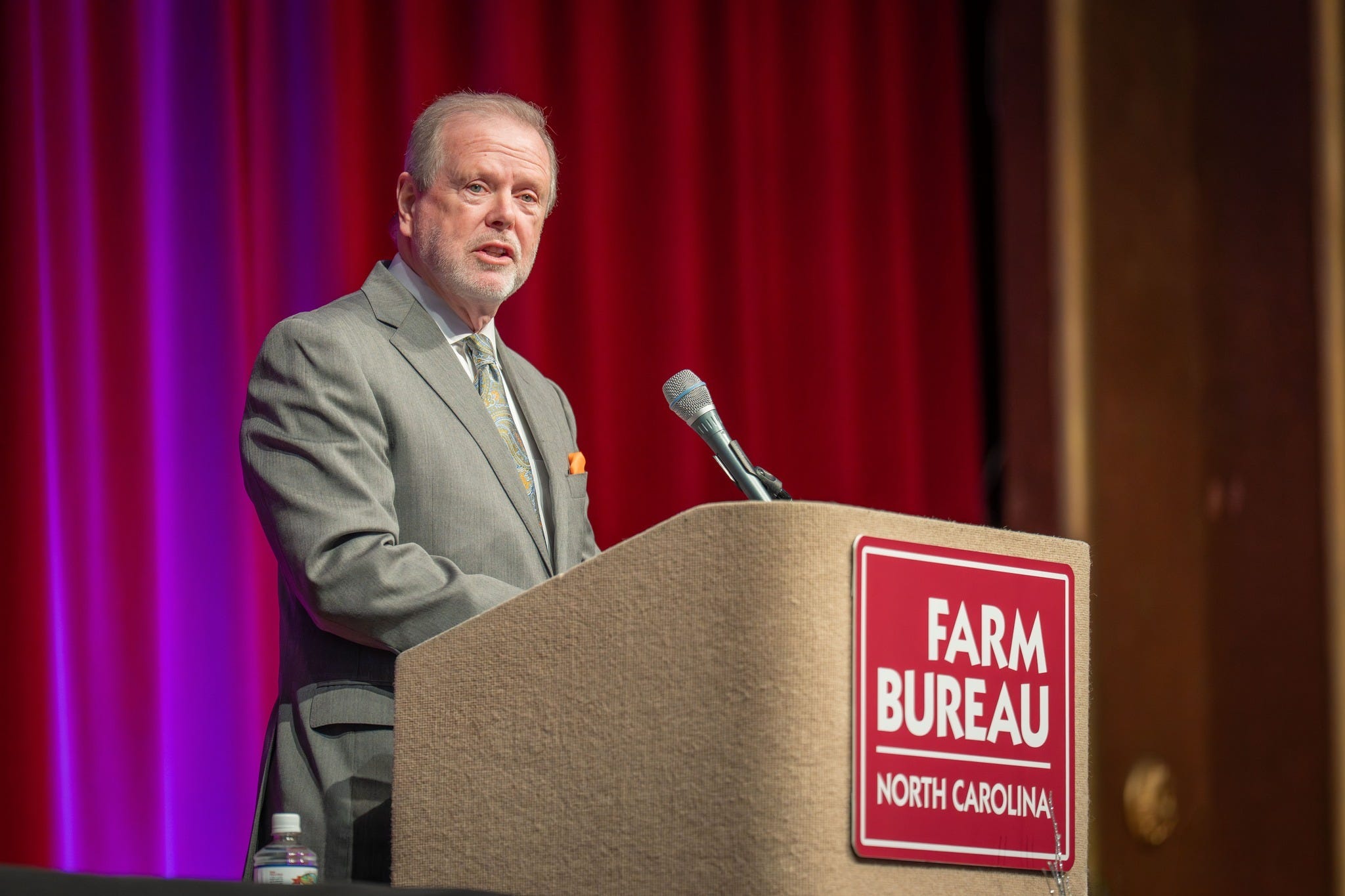
Phil Berger, who ascended to the top job in the state Senate after Republicans swept the 2010 midterms, is squaring off against Rockingham County Sheriff Sam Page in a nationally watched election that will have an outsized impact on the future of the state.
Berger, whose official title is president pro tempore, has Donald Trump’s endorsement and a huge financial advantage in the March 3 primary for the 26th District, a reliably red constituency that includes several communities around Greensboro and a small portion of the city.
Page, though, is hoping to benefit from the same sort of backlash against the establishment that doomed legislative leaders from coast to coast in 2024.
That year, Democratic primary voters in Delaware and Hawaii denied renomination to the speakers of their respective state houses, while Republicans in Idaho, Oklahoma, and West Virginia did the same to the current or incoming leaders of their state senates.
Texas House Speaker Dade Phelan almost joined this ignominious roster as well, but he survived an expensive assault to fend off a Trump-backed GOP primary foe by just 389 votes. Phelan, though, was still forced to give up his gavel after he realized he couldn’t defeat a hardline opponent in the vote for speaker, and he later decided not to seek reelection to the legislature this year.
None of these now-former legislative leaders, however, had the kind of longevity or influence that Berger enjoys.
The North Carolinian, who was first elected to the Senate in 2000, became minority leader four years later at a time when Democrats still dominated state government. But Berger, as Kevin Maurer detailed in a 2021 profile for The Assembly, was determined to make sure that Tar Heel Republicans, who usually prevailed in federal contests, also took power at home.
Berger’s long wait came to an end in 2010 when the same wave that buoyed the GOP nationally gave Republican control of both chambers of the North Carolina legislature for the first time since 1870.
Democratic Gov. Bev Perdue was able to prevent Berger and his counterpart, Speaker Thom Tillis, from being able to carry out their entire hardline agenda, but Republicans got their way on an issue Perdue lacked the power to veto.
The two leaders quickly worked to lock in their new majorities by passing the first of what would be many gerrymanders over the ensuing decade and a half. Those ever-changing lines have allowed Republicans to maintain control of both chambers every two years, no matter how good or bad the political climate is for the GOP in this light-red state.
Those aggressive gerrymanders have also frequently given Republicans the three-fifths supermajorities in both chambers they need to override vetoes from Democratic governors and consolidate ever more power for themselves. And even when Republicans are just short of that threshold, they’ve sometimes been able to get their way by convincing wayward Democratic legislators to side with them.
As governors and House speakers have come and gone, Berger has remained president pro tempore without interruption since 2011. But while Berger doesn’t want to give up his influential office anytime soon, he now faces a primary opponent who thinks he’s overstayed his welcome.
Page has highlighted Berger’s support for a 2023 plan to build a casino in Rockingham County, a proposal that stirred up ardent opposition from residents who argued it would make life worse for their community.
While the casino, which detractors also complained should have been subject to a referendum, was never built, the backlash almost cost Berger’s son Kevin his seat on the county commission. (Berger’s other son, Phil Jr., sits on the state Supreme Court, which has greenlit countless GOP power grabs.)
Page, who was first elected sheriff in 1998, has also made a name for himself well outside Rockingham County as an ardent supporter of immigration restrictions. Trump, in his December post endorsing Berger, even wrote that “Sam Page is GREAT” before lamenting that “I really want him to come work for us in Washington, D.C., rather than further considering a run against Phil.”
And while Rockingham makes up just over 40% of the 26th District, Page has reason to be optimistic about his appeal in the district’s second and far larger county. In the 2024 primary for lieutenant governor, the sheriff carried Guilford County, which is partially located in the 26th, even as he came in fifth place statewide. He also took more votes in Rockingham than his 10 opponents put together.
Page is getting some assistance from dark money groups that do not need to disclose their donors, though North Carolina Newsline’s Bob Hall recently reported that it’s not clear how much they’re spending. But while Berger has accused Democrats of financing the effort to oust him, Hall says that the outfits in Page’s corner mainly appear to be funded by conservatives.
Berger, meanwhile, is using every advantage he has to turn back his challenger.
Two months before Berger picked up Trump’s endorsement late last year, the legislature passed a new congressional gerrymander intended to flip Democratic Rep. Don Davis’ 1st District. CBS 17 reported in September that Trump had conditioned an endorsement on Berger championing the new map, but the lawmaker denied any quid pro quo with the White House.
Berger’s extensive connections in state and national politics have also allowed him to massively outraise the challenger. The incumbent ended last year with almost $1.6 million in the bank, compared to a mere $29,000 for Page.
Berger has used his huge war chest to dominate the airwaves, though not everyone thinks the strategy is benefiting him. The New York Times’ Eduardo Medina wrote last week that Berger has aired so many commercials that some voters have complained that “the volume felt worse than a presidential election year, which is saying a lot for swing state residents.”
That money might be getting squandered in more ways than one. Medina noted that some Republicans are afraid that Berger is diverting cash that his caucus will need to defend vulnerable incumbents in the fall.
Democrats would be delighted if those worries became reality. While Republicans are unlikely to lose control of either chamber thanks to their turbocharged gerrymanders, Democrats are hoping to net the one Senate seat they need to take away the GOP’s 30-20 supermajority.
Democrats are also determined to prevent the GOP, which controls the lower chamber 71-49, from flipping the one seat they’d need for a three-fifths supermajority in the state House. As noted above, though, Republicans have often been successful in peeling off certain Democrats to help override Gov. Josh Stein’s vetoes.
That problem is also of more immediate concern to Stein and his allies. The governor is supporting pastor Rodney Sadler’s primary campaign against state Rep. Carla Cunningham, who gave Republicans the vote they needed this summer to pass a law requiring local law enforcement officials to expand their cooperation with ICE.
But while Sadler’s campaign against Cunningham has drawn national interest—Jacob Biba recently took a detailed look at this contest for Bolts—a loss for Berger would resonate at the highest levels of U.S. politics.
March 3 marks the start of the six-month-long 2026 primary season, so an early defeat for such a powerful Trump-backed candidate would set off new and unwelcome questions about the power of Trump’s “complete and total endorsement.”
David Nir here, and I’m very pleased to let you know that I’ve signed on as the co-host of the brand-new podcast run by my good friend G. Elliott Morris, who runs the seminal polling analysis site Strength In Numbers.
You can find our latest episode right here. Every Thursday at 2 PM ET, we carefully dissect the latest polls and skewer the conventional wisdom. The best part? It’s a live show—and if you’re a paid subscriber, you can ask us questions in real-time. Just upgrade below to participate in our Q&A each week!

Redistricting Roundup
NY Redistricting
A New York appeals court ruled on Thursday that the state’s redistricting commission could resume drawing a new congressional map, as ordered last month by a lower court.
That January directive was automatically stayed when Republican Rep. Nicole Malliotakis, whose Staten Island-based 11th District is at issue in the case, filed an appeal, prompting the commission to halt its work.
Malliotakis has also asked the U.S. Supreme Court to intervene, arguing that the lower court’s order to draw a district where Black and Latino voters could collectively elect the candidate of their choice would require the creation of an unconstitutional racial gerrymander.
VA Redistricting
A judge in a deep-red county in southwestern Virginia issued a ruling on Thursday halting the April 21 vote on whether the state should adopt a new congressional map drawn by Democrats, saying that Republicans were likely to succeed in their arguments that the legislature had failed to follow proper procedures in putting the amendment before voters.
The order bars officials from making any further preparations for the election, for which early voting was set to begin on March 6. Democrats, however, immediately said they would appeal.
Late last month, the same judge, Jack Hurley of the Tazewell County Circuit Court, issued a similar but much narrower ruling. The state Supreme Court soon clarified that the election could proceed, given the limited scope of Hurley’s original order.
House
AZ-01
State Rep. Joseph Chaplik said Thursday that he would resign from the Arizona legislature next week to concentrate on his campaign for the swingy 1st Congressional District, where he faces a difficult battle in the GOP primary.
Chaplik, a leader of the state’s branch of the far-right Freedom Caucus, is going up against two serious intraparty opponents on July 21 for the seat that GOP Rep. David Schweikert is giving up to run for governor.
The frontrunner is arguably Jay Feely, a former Arizona Cardinals kicker who has Donald Trump’s support.
Feely shared that endorsement with former state GOP chair Gina Swoboda until last week, but everything changed Friday when Swoboda, whom hardliners like Chaplik attacked as “a recent Hillary Clinton supporter,” announced she would run for secretary of state rather than keep campaigning for the 1st.

Wealthy businessman John Trobough is also seeking the GOP nod to replace Schweikert in a district that Trump carried 51-48.
Five notable Democrats are campaigning to flip this constituency in the Phoenix suburbs. Unlike on the GOP side, though, there is no obvious favorite five months out from the primary.
FL-19
An obscure outside group called Southwest Florida First has begun airing ads trashing former Rep. Chris Collins as a “New York liberal who was in Congress, got busted for insider trading, and then went to prison.”
It’s unclear who is behind this organization or how much it’s spending on this ad campaign, which comes six months before the Aug. 18 primary for Florida’s open and safely red 19th District.
But while the outfit hasn’t said whether it’s backing anyone in particular, it not very subtly hinted it has more targets in mind. A longer version of its commercial blasts Collins as one of “a bunch of other carpetbaggers trying to buy our seat in Congress.”
Collins, a longtime New York politician who represented the Buffalo area in Congress from 2013 until he resigned in disgrace in 2019, is one of five candidates who’ve waged bids for the House in other states.
His many opponents include former Rep. Madison Cawthorn, who lost renomination in North Carolina in 2022; former Illinois state Sen. Jim Oberweis, a dairy magnate whose many failed campaigns long ago earned him the nickname “Milk Dud;” Catalina Lauf, a former Trump administration official who lost to Oberweis during one of her two unsuccessful House bids back in the Land of Lincoln; and Ola Hawatmeh, a fashion designer who lost a 2020 primary in New York.
Jim Schwartzel, a wealthy businessman whose company owns several conservative radio and TV stations, is running as well. Unusually, it does not appear that he has sought office outside of Florida.
IL-02
Democratic Rep. Jan Schakowsky said Thursday that she was rescinding her primary endorsement of Cook County Commissioner Donna Miller because of the extensive support Miller has received from AIPAC in her campaign for Illinois’ open 2nd District.
Schakowsky, whose 9th District is located several districts to the north of the constituency Miller wants to represent, issued her endorsement at the end of January. The following week, though, an obscure group called Affordable Chicago Now began airing ads promoting Miller in the packed primary for the seat that Democratic Rep. Robin Kelly is giving up to run for the Senate.
Multiple media outlets reported that AIPAC was funding Affordable Chicago Now, which has spent close to $900,000 to aid Miller. The candidate has also received a similar sum in direct contributions from people who have donated to the hawkish pro-Israel group.
Schakowsky told the Chicago Sun-Times on Thursday that the reported intervention of AIPAC, which receives much of its funding from conservative donors, had led her to reevaluate her endorsement.
“Illinois deserves leaders who put voters first, not AIPAC or out-of-state Trump donors,” Schakowsky said. “I cannot support any candidate running for Congress who is funded by these outside interests.”
Miller, for her part, argued that she wasn’t getting support from “MAGA donors.”
“People are contributing to my campaign because I have a strong record,” she told the Sun-Times earlier this month. “And who’s talking about these other issues? I haven’t heard anyone talk about it until my opponents realize that they’re losing and they want to attack me.”
NY-12
A pro-AI outside group is up with ads defending Assemblymember Alex Bores from ads from a rival pro-AI outside group.
The new commercials come from Jobs and Democracy PAC, which is linked to an organization funded by the AI company Anthropic. CNBC, though, notes that Anthropic has been one of the rare major players in the industry to call for more regulation.
The PAC’s spot, which is backed by $450,000, argues that Bores is being attacked because he’s the Democrat who opposed “right-wing billionaires.” The commercial, which pledges that Bores will “stand up to ICE,” does not mention AI or other related topics.
Bores, one of the many candidates competing in the June 23 primary for New York’s open 12th District, was the subject of a very different kind of ad last month.
Think Big PAC launched a $1 million ad campaign attacking Bores, who spearheaded a major AI safety bill last year. The spot, however, attacked him over his work for the surveillance firm Palantir Technologies—even though one of the PAC’s top donors was a Palantir founder.
Think Big is an affiliate of Leading the Future, a network of pro-AI super PACs that are pushing for looser regulations. Its major funders include Joe Lonsdale, a prominent Donald Trump supporter who co-founded Palantir.
TX-32
Wealthy businessman Paul Bondar, who unsuccessfully ran for Congress in Oklahoma in 2024, is now airing an ad faulting his main GOP primary opponent for living too close to … Oklahoma.
“Jace Yarbrough lives two hours outside of our district and has accepted nearly $1 million in dark money,” Bondar’s narrator tells voters in Texas’ 32nd District. That attack is accompanied by on-screen text saying that Yarbrough resides “Near Oklahoma.”
The rest of the commercial praises Bondar as someone who “lives in the district, is funding his own campaign, and is the conservative choice for Congress.”
But Bondar isn’t every conservative’s choice for Congress. Both Donald Trump and Gov. Greg Abbott are supporting Yarbrough in the March 3 primary for a constituency that the GOP-dominated legislature completely overhauled when it passed a new gerrymander last summer.
Ballot Measures
NE Ballot
A key Republican lawmaker tells the Nebraska Examiner he remains opposed to GOP Gov. Jim Pillen’s newest push to undo a state law that awards presidential candidates an electoral vote for each congressional district they carry.
Last month, Pillen called on the unicameral legislature to place a constitutional amendment on the November ballot to adopt the same “winner-take-all” system that’s in use in every other state but Maine.
But while Republican members occupy 33 of the Senate’s 49 seats—the exact number required to overcome an all but certain filibuster by Democrats—state Sen. Merv Riepe says he won’t help.
Riepe, who sided with the Democratic minority last year to keep the status quo in place, instead told the Examiner that such a switch shouldn’t be discussed before 2028. He also noted that a conservative group is trying to collect signatures to place a similar measure on this year’s ballot, citing that effort as another reason why legislative action isn’t necessary.
Legislatures
WI State Assembly
Wisconsin Assembly Speaker Robin Vos said Thursday that he would not seek reelection this fall, an announcement that comes ahead of an election in which Democrats are trying to flip the chamber for the first time since the 2010 GOP wave.

Vos became speaker following the 2012 elections and spent the first portion of his record 14 years in power advancing GOP Gov. Scott Walker’s hardline agenda. After Scott lost in an upset to Democrat Tony Evers in 2018, Vos pivoted to oppose the new governor however and whenever he could.
Vos, though, found himself on Trump’s enemies list after he refused to help him overturn Joe Biden’s 2020 victory in the state. The speaker narrowly held off a Trump-backed primary opponent in 2022, and conservatives unsuccessfully tried to collect enough signatures to force a recall vote against him in 2024.
Republicans hold a 54-45 majority, but thanks to un-gerrymandered lines that were first imposed by the state Supreme Court ahead of the 2024 elections, Democrats have a chance to secure a majority this fall.
Other Races
FL Chief Financial Officer
GOP state Rep. Kevin Steele said Thursday that he was abandoning his primary campaign against Florida Chief Financial Officer Blaise Ingoglia and would seek reelection to the legislature instead. Steele also endorsed Ingoglia on his way out.
Ingoglia had long been preparing for a tough primary campaign to defend the office Gov. Ron DeSantis appointed him to this summer, but he now faces only minor opposition.
Poll Pile
MA-Sen: Cygnal (R) for John Deaton: Ed Markey (D-inc): 54, John Deaton (R): 30.
NE-Sen: Impact Research (D) for Dan Osborn: Pete Ricketts (R-inc): 48, Dan Osborn (I): 47.
AZ-Gov: Center for Excellence in Polling for the Foundation for Government Accountability:
Katie Hobbs (D-inc): 50, Andy Biggs (R): 41.
Hobbs (D-inc): 51, Dave Schweikert (R): 38.
The Foundation for Government Accountability is a conservative think tank.
MI-Gov: Impact Research (D) for Jocelyn Benson: Jocelyn Benson (D): 39, John James (R): 36, Mike Duggan (I): 20.
CA-48 (top-two primary): Public Policy Polling (D) for Equality PAC (pro-Marni von Wilpert): Darrell Issa (R-inc): 40, Ammar Campa-Najjar (D): 18, Brandon Riker (D): 8, Marni von Wilpert (D): 7, undecided: 28.
NC-Sen: Cooper up 50-40.
https://changeresearch.com/north-carolina-voters-february-2026/
Tariffs imposed under the Emergency Economic Powers Act of 1977 struck down by Supreme Court in a 6-3 vote.
Of course, the conservative 3 in the majority rely on the totally made up "major questions" doctrine. While the liberal 3 in the majority say traditional statutory construction clearly indicates that congress did not intend to grant the power to unilaterally imposes tariffs in the 1977 law.