



Leading Off
AZ-01, AZ-SoS
For the second day in a row, an Arizona Republican who wound up on the wrong side of a dual endorsement from Donald Trump has fled her race.
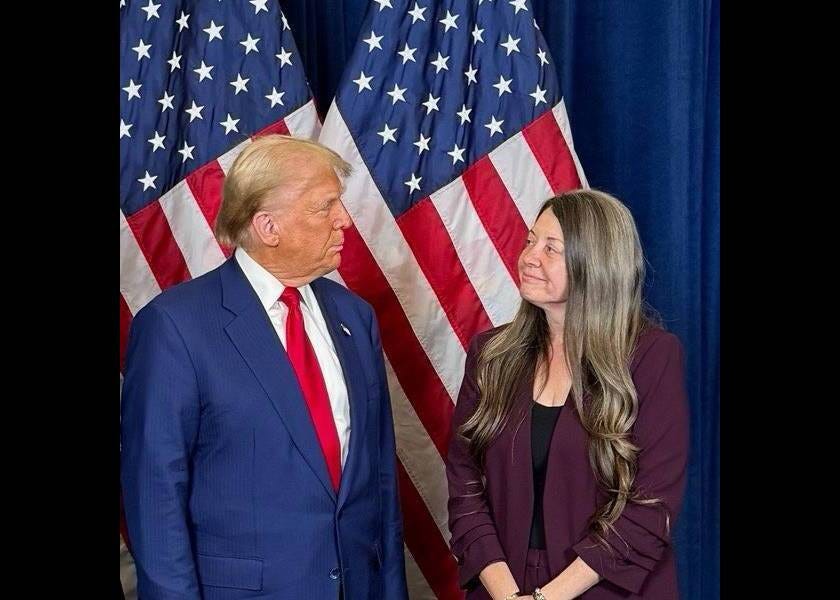
Former state GOP chair Gina Swoboda announced Friday that she would challenge Democratic Secretary of State Adrian Fontes rather than continue her campaign for the swingy 1st Congressional District.
Swoboda will now face state Rep. Alex Kolodin, a member of the state’s affiliate of the nihilistic Freedom Caucus, in the July 21 primary. Trump has not taken sides in her new campaign—at least, not yet.
Swoboda switched races the day after wealthy businesswoman Karrin Taylor Robson dropped out of the primary to oppose Democratic Gov. Katie Hobbs. Robson, unlike Swoboda, did not announce a new bid for office.
The two women, however, share one unhappy distinction. While they both entered their respective races last year as Donald Trump’s sole endorsed candidate, MAGA’s master responded to the backlash from the same cadre of far-right figures by extending his support to a second, more ideologically pure option.
Back in October, Swoboda became the first major Republican to announce a campaign to replace Rep. David Schweikert, who decided to leave the 1st District behind to run for governor. But while her launch announcement showed off an endorsement from Trump pledging that she would “never let you down,” the restive MAGA base already felt Swoboda had done exactly that.

“During her time as Chairwoman, she has a record of working against MAGA grassroots activists,” far-right influencer Laura Loomer tweeted earlier that month after chatter began that Swoboda could run for Congress. Loomer, who is reportedly close to Trump, also accused Swoboda of “going on podcasts badmouthing” Turning Point USA, the Arizona-based organization led by the late Charlie Kirk.
Trump’s subsequent stamp of approval also didn’t stop state Sen. Jake Hoffman, who leads the Arizona Freedom Caucus, from re-upping his long-running feud with Swoboda.
“It’s insanity that the AZGOP Chairwoman continues to trip all over herself to UNDERMINE election integrity & defend the literal socialist Pima County Recorder,” Hoffman tweeted in November. “Gina Swoboda is a Democrat.”
Loomer and Hoffman had hurled similar insults at Robson, with Hoffman lamenting in late 2024 that Trump “should fire whichever executive consultant or staffer told him to endorse the UniParty McCain network candidate for Arizona governor.”
Trump, though, appeased them the following spring when he announced that he was also giving her main primary rival, Rep. Andy Biggs, his “complete and total endorsement.” (Schweikert has yet to receive Trump’s blessing.)
But just like in the governor’s race, Trump was granted the opportunity to keep MAGA’s loudest soldiers happy when former Arizona Cardinals kicker Jay Feely announced in December that he was abandoning his uphill campaign to replace Biggs in the safely red 5th District and would instead oppose Swoboda in the 1st.
(Feely’s main primary opponent in the 5th, former Pinal County Sheriff Mark Lamb, had received Trump’s endorsement without any notable backlash.)
Trump followed his old pattern last month by announcing he was bestowing his endorsement on Feely in addition to Swoboda. But while Trump insisted that either of his picks “would be an incredible Representative,” just about everyone recognized that Swoboda, like Robson, had suffered by losing Trump’s exclusive support.
Robson, who badly trailed Biggs in the polls, was the first to bow to political reality when she exited the race for governor on Thursday.
Some observers viewed her surrender to the MAGA-approved Biggs as a win for Trump, with the New York Times calling Robson’s departure “a sign of President Trump’s continued influence over G.O.P. politics.”
The GOP’s leader, though, only supported Biggs after the backlash against Robson proved too much for him to ignore. Trump, by contrast, never had such trouble influencing primaries during his first term in the White House.
While his picks didn’t always secure the GOP nod, everyone understood that, when Trump issued an endorsement to a single candidate, anyone who didn’t receive his blessing was out of luck.
But the quest for Trump’s backing is no longer over once he’s told the world that a candidate has his “complete and total endorsement.” Trump has been willing to hedge his bets by providing a dual endorsement after initially favoring just one person, or sometimes even abandoning his pick altogether if he sees them losing.
Trump’s newfound flexibility has resulted in a playing field where candidates and their allies are no longer willing to let Trump have the final word on his own preferences. Trump himself may love getting to watch Republican office-seekers continue to grovel for his backing, but it’s also made his endorsement less powerful than it once was.
Candidates who have Trump’s sole backing now have to be wary of rivals who understand that they might still have the chance to get him to bless their campaigns. While his endorsement once would have made Swoboda and Robson the instant favorites in their primaries, Loomer and Hoffman now know that Trump can still be swayed, with potentially major consequences.
Trump’s endorsement remains the most vital commodity in GOP politics, but even he can no longer use it bestow MAGA’s unquestioned seal of approval.
Thanks to your enthusiastic response, The Downballot is now just 15 paid subscribers away from 3,000!
If you sign up—for just $7 a month or an even cheaper $60 a year—you’ll be helping to support independent journalism at a time when outside voices are so desperately needed. Unlike legacy media giants run by corporate conglomerates, we aren’t beholden to insatiable shareholders, and we’ll never grovel before Trump.
We just tell the truth about elections. Period. And the only people we’re accountable to are you—our readers. We wouldn’t have it any other way.

Redistricting Roundup
VA Redistricting
The Virginia Supreme Court ruled on Friday that an April 21 vote on a constitutional amendment allowing the legislature to redraw the state’s congressional map could proceed, even though a lower court determined late last month that lawmakers had not followed proper procedures in putting their amendment before voters.
However, that earlier ruling was very limited in scope and only ordered that the Circuit Court clerk in Tazewell County, where the case originated, post the text of the proposed amendment before “the next ensuing election” for the House of Delegates. (The judge said that the legislature had failed to timely post the amendment as required by law, though Democratic Gov. Abigail Spanberger subsequently signed a bill retroactively repealing that requirement.)
The Supreme Court said it would still hear substantive arguments about the case, but it set a briefing schedule that extends past the April 21 election and said it would schedule oral arguments, “if any,” at a later date.
As a result, voters will get the chance to weigh in on the amendment this spring. If they approve it, Virginia would implement a new map that would be likely to elect 10 Democrats and just one Republican.
Senate
LA-Sen
Louisiana Gov. Jeff Landry endorsed Rep. Julia Letlow’s bid for the Senate on Friday, which was the final day of candidate qualifying.
The governor, though, spent considerably more energy bashing Letlow’s two main rivals in the GOP primary, incumbent Bill Cassidy and state Treasurer John Fleming.
[”Cassidy] spends more time worrying about impeaching the president and going after Bobby Kennedy than reining in these federal judges,” Landry told the Shreveport Times. “Cassidy has never stood up once for us.”
Landry’s offensive came two days after Fleming aired his own grievances against the governor. Fleming claimed to reporters that he’d heard from “multiple people” that Landry had successfully persuaded Donald Trump to endorse Letlow for reasons that had little to do with Cassidy.
The treasurer instead said that the governor was engineering a “scheme” to set a chain of events in motion that would “rearrange the chairs on the deck” so that one day, Landry himself would get to serve in the Senate. Fleming did not offer any evidence to back up his theory about what he called Landry’s “bank shot” maneuver.

“Anyone who makes stuff up like that may not be fit for office,” Landry said in response.
Landry’s influence is also impacting this election in another way.
The Bayou State’s leader persuaded the legislature to pass a bill in 2024 reestablishing traditional primaries for Congress rather than requiring all candidates from all parties to face off on one ballot in the general election, as had been the state’s practice for many years.
Cassidy, Letlow, Fleming, and a little-known candidate named Mark Spencer will thus collide in the Republican primary on May 16, though candidates need to win a majority of the vote to avoid a runoff on June 27. A fifth Republican, Public Service Commissioner Eric Skrmetta, dropped out on the final day of qualifying and endorsed Letlow.
Whoever eventually emerges with the Republican nomination should have no trouble in the fall in this reliably red state.
SC-Sen, SC-Gov, SC-01
Noted hiker Mark Sanford may hit the trail one more time.
Axios reports that Sanford is considering waging a primary challenge against South Carolina Sen. Lindsey Graham, or entering the open races for either governor or the 1st Congressional District. Sanford, who held the latter two offices at various points in his long and bizarre career, has until the March 30 candidate filing deadline to make up his mind.
Sanford’s deliberations come a year after Pluribus reported that he was interested in reclaiming the governorship, the post that briefly made him into a conservative star—and not-so-briefly into a national punchline.

But while Sanford hasn’t taken any obvious steps to prepare for another comeback over the ensuing 12 months, he’s hardly faded from public view.
Most recently, he was in the news again in November when journalist Ryan Lizza published a multi-part confessional alleging that his then-partner, Olivia Nuzzi, had an illicit relationship with Sanford in 2020. Both Sanford and Nuzzi have said nothing publicly about Lizza’s claims.
TX-Sen
Democratic Rep. Jasmine Crockett’s allies have launched their long-awaited ad campaign ahead of the March 3 Senate primary, with Politico reporting that a group called Forward Texas is spending “seven-figure[s]” on ads.
The buy comes after state Rep. James Talarico and his backers have spent or reserved over $15 million on the airwaves. Crockett’s campaign only began its own TV blitz last week.
Forward Texas’ opening commercial, which is airing in English and Spanish, accuses Talarico of taking advantage of a 2021 battle against a GOP-backed bill restricting voting to “help himself.”
Talarico joined much of the lower chamber’s Democratic caucus in leaving the state to avoid giving the GOP majority a quorum. (Crockett, who served in the state House at the time, also participated in the walkout.) But he and other members began to return after House Speaker Dade Phelan signed civil arrest warrants against them.
“[Y]ou all threw us under the bus today!” state Rep. Ana-Maria Ramos wrote in a tweet showing a picture of Talarico back in the chamber—a quote that makes it into Forward Texas’s ad. The bill ultimately passed.
The spot continues by highlighting a Politico story from last year detailing how Miriam Adelson, who is one of the most prominent GOP megadonors in the country, was the largest contributor to Talarico’s 2024 reelection campaign. The narrator declares, “Jasmine Crockett will never sell us out to Donald Trump.”
Attorney General Ken Paxton, meanwhile, is also taking to the airwaves for the first time in his three-way GOP primary battle with Sen. John Cornyn and Rep. Wesley Hunt. AdImpact, though, reported Friday that Paxton had reserved just $350,000—a tiny sum for a statewide campaign in America’s second-largest state.
Paxton’s opening spot features old footage and audio of Donald Trump gushing that the attorney general is a “tremendous guy,” though Trump has yet to endorse anyone in this race. The ad does not mention any of Paxton’s rivals.
House
NY-21, NY-19, NY State Assembly
Former Rep. Marc Molinaro will seek an open seat in the New York state Assembly rather than attempt a return to the U.S. House, Politico reported on Friday.
Molinaro confirmed later that day he was stepping down as head of the Federal Transit Administration, effective Feb. 20, and that he’d be “coming home to be closer to my family and get back into the fight.”
Molinaro narrowly lost his bid for reelection against Democrat Josh Riley in the 19th Congressional District in 2024, but he reportedly eyed a comeback in a different—and far redder—constituency. Conservative Party Chair Gerard Kassar told the New York Post last month that Molinaro, who is now head of the Federal Transit Administration, spoke with him about potentially running for the open 21st District.
But if Molinaro hoped to have Kassar’s support to replace GOP Rep. Elise Stefanik, who is not seeking reelection in the 21st, that’s not how things worked out. Kassar instead announced last week that his party’s choice was Republican Assemblyman Robert Smullen.
Smullen’s only serious opponent in the June 23 GOP primary remains Anthony Constantino, a wealthy sticker magnet whom Kassar is currently suing for defamation.
The New York Times’ Nicholas Fandos further reported that Molinaro had spoken to Donald Trump’s team about joining the race for the 21st District with his endorsement. The discussions, though, evidently did not go the way the former congressman wanted.
Molinaro, by contrast, never showed any obvious interest in seeking a rematch against Riley back in the 19th. The new congressman instead faces state Sen. Peter Oberacker, who has Donald Trump’s endorsement.
Fandos says that Republicans “privately believe” that their chances of beating Riley are “low.” Oberacker’s decision to try, though, set off a game of musical chairs that Molinaro may benefit from: Assemblyman Chris Tague is running for Oberacker’s Senate seat, while Molinaro reportedly plans to campaign to replace Tague.
Kassar, though, acknowledged Friday that he was perplexed that Molinaro would want to leave the Trump administration to seek a spot in the Democratic-dominated Assembly.
“His job, in my view, is right below the cabinet,” Kassar told the Times. “Yeah, it’s funny. I don’t get it. I think other people don’t get it either.”
VA-01, VA-07
Democratic Rep. Eugene Vindman confirmed late last week that he would seek reelection in the proposed 1st District, which would be the natural successor to his current 7th District, should Virginia voters approve a new Democratic-drawn map at the ballot box in April.
Vindman’s Republican opponents, though, have yet to announce their plans.
Poll Pile
NH-Sen: Yes. Every kid.: Chris Pappas (D): 45, John Sununu (R): 41. The poll was conducted in-house by Scott Foster, who has worked for Republican polling firms.
TX-Sen (R): Pulse Decision Science (R) for Ken Paxton: Ken Paxton: 36, John Cornyn (inc): 27, Wesley Hunt: 15. (Early Feb.: Paxton: 34, Cornyn: 26, Hunt: 18. The earlier poll was conducted for the pro-Paxton group Lone Star Liberty.)
NH-Gov: Yes. Every kid.: Kelly Ayotte (R-inc): 47, Jon Kiper (D): 37.
OR-Gov: FM3 (D) for Charlie Health:
Tina Kotek (D-inc): 45, Christine Drazan (R): 40.
Kotek (D-inc): 43, Ed Diehl (R): 37.
Kotek (D-inc): 45, Chris Dudley (R): 35.
TX-09 (R): Pulse Decision Science (R) for the Club for Growth (pro-Alex Mealer): Alex Mealer: 29, Briscoe Cain: 25, Steve Stockman: 6, Dan Mims: 6, Dwayne Stovall: 3. (Unreleased December poll: Cain: 25, Mealer: 19, Stockman: 6.)
TX-09 (D): University of Houston: Leticia Gutierrez: 24, Terry Virts: 5, Earnest Clayton: 5, others 2% or less, undecided: 61%.
TX-18 (D): UH: Christian Menefee (inc): 52, Al Green (inc): 28, Amanda Edwards: 9. Edwards dropped out of the race after this poll was finished, though her name will remain on the ballot.
TX-29 (D): UH: Sylvia Garcia (inc): 46, Jarvis Johnson: 27, Robert Slater: 2.
I am sorry to learn that the Crocket campaign has gone negative on Talarico. As the candidate, she is responsible for that. To criticize him and the other Democrats for returning after their walkout is to miss the point: They drew attention to Trump's scheme to re-district to win the House, and that set off the re-districting initiatives in California and Virginia to counter it. The Democratic state legislators were never going to be able to hold out forever; that is not how it works.
If Crocket cannot win on the strength of her positions on the issues, she does not deserve to win.
I would like to know what the actual story is behind the GOP megadonor, since the GOP is the group that was pushing for Crocket to enter the race.
Always an interesting read, thank you both ... and pleased to be one of your earliest annual subscribers.