



Leading Off
IA State Senate
Iowa Republicans are at risk of losing their supermajority in the state Senate in a special election on Tuesday as both parties compete for a conservative—but politically volatile—seat in the western part of the state.
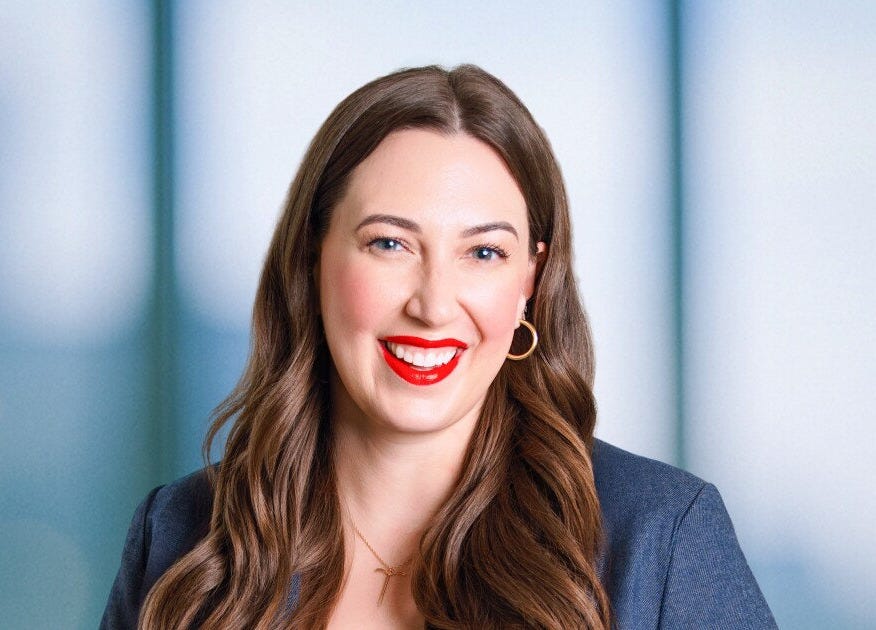
Democrats, as The Downballot reported when the special election for Iowa's 1st District was first called almost two months ago, are fielding Catelin Drey, a progressive organizer who works at a marketing firm.
Republicans, meanwhile, have nominated Christopher Prosch, who has worked as a political operative and communications strategist. The two are vying to replace Republican Sen. Rocky De Witt, who died in June.
Calculations by The Downballot show that Donald Trump last year carried the 1st District, which is based in the Sioux City area, by a 55-44 margin, a considerable increase from his 50-48 showing in 2020.
The area, though, elected a Democratic senator in the not-so-recent past: Jackie Smith narrowly flipped the previous version of the 1st in 2018, before decisively losing to DeWitt four years later.
Drey, however, has reason to be optimistic that Tuesday's electorate will be more friendly toward her than the one that's turned out in recent years.
Iowa Democrats have overperformed Kamala Harris' margin by at least 24 points in each of the three special legislative elections that occurred this year, which is more than twice what Drey needs to win.
All three of these contests were located on the opposite side of the state, but Drey believes that anger at the GOP-controlled state government isn't confined to eastern Iowa.
"The reason this race is so important is because it gives Democrats and ultimately the people in Senate District 1 and Iowa at large an opportunity to stand up against unpopular policies like [Gov.] Kim Reynolds' carbon capture pipeline boondoggle that is going to divert public money and potentially private land into the hands of a single corporation," she told the Sioux City Journal.
Drey has good reason to focus on Reynolds, who unexpectedly announced in April that she would not seek reelection after a Morning Consult poll pegged her as the most unpopular governor in the country for the fifth quarter in a row. Reynolds extended that ugly streak in July, a track record that has one local political observer believing she could sink her party on Tuesday.
"People are sick of Kim Reynolds," newspaper editor Art Cullen recently told the Guardian. "People are getting tired of the wackiness: banning books, making a big to-do over trans people. Republicans are concentrating on all that stuff and not on, how good are our schools and why are our property taxes so high?"
A win for Drey would weaken Reynolds for the final 17 months of her governorship by costing the GOP the two-thirds supermajority it needs to confirm her nominees for state cabinet posts.
Republicans secured a 35-15 edge in the chamber last year, but they unexpectedly lost one of those seats in January when educator Mike Zimmer flipped a constituency that Trump had just carried by 21 points. A victory for Drey would leave the GOP with a 33-17 advantage, which would require Republicans to persuade at least one Democrat to confirm any Reynolds picks.
Both parties are taking the prospect of an upset seriously. Bleeding Heartland's Laura Belin highlights that Drey raised more than $160,000 in the six-week period from early July to mid-August, with the state Democratic Party deploying another $100,000 on her behalf.
In addition, the Democratic Legislative Campaign Committee told The Downballot on Monday that it had made a five-figure investment in the race, directing funds to the Iowa Senate Democratic caucus to support Drey.
Prosch, meanwhile, took in just $20,000 from donors during this time, but he's getting help: Belin flags that the state GOP has spent $160,000 to guard against a loss.
Prosch, who, among many other things, has said that rape victims should be forced to give birth to their rapists' babies and suggested that abortion is worse than the Holocaust, is continuing to tout his opposition to reproductive rights even as he's tried to focus on other topics.
The Republican talked about cutting taxes while running ads showing an old picture of Drey sporting pink hair to make his case that she's a supporter of "open borders" with "kooky ideas."
Drey, whose Moms for Iowa group mobilizes mothers to communicate with lawmakers about issues like gun violence and reproductive freedom, has pushed back.
"I think I looked great with pink hair, but the upkeep was exhausting," she said in one ad. "My 'kooky ideas' are fully funding our public schools, making housing and child care more affordable, and putting more money back in the pockets of working Iowans."

Redistricting Roundup
MD Redistricting
When asked in a new interview with CBS News if he was "actively looking at" targeting the lone Republican-held seat in Maryland's congressional delegation, Democratic Gov. Wes Moore responded in the affirmative, adding, "I think we have to" consider the idea.
In previous comments, Moore was somewhat more reserved, telling WBAL that "all options are on the table about how we respond" to mid-decade Republican gerrymandering—a phrase he also reused on Sunday when speaking with CBS.
Election Night
Special Elections
In addition to the state Senate race in Iowa leading off this Digest, two other notable special elections are taking place on Tuesday for state legislatures across the country.
In northern Alabama's vacant 11th House District, Kamala Harris won just 9% of the vote last year, making this the reddest district we've ever tracked in a special election going back almost a decade.
What's remarkable, though, is that Democrats are fielding a candidate at all: As the Alabama Reflector notes, Alex Braswell, a sign language interpreter, is the first Democrat to run in this district since 2006. She also earned an endorsement from former Sen. Doug Jones, who held a town hall with her last month. Braswell faces Republican businessman Heath Allbright.
In California's conservative 63rd Assembly District in western Riverside County, meanwhile, Democrat Chris Shoults, an educator and labor organizer, is hoping for an upset over Republican Natasha Johnson, a member of the Lake Elsinore City Council.
In the first round of voting in late June, Johnson edged out Shoults 46-44, and she and another Republican candidate combined for 55% of the vote, matching Donald Trump's vote share here last year. But Shoults has kept pace in fundraising, and with Democrats frequently overperforming in special elections by large margins, a surprise can't be ruled out.
Democrats hold a supermajority in both chambers of California's legislature, while the same is true for Republicans in Alabama.
Governors
CT-Gov
New Britain Mayor Erin Stewart has publicized an internal poll that shows her trailing Democratic Gov. Ned Lamont 50-42 in a hypothetical general election. Stewart's team, though, argued that these numbers from OnMessage demonstrate that she can defeat the governor next year.
The survey, which was first shared with WTNH, did not mention how any of the other Republican candidates would fare against Lamont. Stewart, who has yet to announce she's joining the GOP primary, released a poll last week showing her beating state Sen. Ryan Fazio 42-13 for the party's nod.
House
NC-11
Air Force veteran Moe Davis said Saturday that he was dropping out of the Democratic primary to take on Republican Rep. Chuck Edwards, a move he announced in what the Asheville Watchog characterized as "a grievance-laced midnight Facebook post" against his party's leadership.
Davis' departure leaves farmer Jamie Ager as the only notable Democrat opposing Edwards in North Carolina's 11th District in the western part of the state. Calculations by The Downballot show that Donald Trump carried this seat 54-45 last year, while Edwards won a second term 57-43.
NJ-07
Criminal justice professor Beth Adubato last week became the eighth notable Democrat to launch a campaign against Republican Rep. Tom Kean in New Jersey's 7th District.
Adubato's family, the New Jersey Globe highlights, is politically well-connected in the Garden State. Her most famous relative, however, is her father, Richie Adubato, a former NBA and WNBA coach who skippered both the Dallas Mavericks and the New York Liberty.
Seven other Democrats were already running in the 7th, a suburban seat southwest of New York City that voted for Donald Trump by a narrow 50-48 margin last year.
PA-03
State Sen. Sharif Street announced Monday that he was giving up his post as chair of the Pennsylvania Democratic Party to concentrate on his campaign for the open 3rd District.
Street's decision came more than a month after Gov. Josh Shapiro and Democratic National Committee Chair Ken Martin both urged that he step aside as chair because of his run for Congress. Shapiro told reporters, "I'm not sure how you can be the leader of the Democratic Party while you're engaged in a Democratic primary fight."
Street, who remains a member of the legislature, is one of several Democratic candidates competing to succeed Rep. Dwight Evans, who is not seeking reelection in this safely blue Philadelphia constituency. The field also includes physician Dave Oxman, state Rep. Chris Rabb, and computer scientist Karl Morris, a Temple University professor who announced earlier this month.
PA-07
Bob Brooks, who serves as president of the Pennsylvania Professional Firefighters Association, announced Tuesday morning that he was joining the Democratic primary to face Republican Rep. Republican Rep. Ryan Mackenzie.
Brooks, who retired earlier this year after a long career in the Bethlehem Fire Department, is trying to flip a swingy seat based in the Lehigh Valley. He launched his campaign for the 7th District with endorsements from Lt. Gov. Austin Davis and Vermont Sen. Bernie Sanders. Also in his corner are Rep. Chris Deluzio, who represents the 17th District on the other side of the state, and the SEIU.
Brooks joins four other notable Democrats in next year's primary: former federal prosecutor Ryan Crosswell, Northampton County Executive Lamont McClure, former utility company supervisor Carol Obando-Derstine, and Lehigh County Controller Mark Pinsley.
Donald Trump carried the 7th District 51-48 four years after Joe Biden took it 50-49. Mackenzie won his seat last year by narrowly unseating Democratic incumbent Susan Wild 50-49.
SC-01
Air Force veteran Alex Pelbath on Monday joined the Republican primary for South Carolina's 1st District, a conservative open seat that includes much of the state's coastline.
"I was the commander of the final air mission out of Afghanistan," Pelbath tells the audience in a launch video focused on his military service and support for Donald Trump.
The conservative Washington Examiner wrote earlier this month that Pelbath has "strong ties" to Trump, and he recently told the Post and Courier that he's met with White House officials.
Pelbath, who is running for office for the first time, is campaigning to replace Rep. Nancy Mace, who is seeking the GOP nomination for governor. He joins state Rep. Mark Smith in the primary, while Dorchester County Councilman Jay Byars has signaled that he'll launch his own effort after Labor Day.
On the Democratic side, Mac Deford, an attorney and Coast Guard veteran, is the only notable candidate so far running to flip a seat Trump carried 56-43 last year.
TX-09
Army veteran Alexandra del Moral Mealer, who lost a tight 2022 race to lead Harris County, on Monday became the second prominent Republican to enter the race for Texas' revamped 9th Congressional District.
Three years ago, Mealer challenged Democratic Judge Lina Hidalgo, whose post is executive rather than judicial in nature, and fell short 51-49—a margin of just over 18,000 votes. Mealer initially conceded the race, but she filed a lawsuit the following January over what she called "serious operational issues that occurred throughout Election Day."
She ultimately gave up her legal battle eight months later, but a subsequent audit from Republican Secretary of State Jane Nelson's office found that county officials had failed to properly train workers or provide some polling spots with enough paper for ballots. However, the report did not suggest that these issues impacted any election outcomes.
Though Mealer wasn't successful in court, her fellow Republicans are continuing to weaponize her allegations. Gov. Greg Abbott said this spring that he had delayed in scheduling the special election for the safely blue 18th Congressional District for November—eight months after Democratic Rep. Sylvester Turner died in office—because Harris County couldn't be trusted to conduct an election any sooner.
Mealer, who has since taken a post as public safety chair for Houston's METRO transit authority, joins state Rep. Briscoe Cain in next year's primary for the 9th District. This constituency, which would have backed Donald Trump 59-40 last year, has almost nothing in common with the dark-blue 9th District that Democratic Rep. Al Green has represented since 2005.
TX-18
The Texas GOP's new congressional gerrymander foists aggressive changes to the Houston-area 18th District even as that district is in the midst of holding a special election to fill a vacancy, making a chaotic situation even tougher to predict.
One added complication is that we don't actually know when that vacancy (created by the death of Rep. Sylvester Turner in March) will be filled. An election using the old lines is scheduled for Nov. 4, in which all candidates from all parties will run together on a single ballot. However, under Texas law, a runoff must be held if no one wins a majority.
That's exceedingly likely, since around a dozen hopefuls have launched campaigns, and more could join by the Sept. 3 filing deadline. The roster includes several prominent Democrats who all have a real chance at victory in this dark-blue district, and limited polling shows the frontrunners in the teens.
So when would a runoff take place? We can't say precisely. Texas gives the governor 15 to 30 days to certify results, then requires that he set a runoff 70 to 77 days after certification. That means the soonest a runoff could happen is Jan. 28, but Gov. Greg Abbott could wait until as late as Feb. 19.
The 2026 election season will be well underway by then. Texas' regularly scheduled primaries will take place on March 3, with candidates required to file for the ballot no later than Dec. 8.
As a result, participants in the special election will almost certainly have to submit paperwork to run for a full term before they even know whether they've won. And if Democratic Rep. Al Green, who currently represents almost two-thirds of the new 18th District, decides to seek reelection there, he likely won't know the identity of the old district's new incumbent by the December filing deadline.
But the uncertainty won't necessarily end in March. Once again, if no candidate secures a majority in the all-important Democratic primary, another runoff will be held, this time on May 26. (The overhauled 18th remains safely blue.)
A general election would then follow in November of next year. That means that whoever winds up winning a full term and serving in the next Congress could wind up appearing on the ballot as many as five times.
TX-37
Democratic Rep. Greg Casar announced his campaign for the redrawn 37th District on Monday with endorsements from a boatload of Austin Democrats, including state Sen. Sarah Eckhardt.
Eckhardt hinted last week that she might also join the race for the 37th after longtime Rep. Lloyd Doggett said he wouldn't seek reelection if the courts uphold the GOP's new gerrymander, though she held open the possibility of running elsewhere, too.
Casar planned to run for the 37th after Republicans transformed his reliably blue 35th District into a conservative seat that includes none of his Austin base, and he doesn't appear to have any serious opposition on the horizon.
Attorneys General
GA-AG
State Rep. Tanya Miller announced Monday that she was entering the Democratic primary to serve as Georgia's attorney general, an office that Republican incumbent Chris Carr is giving up to run for governor.
Miller, who is chair of the Georgia House Democratic Caucus, would be the first Black woman elected statewide. She joins former state House Minority Leader Bob Trammell in the Democratic primary for a post their party last won in 2006.

TX-AG
Republican Attorney General Ken Paxton on Monday endorsed former Department of Justice official Aaron Reitz, who is one of his former subordinates, in next year's race to replace him as Texas' top lawyer.
Reitz, who called himself the "only pro-Paxton candidate in the race," faces three prominent Republicans in next year's primary. One of those contenders is Rep. Chip Roy, another former Paxton employee who does not have a good relationship with his old boss.

Correction: This piece originally stated that the Iowa Senate must confirm judicial picks. The Senate does not play a role in judicial nominations.
Editor's note: In our last Digest, our item on New York's 19th Congressional District incorrectly identified its representative as Pat Ryan. It is represented by Josh Riley. Ryan represents the neighboring 18th District.
We also misstated the timing of a possible runoff in the special election for Texas' 18th Congressional District. If one is necessary, it would take place in January or February, not in December.
Here is the official canvass from Iowa Senate district 35, the Trump+21 district that Democrat Mike Zimmer flipped in January:
https://www.bleedingheartland.com/static/media/2025/08/IowaSenatedistrict35_officialcanvass.png
Note that the candidates tied in early votes cast. Zimmer actually carried the election day vote (surprising to me since Iowa Republicans usually win the election-day vote).
We don't know how people voted but we do know that as of yesterday, registered Democrats had cast 241 more early ballots than Republicans in Senate district 1. Democrats feel confident that the majority of no-party voters who have cast ballots are supporting Catelin Drey. I updated the early vote totals here, near the end:
https://laurabelin.substack.com/p/iowa-senate-district-1-election-preview
Trump hits 54% disapproval rating in NC, according to a YouGov #12 poll. Former governor Roy Cooper, in his bid for the open Senate seat next year, still maintains a high 55% approval, 38% disapproval and 6% of respondents unfamiliar with him.
https://catawba.edu/news/all-news/2025/yougov-12/