



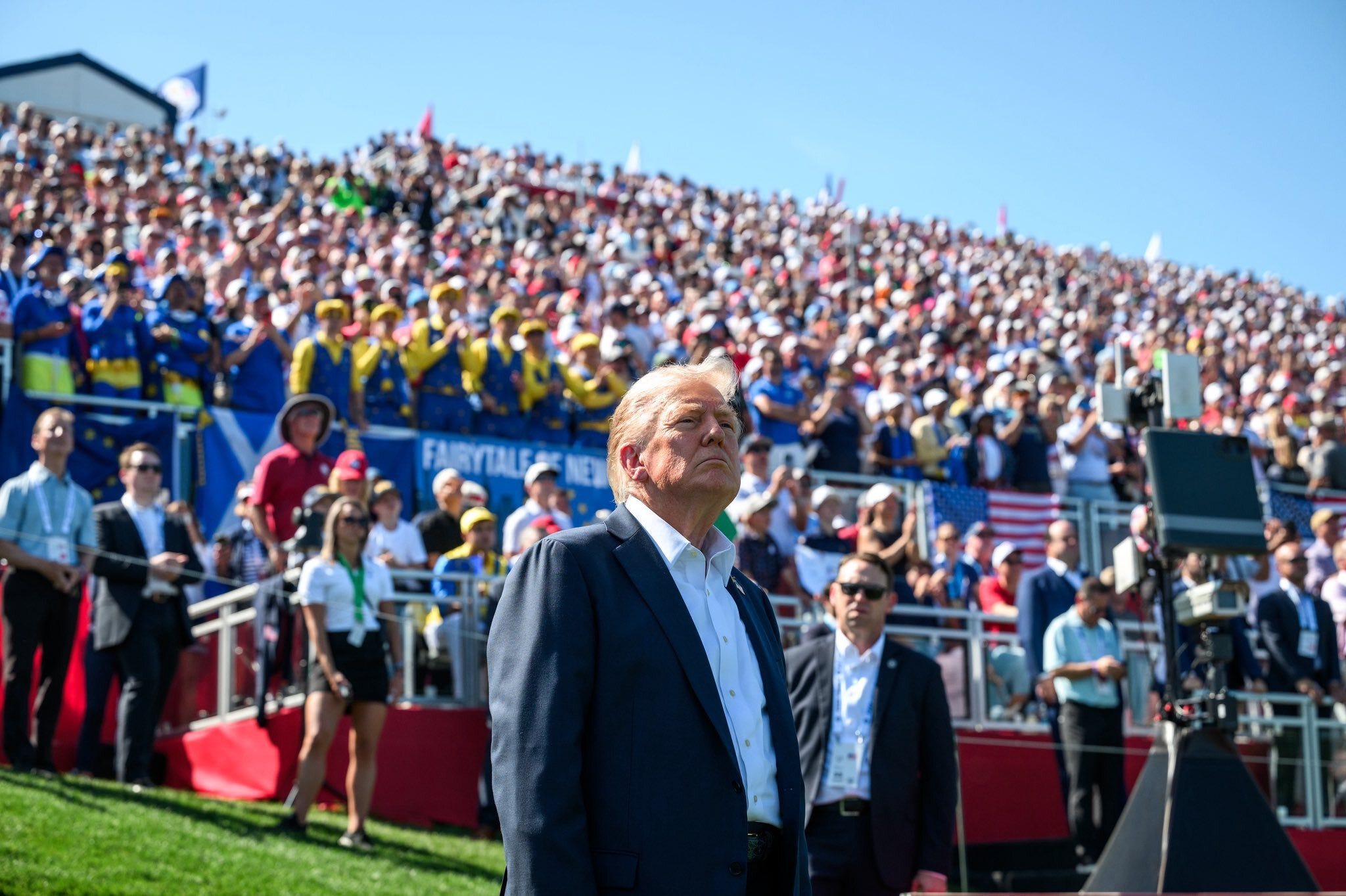
Leading Off
IN State Senate
Donald Trump’s crusade to punish Indiana Republicans who scuttled his plans to re-gerrymander the state’s congressional districts just suffered a high-profile blow when a challenger he had endorsed abandoned his campaign against a Republican senator who opposed a remap.
Bluffton City Councilman Blake Fiechter announced last week that he was ending his bid against state Sen. Travis Holdman, one of 21 Republicans in the upper chamber who joined with all 10 Democrats to reject a GOP-drawn map in December.
Trump endorsed Fiechter last month, before the candidate had even joined the May 5 primary for the 19th Senate District, a conservative constituency that includes a small portion of Fort Wayne and communities to the south.
“Holdman and his RINO friends made Indiana, a State I love and have been very good to, the only State in the Country that essentially said they don’t care about what happens in the United States Congress,” Trump ranted on Truth Social. “Should he decide to enter this Race, and hopefully he will, Blake Fiechter has my Complete and Total Endorsement against RINO Travis Holdman. RUN, BLAKE, RUN!”
But while Fiechter took Trump up on that invitation, he soon learned that this complete and total endorsement didn’t include much help raising money and recruiting campaign staff.
“I felt like I was on a raft alone trying to navigate,” Fiechter told WANE 15 last week as he explained why he was leaving the race after just three-and-a-half weeks.
The financial gap was likely acute. According to disclosures filed last month, Holdman was sitting on more than $430,000 in his campaign account. Fiechter, by contrast, never filed any fundraising reports during his short-lived bid.
Candidate filing closed earlier this month, so it’s too late for a different MAGA acolyte to run in his place. Fiechter’s name, however, will still appear on the primary ballot.
Fiechter was one of five Trump-endorsed Hoosiers challenging GOP senators. Trump has also urged Republicans to eject incumbents Jim Buck, Spencer Deery, Greg Goode, and Greg Walker, who all defied him on redistricting, and replace them with his chosen candidates.
The other four challengers are still running, as of now, though with the exception of state Rep. Michelle Davis, who is taking on Walker, all trail in fundraising or have yet to file any disclosures.
Trump’s allies have promised to spend huge sums to make up this shortfall. Marty Obst, who heads the Orwellian-named group “Fair Maps Indiana,” told the Indiana Capital Chronicle last month, “Our intention is to spend seven figures opposing those senators and supporting top-tier challengers.”
The promised aid, though, wasn’t enough to induce Fiechter to keep running.
Trump has also spent months railing against Senate Pro Tem Rodric Bray, whose opposition to the remap last year made him one of the most hated Republicans in MAGA world. MAGA’s master wrote last month, “We’re after you Bray, like no one has ever come after you before!”
But Trump faces an opponent no amount of Truth Social posts can overcome: the calendar. Only half of the 50-member state Senate is up every two years, and Bray doesn’t go before voters again until 2028.
Unlike a political campaign, which goes away after Election Day, The Downballot still be here the next day—to start covering the next election. So if you want to help build up critical infrastructure for the long term, there’s no better way to do so than by upgrading to a paid subscription. Plus, we’ll never spam you or blow up your phone with annoying texts!

Election Recaps
Special Elections
Democrats won a trio of special elections on Tuesday night, preserving their slim majorities in the state houses in both Maine and Pennsylvania.
In Maine’s 94th District in Lewiston, Democrat Scott Harriman, who serves on the City Council, defeated Republican Janet Beaudoin, a member of the local school board, by a 53-47 margin. Democrats now hold a 75-72 advantage in the chamber, though three independents usually align with them. One GOP-held seat remains vacant.
The two races at opposite ends of the Keystone State, meanwhile, were blowouts for Democrats. Just outside of Pittsburgh, Dormont Borough Councilmember Jennifer Mazzocco crushed her Republican opponent 82-18 in the 42nd District. And in the 22nd District in the Lehigh Valley, Ana Tiburcio, the director of the Allentown School Board, likewise romped by a 67-33 margin.
The wins give Democrats a temporary 102-98 edge, but three Republican seats will be filled in special elections later this year.
You can track every legislative special election across the country by bookmarking The Downballot’s continually updated Big Board.
Governors
AK-Gov
Meda DeWitt, an independent who was a leader in the unsuccessful two-year-long campaign to recall Republican Gov. Mike Dunleavy, tells the Alaska Beacon she’s joining the packed race to replace him now that he’s termed out.
DeWitt, who is the president of the for-profit Alaska Native Corporation for the southeast Alaska community of Yakutat and an Alaska Native traditional healer, previously served as chair of Recall Dunleavy, a group that formed the year after the hardline conservative was first elected governor in 2018.
Her organization got the green light to collect signatures in the spring of 2020 after a long legal battle, but that timing meant organizers had to accomplish their task during the height of the COVID pandemic. Saying that social distancing rules hampered its efforts, the campaign missed out on the chance to place its question on that year’s ballot.
DeWitt announced in the summer of 2021 that, while Recall Dunleavy had come close to gathering the requisite number of signatures, the group’s leadership decided it didn’t make sense to continue because the regular election was now so close. But while DeWitt and her allies hoped to deny Dunleavy a second term, the incumbent triumphed easily in 2022.
Dunleavy is now set to become the first Alaska governor to leave office because of term limits since 2002, when the last Democrat to hold the post, Tony Knowles, completed his second term. A horde of politicians are taking advantage of this rare open-seat race, with DeWitt the 17th hopeful to file a letter of intent with the state.
The massive field will be winnowed on Aug. 18, when all candidates will run together on a single ballot, with the top four vote-getters advancing to a ranked-choice general election. It’s anyone’s guess, though, as to which four will move forward and which parties—or lack thereof—they’ll hail from.
New campaign finance reports show that one wealthy Republican, however, has brought in far more cash than any of his many rivals. Podiatrist Matt Heilala self-funded $1.3 million through the end of January—a haul that represents nearly all the money he took in—and has more than $1 million on hand.
Former Attorney General Treg Taylor, a fellow Republican who has self-funded a smaller portion of his campaign, was in second with $724,000 banked.
A pair of Democrats, state Sen. Matt Claman and former state Sen. Tom Begich, each had a little more than $200,000 in cash when the last fundraising period ended at the close of January. However, former state Rep. Jonathan Kreiss-Tomkins, who announced earlier this month that he would also run as a Democrat, has said he’s already raised over $750,000.
House
CA-05, CA-06
Rep. Kevin Kiley tells NOTUS he’ll reveal Monday whether he’ll challenge fellow GOP Rep. Tom McClintock in California’s conservative 5th Congressional District or seek the open but Democratic-leaning 6th District.
Kiley’s announcement will finally put an end to four months of what the Sacramento Bee’s Mathew Miranda dubbed his “own political version of The Bachelor,” but the congressman may have already revealed which district he’ll offer his final rose to.
The San Joaquin Sun reported earlier this month that Kiley is airing TV ads in the Fresno media market, which covers the 5th District, while staying off the air in the Sacramento market, which would reach voters in the 6th.
Whichever constituency he picks, voters participating in the June 2 top-two will get their first chance to decide if Kiley is “there for the right reasons.”
FL-19
Lee County Sheriff Carmine Marceno said this week that he would not join the GOP primary for Florida’s open 19th District, meaning that the race still lacks any elected officials actually from the Sunshine State. At least five Republicans looking to replace Rep. Byron Donalds have run for—or held—office in other states, including North Carolina, New York, and Illinois.
IL-09
Elect Chicago Women, an obscure group that’s reportedly funded by AIPAC, began airing negative ads this weekend, with an opening message that pans Evanston Mayor Daniel Biss as a perpetual office-seeker full of “empty promises.”
Biss volleyed back with his own commercial declaring that state Rep. Laura Fine, whom ECW supports, has accepted extensive donations “from AIPAC, a Trump-aligned, pro-Netanyahu lobbying group.”
Biss, Fine, and political commentator Kat Abughazaleh have attracted the greatest attention in the field of 15 candidates competing in the March 17 Democratic primary for Illinois’ open 9th Congressional District. Reporter Matthew Eadie of Evanston Now, however, notes that well-funded outside groups have, so far, taken notice of only Biss and Fine.
ECW has spent more than $2.6 million to promote Fine or attack Biss. The mayor has benefited from a total of $750,000 from two outfits: 314 Action Fund, a group that helps Democrats with backgrounds in science and related fields (Biss is a mathematician), and the campaign arm of the Congressional Progressive Caucus.
NY-07
The labor-backed Working Families Party has endorsed Brooklyn Borough President Antonio Reynoso as he seeks the Democratic nod for New York’s open 7th Congressional District.
Reynoso is one of three notable Democrats running to replace retiring Rep. Nydia Velazquez, who gave her backing to the borough president last month. His chief rivals for the safely blue 7th District, which is based in northern Brooklyn and western Queens, are New York City Councilmember Julie Won and Assemblywoman Claire Valdez, who has Mayor Zohran Mamdani’s support.
TX-02
Sen. Ted Cruz endorsed state Rep. Steve Toth on Tuesday, a move that came one week before Toth faces Rep. Dan Crenshaw in the closely watched Republican primary for Texas’ 2nd Congressional District.
Crenshaw and allied outside groups have far outspent Toth and his backers, who have portrayed the incumbent as insufficiently conservative. The congressman, however, lacks one major asset.
Crenshaw is the only Republican in the state’s enormous House delegation who has yet to receive an endorsement from Donald Trump for reelection. Even fellow Rep. Tony Gonzales, who faces a daily torrent of ugly headlines over his alleged affair with a staffer who died by suicide last year, retains Trump’s favor.
VA-02, VA State Senate
Marine veteran Michael Williamson announced on Tuesday that he would not run for Congress but would instead challenge a Republican member of the Virginia Senate next year.
Williamson launched a bid for the 2nd Congressional District last year but bowed out after former Rep. Elaine Luria announced a comeback against Republican Rep. Jen Kiggans in November. He later said he might resume his campaign, but only if a revised map were to place his home city of Suffolk in a district that neither Luria nor any Democratic incumbents would run in.
That didn’t happen: Suffolk, an independent city in the southeastern corner of the state, would remain in the 2nd District under the proposal Democrats hope voters will greenlight in an April 21 special election.
Instead, Williamson said he’ll seek to oust Republican state Sen. Emily Jordan in the 17th District, a competitive constituency that includes Suffolk. Jordan (then going by the surname Brewer) first won the seat in 2023 by a 52-45 margin, but the following year, Kamala Harris carried it 52-47, according to data from the Redistricting Data Hub uploaded to Dave’s Redistricting App.
Calculations from the Virginia Public Access Project also show that Democratic Gov. Abigail Spanberger won the 17th 55-45 last year en route to her blowout statewide victory. Democrats currently hold a narrow 21-19 majority in the Senate, but all 40 seats will be up in 2027.
Judges
GA Supreme Court
A pair of prominent liberals announced campaigns on Tuesday for the Georgia Supreme Court, a conservative-dominated body that has rarely seen contested elections.
The new challengers are former Democratic state Sen. Jen Jordan, who lost a bid for state attorney general 52-47 in 2022, and personal injury attorney Miracle Rankin, who served as president of the Georgia Association of Black Women Attorneys in 2021.
Both are running against appointees of former Gov. Nathan Deal who were originally named to the bench in 2018. Jordan is taking on Justice Sarah Warren, who won a full six-year term in 2020 in a 79-21 blowout against a right-wing gadfly. Rankin, meanwhile, is looking to unseat Justice Charlie Bethel, who eked out a narrow 52-48 victory over a Republican state legislator.
As the results of these officially nonpartisan races show, progressives have seldom managed to put up major names in Supreme Court contests. The most notable battle, though, came just two years ago, when former Democratic Rep. John Barrow made abortion rights the centerpiece of his campaign against conservative Justice Andrew Pinson.
Pinson, however, prevailed by a 55-45 margin in a race that saw low turnout—a regular feature of Supreme Court elections in Georgia, which always coincide with the state’s May primaries. November runoffs are technically possible if no candidate wins a majority, but it’s not clear when that last happened, if ever.
It’s also incredibly rare for a sitting justice to lose reelection. According to the Atlanta Journal-Constitution, the more recent—and possibly only—such occasion came in 1922. Incumbents have a further advantage as well: They’re actually listed as such on the ballot.
Jordan and Rakin therefore face tough odds on May 19, but this time, it’s possible light turnout could favor them. In November, two Georgia Democrats ousted Republican incumbents on the state’s Public Service Commission in 25-point blowouts, boosted by strong enthusiasm among Democrats and indifference on the part of many GOP voters.
Poll Pile
MA-Sen (D): University of New Hampshire: Ed Markey (inc): 35, Seth Moulton: 23, Alex Rikleen: 7, undecided: 30. (Nov.: Markey 34-25.)
MA-Sen: UNH:
Markey (D-inc): 56, John Deaton (R): 27.
Moulton (D): 59, Deaton (R): 23.
ME-Sen (D): UNH: Graham Platner: 64, Janet Mills: 26. (Oct.: 58-24 Platner)
ME-Sen (R): UNH: Susan Collins (inc): 67, Dan Smeriglio: 6. (Oct.: 66-1 Collins)
ME-Sen: UNH:
Platner (D): 49, Collins (R-inc): 38.
Mills (D): 41, Collins (R-inc): 40.
MT-Sen: American Pulse (R):
Steve Daines (R-inc): 52, Reilly Neill (D): 25, Seth Bodnar (I): 16.
Daines (R-inc): 56, Neill (D): 37.
Daines (R-inc): 51, Bodnar (I): 42.
Bodnar has not announced a campaign.
TX-Sen (R): Peak Insights (R) for Texans for a Conservative Majority (pro-John Cornyn): John Cornyn (inc): 36, Ken Paxton: 36, Wesley Hunt: 14. (Unreleased early Feb. poll: Paxton: 31, Cornyn: 29, Hunt: 25.)
FL-Gov (R): University of North Florida:
Bryon Donalds: 28, Casey DeSantis: 24, James Fishback: 4, Jay Collins: 3, Paul Renner: <1, undecided: 36.
Donalds: 31, Fishback: 6, Collins: 4, Renner: 1, undecided: 51.
Casey DeSantis has not announced a campaign.
MA-Gov: UNH:
Maura Healey (D-inc): 55, Mike Kennedy (R): 28.
Healey (D-inc): 56, Michael Minogue (R): 27.
Healey (D-inc): 58, Brian Shortsleeve (R): 28.
ME-Gov (D): UNH: Nirav Shah: 25, Shenna Bellows: 19, Troy Jackson: 16, Hannah Pingree: 10, Angus King III: 5, undecided: 23.
ME-Gov (R): UNH: Robert Charles: 28, Garrett Mason: 12, David Jones: 7, Ben Midgley: 6, Jonathan Bush: 5, Robert Wessels: 4, others 2% or less, undecided: 31.
MI-Gov: Glengariff Group for the Detroit Regional Chamber (pro-Mike Duggan): Mike Duggan (I): 30, John James (R): 28, Jocelyn Benson (D): 28.
NM-Gov (D): GBAO (D) for Deb Haaland: Deb Haaland: 56, Sam Bregman: 26.
RI-Gov (D): UNH: Helena Foulkes: 34, Dan McKee (inc): 18, Gregory Stevens: 4, undecided: 40. (Sept.: 35-19 Foulkes)
ME-02: UNH:
Paul LePage (R): 48, Joe Baldacci (D): 47.
LePage (R): 47, Matthew Dunlap (D): 46.
LePage (R): 48, Jordan Wood (D): 44.
Editor’s Note: In our last Digest, we incorrectly said that California state Sen. Mike McGuire’s base was in Mendocino County. McGuire’s base is in Sonoma County.
In this post, we failed to note that the Detroit Regional Chamber, which commissioned a poll of the Michigan governor's race, previously endorsed one of the candidates, independent Mike Duggan. We regret the omission.
Correction: This post incorrectly said that Donald Trump won Virginia’s 17th Senate District in 2024. It was won by Kamala Harris.
Following my analysis of the Democrats legislative future in yesterdays digest, I thought I would note what i think the Democrats strategy should be going forward.
In my opinion, we should take notes from Howard Dean's fifty-state strategy, as people all across the political system become increasingly disenfranchised with this Trump administration, and basically nothing doing well, we are set up for winning the house back for sure and it makes me think that we should invest largely into potential infrastructure in potential democratic states in ~50 years or 50 years ago, sort of something similar to the tea party movement but have candidates that suit the district they're running in whilst also having them being connected to crucial ideology of the democratic party. We can then move onto having progressives in deep blue seats, because then every caucus benefit of having democrats in congress whilst benefiting the main democrats agenda, representing every ideology in the broad tent party we are.
Would love to know your thoughts.
Dozens of FBI records apparently missing from Epstein files, including Trump accuser interviews
https://www.koat.com/article/fbi-records-missing-epstein-files-trump-accuser-interviews/70485920