



Leading Off
FL-20
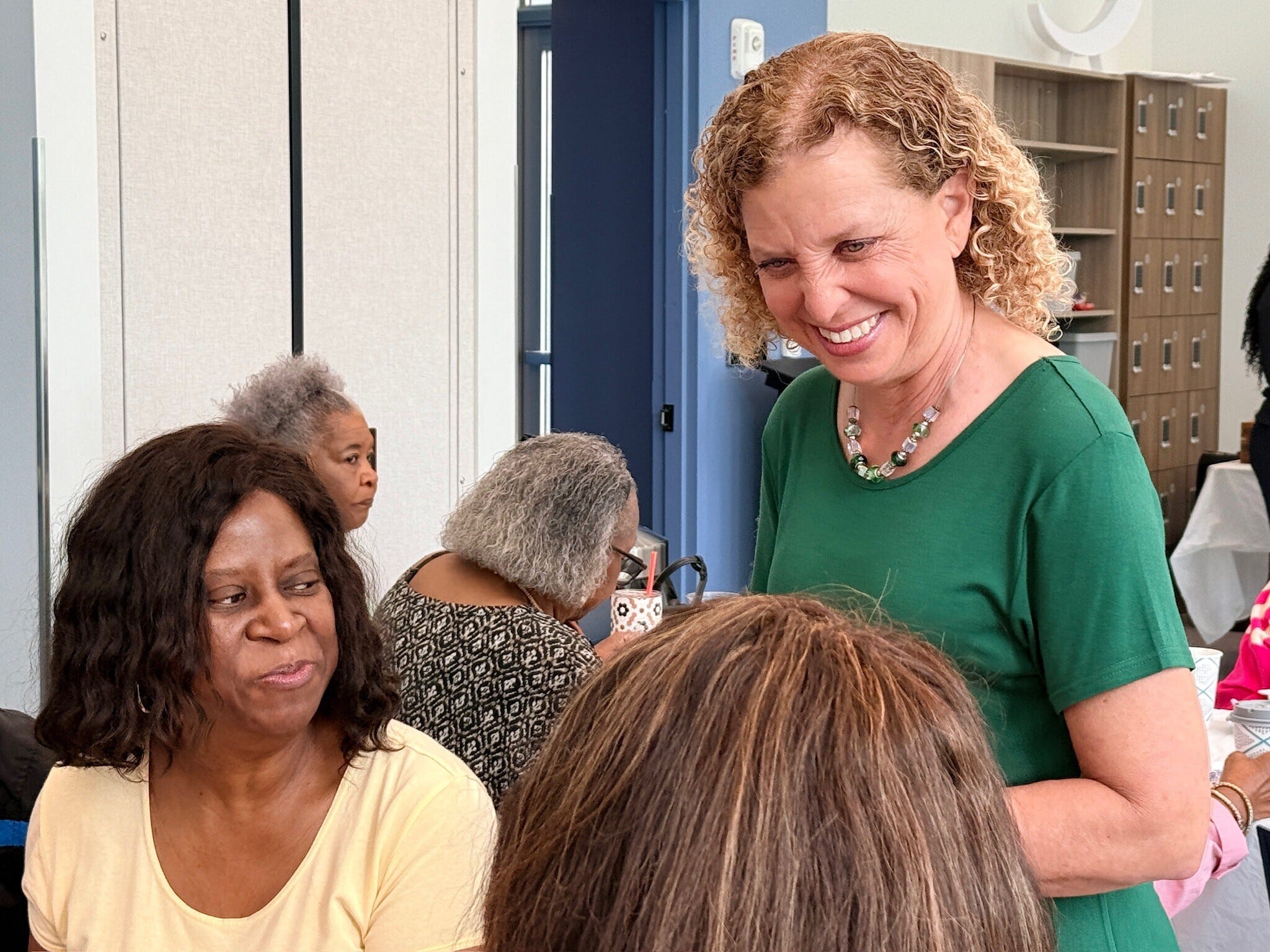
In a rare and possibly unprecedented move, House Minority Leader Hakeem Jeffries has declined to endorse Democratic Rep. Debbie Wasserman Schultz’s bid for reelection as Black Democrats in South Florida seek to stop her from continuing her career in a heavily Black district.
When asked whether he supported Wasserman Schultz’s choice to run in Florida’s 20th District, Jeffries told reporters at a Tuesday press conference, “Haven’t made a decision as it relates to that particular race.”
“Everybody has a right to run where they see fit, they’ve got to go make their case to the people that they hope to represent moving forward, and that’s what I communicated directly to Congresswoman Wasserman Schultz,” he continued.
Jeffries’ reluctance to back Wasserman Schultz “stunned some of his colleagues,” according to Axios’ Andrew Solender.
“He’s never done that,” one unnamed senior House Democrat told the outlet. “He supports incumbents.”
But the circumstances in this case—brought about by the Florida GOP’s new gerrymander and former Democratic Rep. Sheila Cherfilus-McCormick’s April resignation—are extremely unusual.
Thanks to an aggressive Republican redraw, Wasserman Schultz was left without an obvious district in which to run. Instead, she chose a non-obvious option: the safely blue 20th District in Broward County, where only 2% of her current constituents now live.
But before she even announced her plans, local Black leaders urged the congresswoman not to run in the 20th, where voting-age Black residents make up a 42% plurality of the electorate and Latinos another 22%.
“With only two remaining Black access congressional districts in Florida, the significance of representation in District 20 cannot be overstated,” the Florida Legislative Black Caucus said in a statement. “Congresswoman Wasserman Schultz’s decision to pursue reelection in this historically Black district, despite explicit requests from the Black community to seek candidacy in a neighboring district, is disheartening.”
Black politicians have now moved beyond words in their efforts to keep Wasserman Schultz from winning. According to the Miami Herald, four candidates, all African American, met earlier this week to discuss the possibility of uniting behind a single standard-bearer with the goal of defeating the longtime congresswoman in the Aug. 18 primary.
However, those four—rapper Luther Campbell, former Broward County Commissioner Dale Holness, activist Elijah Manley, and Cherfilus-McCormick—have yet to agree on who that standard-bearer should be.
Manley, though, expressed optimism to the Herald, saying, “I think we’re all going to come to some agreement before the end of qualifying,” which is June 12.
The Downballot Podcast
Tuesday’s massive primary night
The biggest primary night of the year unfolded on Tuesday—and it’s still not over. On this week’s episode of The Downballot podcast, co-hosts David Nir and David Beard recap all the top action and update listeners on where things stand in key contests that remain uncalled. On the docket is California’s race for governor, where Republicans are now looking at a possible lockout, as well as major battles in Iowa, Montana, and South Dakota, plus a whole ton of House races.
The Davids also speak with Georgia Democrat Peter Hubbard, who won a spot on the state’s Public Service Commission in a shocking landslide last year. Hubbard explains why races like his have become so salient, particularly as Americans face soaring utility bills and unwelcome data center construction. And with Democrats in position to take a majority on the PSC this fall, he tells us how the commission could achieve a “win-win-win” for Georgians by promoting renewable energy.
Election Recaps
SD-Gov
Rep. Dusty Johnson conceded South Dakota’s Republican primary for governor on Wednesday morning, setting up the state’s first-ever runoff on July 28. That second round will feature wealthy businessman Toby Doeden, who finished first with 31% of the vote, and Gov. Larry Rhoden, who edged past Johnson 25-23 to secure the runner-up slot.
South Dakota has required runoffs in races for Congress and governor for 40 years, but as Eric Ostermeier explained earlier this year, the law has never been triggered because the threshold for winning outright—just 35%—is so low.
MT-01
Gun safety activist Ryan Busse conceded the Democratic primary for Montana’s open 1st District on Wednesday morning to smokejumper Sam Forstag, who defeated him 37-33.
Forstag will now take on conservative radio host Aaron Flint in the race to replace retiring GOP Rep. Ryan Zinke. While the 1st District, based in the western part of the state, leans decidedly to the right, the pro-Democratic House Majority PAC previously announced it had booked nearly $1.5 million in fall TV ad time to try to flip the seat.
Redistricting Roundup
AL Redistricting
The Supreme Court on Tuesday stayed a recent lower court ruling that found that Alabama’s new congressional boundaries still discriminated against Black voters, allowing Republicans to move forward with a map that eliminates one of the state’s two districts where African Americans have the ability to elect their preferred candidates.
Democratic Rep. Shomari Figures, whose majority-Black 2nd District was dismantled by the new map, slammed the Supreme Court’s decision but reiterated his intention to seek reelection.
“The Supreme Court has now confirmed that there is no longer a Voting Rights Act in America, and states are essentially free to discriminate against minority voters with no consequences,” he warned in a statement late on Tuesday night. “This is a dangerous ruling that sets the State and this nation back decades.”
“Too many people fought and sacrificed for me to have the opportunity to serve in Congress for me to just walk away,” he continued. “I will stay in this fight to build a better future for Alabama and a better country.”
Last month, Figures said he would run in the redrawn 2nd District, which saw its Black voting-age population reduced from 49% to 40%. As a consequence of becoming much whiter, the district also became much redder, too, shifting from a 54-45 margin for Kamala Harris to a 57-42 win for Donald Trump.
It also no longer includes the congressman’s hometown of Mobile, which is now in the 1st District. Figures briefly considered running in the 1st, but that district, which would have voted for Trump 67-31, would have been all but impossible for any Democrat to win.
The Supreme Court’s new decision will likely be felt beyond Alabama as well. While the state’s maps had been the subject of long-running litigation under the Voting Rights Act, the federal district court that blocked the latest plan relied on an entirely different legal principle to bar its use: the Constitution’s prohibition on racial gerrymandering.
That doctrine was not at issue in the Supreme Court’s April ruling in Callais v. Louisiana that gutted the VRA. However, as legal commentators—and a furious dissent by Justice Sotomayor joined by her two liberal colleagues—have pointed out, the court’s brief, unsigned order on Tuesday now makes racial gerrymandering claims impossible to prove, too.
Senate
MT-Sen
On her first day as the Democrats’ newly minted nominee for Montana’s open Senate race, Air Force veteran Alani Bankhead reiterated that she wouldn’t drop out to boost independent Seth Bodnar’s campaign against Republican Kurt Alme.
“We said it over and over again: I will not drop out of this race,” Bankhead wrote on social media. “No one approached myself or anyone on staff to bend the knee to anyone.”
“If you preferred me as a candidate but voted for someone else out of the fear that I would drop out, you allowed yourself to be manipulated,” she continued. “I am sending the most heartfelt ‘thank you’ to the people who think critically, who do their own research, who contacted the campaign and asked directly.”
House
MD-05
AIPAC’s United Democracy Project affiliate is spending over $1 million on ads praising Del. Adrian Boafo ahead of the packed June 23 Democratic primary for the seat that longtime Rep. Steny Hoyer is not seeking reelection to.
The commercials praise Boafo for supporting legislation “to unmask ICE” and tout his endorsements from Hoyer, Gov. Wes Moore, and Sen. Angela Alsobrooks. The spots, as usual with UDP, do not mention Israel or any related topic.
NY-07, NY-10, NY-13
American Priorities, an organization formed to counter AIPAC’s influence in Democratic primaries, tells the New York Times it plans to spend a total of $2 million to aid the same three congressional candidates New York City Mayor Zohran Mamdani is supporting on June 23.
The group is backing Assemblywoman Claire Valdez’s campaign for the open 7th District; former New York City Comptroller Brad Lander’s primary challenge to Rep. Dan Goldman in the 10th; and activist Darializa Avila Chevalier’s bid to deny renomination to Rep. Adriano Espaillat in the 13th. All three constituencies are safely Democratic.
NY-17
Rockland County Legislator Beth Davidson is tying former National Security Council official Cait Conley’s connections to ICE in what appears to be the first negative TV ad from any Democrat ahead of the June 23 primary in New York’s 17th District.
“She’s on the payroll of two AI firms that help Trump and ICE track, target, and detain law-abiding immigrants and U.S. citizens,” Davidson says of her main intraparty opponent. “And she still works for them—even after ICE killed two Americans.”
Politico and The Intercept separately reported in February that Conley consulted for a pair of firms that support the Trump administration’s operations against immigrants. Conley’s team pushed back by saying she was involved in anti-terrorism work and that she had nothing to do with ICE’s activities.
Davidson and Conley are the two leading Democrats vying to take on Rep. Mike Lawler, one of the most vulnerable House Republicans in the country.
Attorneys General
NV-AG
Donald Trump endorsed attorney Adriana Guzman Fralick over Douglas County Commissioner Danny Tarkanian, who may be the most prominent perennial candidate in the country, one week ahead of Tuesday’s Republican primary for Nevada attorney general.
Tarkanian and Guzman Fralick, who already had Gov. Joe Lombardo in her corner, are facing off for the right to succeed Democratic incumbent Aaron Ford, Lombardo’s likely opponent this fall.
Democrats have their own competitive contest between state Treasurer Zach Conine and state Senate Majority Leader Nicole Cannizzaro.
One recent fault line in the Democratic race is the financial support the two candidates have received from affluent donors. Cannizzaro has highlighted the millions that wealthy cryptocurrency executive Jeffrey Berns has contributed to Conine’s PAC, while the treasurer has sought to tie Cannizzaro to the payday lending industry.
Secretaries of State
GA-LG, GA-SoS
State Sen. Josh McLaurin received endorsements this week from U.S. Sens. Raphael Warnock and Jon Ossoff ahead of the June 16 Democratic primary runoff for lieutenant governor of Georgia. McLaurin faces Nabilah Parkes, a fellow state senator he led by a narrow 41-39 spread in the first round on May 19.
Warnock also announced his support for former Judge Penny Brown Reynolds’ campaign for the Democratic nomination for secretary of state. Ossoff has not taken sides in the runoff between Brown Reynolds and Fulton County Commissioner Dana Barrett, whom Reynolds led 42-35 in the primary.
Mayors & County Leaders
Chicago, IL Mayor
State Comptroller Susana Mendoza on Wednesday became the first prominent candidate to announce a campaign against Chicago Mayor Brandon Johnson, a fellow Democrat who is up for reelection next year.
Mendoza, who unsuccessfully ran for this post in 2019, argued in her kickoff that the incumbent has failed to address what she called the city’s “three major crises,” which she labeled “a financial crisis, a public safety crisis, and a crisis of confidence that they will get better.”
Johnson, who has not yet announced if he’ll seek a second term, has pushed back on his critics, calling 2025 “one of the most transformative years in violence reduction in our city’s history.” He’s also castigated Donald Trump for besieging the city while making the case he’s effectively stood up to the administration’s assault.
“We have endured quite a bit,” the mayor told WTTW last month. “It has been a barrage of just crisis after crisis that I’ve had to manage, but again, you know, I’ve made it very clear that it’s a lot more effective and easier to lead when you are leading with your values and your convictions.”
But Johnson, a prominent progressive who won a tight race in 2023, has struggled to convince his constituents he’s the right man for this difficult job. A Suffolk University poll conducted in April gave him an underwater 34-44 favorable rating, while other surveys have shown him with even worse scores.
Johnson’s vulnerabilities—in January, Chicago Magazine called him “the weakest mayor in modern memory”—have prompted numerous candidates to consider the race.
Both U.S. Rep. Mike Quigley and Cook County Treasurer Maria Pappas have said they intend to run, though neither has gone as far as Mendoza in actually launching a campaign. Other influential figures like Secretary of State Alexi Giannoulias, who has over $18 million in the bank for his uncompetitive reelection campaign this year, are also eying the contest.
All candidates will run on one officially nonpartisan primary ballot next February. A runoff would take place in April unless one contender wins a majority of the vote.
Poll Pile
ME-Sen: Public Policy Polling for Graham Platner:
Graham Platner: 49 (D), Susan Collins (R-inc): 45.
OH-Sen: Beacon Research and Shaw & Company Research for Fox News:
Sherrod Brown (D): 53, Jon Husted (R-inc): 45.
CO-Gov (D): PPP for Fighting For Colorado (pro-Phil Weiser):
Michael Bennet: 36, Phil Weiser: 30.
OH-Gov: Beacon and Shaw:
Amy Acton (D): 50, Vivek Ramaswamy (R): 49.
No sexual assault allegations against Platner in Times’s effort to comb through every minutiae in his personal life to drive him from the race.
https://www.nytimes.com/2026/06/04/us/politics/platner-maine-senate-girlfriends-relationships.html?unlocked_article_code=1.nlA.lhpd.GlgTayYIj6Ef&smid=url-share
I'm looking at Pennsylvania congressional elections, and noticed something interesting: in PA-14, both nominees were uncontested in their primaries, but incumbent Reschenthaler only got a little less than 52% of the total vote compared to his Dem opponent Alan Bradstock (52,447 votes to 48,523). Additionally, in PA-16, the Dem there actually got *more* votes than Mike Kelly, the Republican incumbent (both primaries were also uncontested). I know the focus is on 1, 7, 8, and 10 for the highest-priority flips, but I feel like 14 and 16 could be under-the-radar potential flips as well, especially in a wave year and with the Shapiro/Garrity match-up at the top of the ticket hopefully buoying downballot Dems further.