



Leading Off
Special Elections
Democrats in Arkansas have a chance to flip a swingy GOP-held seat in the state House in a special election on Tuesday, while an independent is campaigning against a Republican for a conservative district in the state Senate. Democrats in Massachusetts, by contrast, are favored to hold a Democratic-leaning state Senate district.
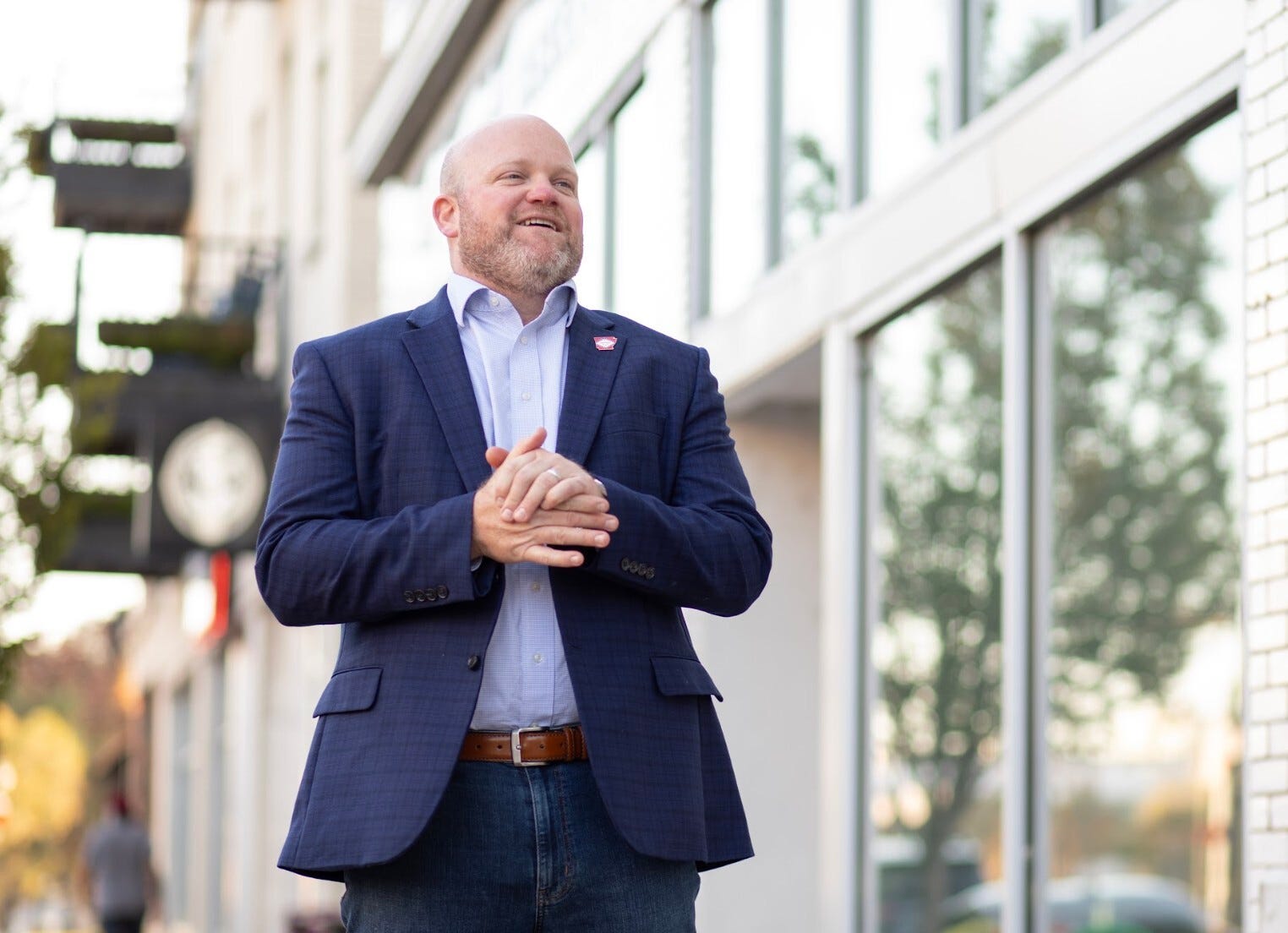
The contest for Arkansas’ 70th House District outside of Little Rock pits Democrat Alex Holladay, a healthcare administrator who came close to winning here in 2024, against Republican Bo Renshaw, a local businessman and physical therapist.
While Arkansas is one of the most conservative states in the country, the 70th is anything but a GOP stronghold. Kamala Harris, according to calculations by The Downballot, carried this constituency 50-48 in 2024 even as Republican state Rep. Carlton Wing was narrowly fending off Holladay 51-49.
This district, which includes part of the city of North Little Rock and a few neighboring areas, also swung left at a time when Arkansas and the nation as a whole were moving to the right: Donald Trump in 2020 prevailed 51-47, according to data uploaded to Dave’s Redistricting App by the Voting and Election Science Team.
The chance for Democrats to flip a rare purple seat in this red state first arose in September, when Wing resigned to become head of Arkansas TV, the state’s public TV network. (Wing soon made news when he announced that the state’s network would separate itself from PBS.)
Republican Gov. Sarah Huckabee Sanders, though, initially announced that the special election would not take place until June 9, which was the same day she’d already picked for the contest to succeed the late GOP state Sen. Gary Stubblefield. A pair of court orders, however, required Sanders to hold both contests on March 3, which is the same day as Arkansas’ statewide primary.
Republicans could also lose Stubblefield’s dark-red 26th Senate District in the west-central part of the state, though not to a Democrat.
That contest is a duel between Republican businessman Brad Simon and Adam Watson, an independent who has been a local leader in the effort to stop a giant prison from being built in the area.
While Simon also opposes the Sanders-backed prison project, Watson is hoping to pull off a surprise in a race where there’s no Democrat on the ballot. Whoever replaces Stubblefield, who won a new four-year term in 2024, won’t be on the ballot again until 2028, while the 70th House District will be up again this fall.
Republicans, however, will keep their supermajorities in both chambers no matter what happens in either election.
There’s less suspense up north in Massachusetts in the special election to succeed Democratic state Sen. Edward J. Kennedy, who died last year. (Kennedy was not related to the late U.S. Sen Ted Kennedy.) Harris carried the 1st Middlesex Senate District, which includes Lowell, 55-43.
The Democratic nominee is state Rep. Vanna Howard, while the GOP is fielding Sam Meas, a businessman who won his nomination through a write-in effort after no one sought to qualify for the primary ballot. Joe Espinola, a former school committee member who has run for office as both a Republican and a Democrat, is also running as an independent.
Democrats hold an imposing 34-5 supermajority in the 40-member chamber, with only this seat vacant.
At long last, the first primary night of 2026 is here—and we’ve got everything you need to know, all in one place, in our comprehensive preview:

To unlock our complete roundup of 40 critical elections, please take advantage of our special sale this week. We’re offering $10 off our usual subscription price—a discount of 17%!

Redistricting Roundup
NY Redistricting
The Supreme Court on Monday granted a request by Republican Rep. Nicole Malliotakis to stay a January ruling by a New York trial court directing that Malliotakis’ district be redrawn.
The justices did not explain their rationale in an unsigned, one-paragraph order, but in a concurring opinion, Justice Samuel Alito called the trial court’s ruling “unadorned racial discrimination” that violates the Constitution.
That court determined that New York’s 11th District discriminated against Black and Latino voters and needed to be revamped to allow the two groups, acting in concert, to elect their preferred candidates. Doing so would have almost certainly made the district more Democratic, jeopardizing Malliotakis’ chances of winning reelection.
In a dissent joined by her two fellow liberals on the court, Justice Sonia Sotomayor slammed the majority for taking “the astonishing, unexplained step of staying a state trial court’s order before the state high court has had a chance to weigh in.”
Malliotakis had filed an appeal with the state courts, but an intermediate appeals court declined to grant a stay while the case was pending. Sotomayor argued that Malliotakis could and should have sought relief before New York’s top court, saying that her failure to do so should have led the Supreme Court to reject her request that the justices intervene.
Regardless of what might happen before the state courts, though, the Supreme Court’s decision strongly suggests that there’s little chance a future ruling adverse to Malliotakis would survive the scrutiny of the federal courts.
UT Redistricting
Utah Republicans appear to have reached the necessary signature targets to place a measure on the ballot this year that would repeal a 2018 initiative banning gerrymandering, but their success is not certain.
Opponents have been encouraging voters who signed the GOP’s petition to withdraw their names, and nearly 5,000 have done so statewide, according to Bryan Schott of Utah Politics Watch. Signatories have 45 days from the time that election officials post their names online to rescind them. Since the signature verification process will run until March 9, rescissions could stretch until late April.
Senate
MA-Sen
Democratic Sen. Ed Markey received an endorsement on Monday from Rep. Ayanna Pressley, a prominent progressive who had considered challenging him last year.
While Pressley passed on the race, though, Rep. Seth Moulton, who has carved out a more moderate profile, is running against Markey in the primary. The election, however, is not until Sept. 1, making it one of the last in the six-month-long primary season.
Governors
NE-Gov
Wealthy businessman Charles Herbster announced Monday that he would not seek a rematch against Nebraska Gov. Jim Pillen, who defeated him in their 2022 Republican primary.
Herbster made his plans known shortly before candidate filing closed, and Pillen now faces only minor intraparty opposition. The governor will also be favored in the general election against former state Sen. Lynne Walz, the likely Democratic nominee, in this conservative state.
NM-Gov
A pair of lawsuits challenging the eligibility of businessman Duke Rodriguez to run for New Mexico’s governorship have been dismissed, with a judge rejecting the latest one for missing a key deadline.
That suit was brought by a rival candidate for the GOP nod, Jim Ellison, a former member of the state’s Public Regulation Commission who has argued that Rodriguez has not lived in the state for the requisite five years.
In comments to reporters after the dismissal, Ellison did not say whether he would appeal. A different judge rejected a previous challenge on procedural grounds.
SC-Gov, SC-01
The House Ethics Committee announced on Monday that Republican Rep. Nancy Mace, who is running for South Carolina’s open governorship, was under investigation over allegations that she sought and received more than $9,000 in reimbursements for housing expenses she did not incur. According to Politico, Mace did not immediately comment on the probe.
House
CA-06, CA-05
Republican Rep. Kevin Kiley announced on Monday that he’d run for California’s 6th Congressional District, a Democratic-leaning seat that otherwise lacks an incumbent. The decision was an unexpected move, since Kiley had taken steps toward a bid against fellow GOP Rep. Tom McClintock in the conservative 5th District.
Kiley, whose 3rd District became reliably blue after voters approved Proposition 50 in November, spent the last four months publicly deliberating which constituency to run for, a process that multiple writers compared to “The Bachelor.”
Kiley’s decision to air ads in the Fresno media market, which covers the 5th District, seemed to preview a run there and even prompted McClintock to release a memo Friday saying he anticipated his colleague would oppose him.
But while Kiley, who barely represents any of the new 5th, said on Monday that he was “fully prepared” to run there, he said that “seeking office in a district that doesn’t include my hometown didn’t feel right.”
Kiley is now unlikely to face any serious intraparty opposition in the June top-two primary for the 6th, but he’ll have a difficult time should he reach the general election. Kamala Harris would have carried the revamped 6th District, which includes part of the Sacramento area, 54-45, and the congressman represents only around a third of the redrawn district.
Four prominent Democrats began running after Democratic Rep. Ami Bera, who represents the old 6th, opted to seek reelection in the 3rd District instead. The field consists of West Sacramento Mayor Martha Guerrero, Sacramento County District Attorney Thien Ho, former state Sen. Richard Pan, and Lauren Babb Tomlinson, who has worked as an official at Planned Parenthood.
IL-04
Lyons Mayor Chris Getty announced late last week that he’d run as an independent for Illinois’ open 4th Congressional District.
Getty is the third notable Democrat to run as an unaligned candidate in the race to succeed Rep. Chuy Garcia, who engineered his retirement to ensure that only his chief of staff, Patty Garcia, would be able to participate in the March 17 Democratic primary. The field already included Mayra Macias, who is a former executive director of the Latino Victory Fund, and Chicago Alderman Byron Sigcho-Lopez.
Independent candidates have until May 26 to turn in 10,816 valid signatures, which is more than 15 times as many as Patty Garcia had to submit.
MT-01
Republican Rep. Ryan Zinke unexpectedly announced Monday that he would not seek reelection to Montana’s 1st Congressional District, a move that came just two days before the state’s candidate filing deadline.
Donald Trump carried Zinke’s constituency in the western part of the state by a 54-43 spread in 2024, an increase from his 52-45 showing here in 2020.
But the 1st, which came into being after Montana gained a second House seat as a result of the 2020 census, isn’t monolithically Republican. Democratic Sen. Jon Tester prevailed by a tight 50-49 margin, according to calculations by The Downballot, even as he was losing reelection statewide 53-46 against Republican Tim Sheehy in 2024.
Zinke, who previously represented the entire state in the House before his short and unhappy tenure as Trump’s first interior secretary, fell right in between, winning his final term 52-45.
Zinke had given no indication he was considering retirement before his Monday announcement, when he said he was ending his second stint in the House because of ongoing surgeries to deal with “injuries sustained” from his service as a Navy SEAL. The GOP, though, didn’t need to wait long before landing its first candidates for this now-open seat.
Conservative radio host Aaron Flint, who hosts what Punchbowl News characterizes as a “popular statewide” program, quickly announced he would compete in the June 2 Republican primary. Flint almost immediately received endorsements from Zinke, Sheehy, and Rep. Troy Downing, whose 2nd District forms the other half of the state.
Former state Sen. Al Olszewski, who narrowly lost to Zinke in the 2022 primary, also said Monday that he would run again.
Three notable Democrats were challenging Zinke when they thought he’d be their opponent: gun safety activist Ryan Busse, who was his party’s unsuccessful 2024 nominee against Gov. Greg Gianforte; smokejumper Sam Forstag; and rancher Matt Rains.
Zinke’s abrupt retirement will mark the end of the volatile career of a man who was only briefly a national GOP star but still managed to return to elected office despite countless scandals.
Zinke was first elected to the state Senate in 2008, but he left the legislature four years later after serving as businessman Neil Livingstone’s running mate for Livingstone’s ill-fated primary campaign for governor. But he soon got his first—though not last—comeback opportunity when GOP Rep. Steve Daines gave up Montana’s at-large congressional district to wage a successful bid for the state’s other U.S. Senate seat.
It was a close thing, though, as Zinke won the 2014 GOP nod just 33-29 over former state Senate Minority Leader Corey Stapleton, with state Sen. Matt Rosendale finishing in a tight third place. However, he easily prevailed that fall, and his convincing 2016 reelection victory against a touted Democratic opponent soon sparked intense interest in his ambitions.
Senate Republicans thought Zinke was the perfect choice to take on Tester in 2018, and they waged an intense effort to recruit him. Trump, though, spoiled those plans by instead tapping the congressman for his Cabinet.
Zinke was still serving there when Rosendale, who had stepped up to run in his place, lost to Tester. But not for long: Zinke resigned just weeks after the election, reportedly due to Trump White House pressure in the face of 18 federal investigations.
Zinke, though, was never charged even though government officials ultimately determined he’d acted improperly.
Federal investigators released a report in the winter of 2022 concluding he had violated ethics rules while in the Cabinet by taking part in talks with developers, including the multinational energy giant Halliburton, about a project involving land owned by his foundation and then lying about his involvement in the negotiations.
The report became public at a time when Zinke was running to return to the House in the brand new 1st District. (Rosendale, who had been elected in 2020 to the at-large seat, opted to run for the dark-red 2nd District after the state earned a second district following the most recent census.)
Zinke spent the primary facing questions about his ethics and about just how much time he spent in Santa Barbara, California, compared to his home state. Trump, though, endorsed his former subordinate, and that seal of approval may have given Zinke the boost he needed to win a tight primary by just a 42-40 margin over Olszewski.
But Zinke had a challenging general election battle ahead of him against Democrat Monica Tranel, who emphasized his many old scandals. One Tranel ad featured her comparing the Republican to “a snake on a plane,” explaining, “Ryan Zinke spent tens of thousands of our tax dollars to fly on private planes.”
Zinke also faced unwanted headlines when the inspector general of the Interior Department released a report concluding he’d made statements to investigators “with the overall intent to mislead them” over a matter involving a casino sought by two Native American tribes. But while Zinke underperformed, he nonetheless prevailed 50-46.
Tranel tried again in 2024, and she again drew attention with an ad filmed in an Airbnb rental owned by the congressman. Zinke, whom Tranel accused of “buying up properties across Montana and jacking up the rent,” ran several points behind Trump, but not by nearly enough to lose.
NY-17
The labor-backed Working Families Party endorsed Tarrytown Trustee Effie Phillips-Staley on Monday, ahead of the packed June 23 Democratic primary to face GOP Rep. Mike Lawler in New York’s competitive 17th District.
SD-AL
State Sen. Casey Crabtree dropped out of the Republican primary for South Dakota’s only U.S. House seat late last week and endorsed Attorney General Marty Jackley. Jackley is now the only notable Republican running to replace GOP Rep. Dusty Johnson, who is campaigning for governor, with just under a month left before the March 31 filing deadline.
Legislatures
MI State House
State Rep. Karen Whitsett, a Michigan Democrat who frequently blocked her party’s priorities in the legislature, announced Monday that she would not seek reelection and “will not be running for any office ever again.”
Whitsett, who represents a heavily Democratic seat in Detroit, also said she was leaving her old party, though she does not appear to have said how she plans to identify during the rest of her term. But that may not matter: Whitsett, who had already said last year that she had stopped caucusing with the Democrats, hasn’t cast a vote in over six months.
Poll Pile
WA-04 (top-two primary): Fabrizio, Lee & Associates (R) for unnamed pro-Amanda McKinney group: John Duresky (D): 25, Amanda McKinney (R): 20, Jerrod Sessler (R): 14, Matt Boehnke (R): 7, Devin Poore (I): 5, Wesley Meier (R): 1, undecided: 27.
https://cadem.org/open-letter-to-the-democratic-candidates-for-governor/
"If you do not have a viable path to make it to the General Election, do not file to place your name on the ballot for the Primary Election.
If you decide to file, be prepared to suspend your campaign and endorse another candidate on or before April 15th if your campaign cannot show meaningful progress towards winning the Primary Election in the coming weeks."
From the CA Dem chair
Looks like Phil Berger lost in that NC state senate primary, down by 15 with over 90 percent in.