



Leading Off
MI Ballot, OK Ballot
Michigan voters will decide in November whether to hold a constitutional convention that would allow the state to revisit its governing document, while Republicans in Oklahoma are fighting over whether to even vote on the issue at all next spring.
The two states are among 14 where this question is supposed to automatically appear on the ballot after a set number of years have elapsed.
In Michigan, which holds such referendums every 16 years, voters overwhelmingly rejected the idea by a 67-33 margin when it last came up in 2010. That was, however, still the best-ever showing for “yes” since 1961, when a narrow 51-49 majority voted to start the gathering that drew up the state’s current constitution (which also reset the cycle to start in 1978).
This year’s referendum on holding a constitutional convention, or “con-con,” could be considerably more competitive than in years past, however. A poll from the Glengariff Group early this month showed a 47-31 plurality in support of a convention, which will be identified on the ballot as Question 1.
But while backers are enthusiastic—Republican consultant Dennis Lennox, who led the “yes” effort in 2010, called Question 1 “the most consequential choice on the Michigan ballot” in a recent op-ed in the conservative Washington Examiner—they aren’t well organized. Indeed, Bridge Michigan says that there’s “no official ‘yes’ campaign” this time.
A broad cross-section of groups, by contrast, is determined to make sure voters once again say no.
“A Con-Con allows delegates to make sweeping changes to the state constitution, opening the door for Lansing politicians and special interests to write their own rules and agendas without any accountability or oversight from voters,” warns Protect MI Constitution from Special Interests, the coalition leading the “no” effort. “This would risk Michigan’s future without any transparency or accountability.”
The campaign includes organizations that are usually on opposite sides of major issues like Planned Parenthood and the Michigan Catholic Conference, which unsuccessfully opposed a 2022 amendment that enshrined abortion rights into the constitution.
Both candidates for the state’s open governorship, Democrat Jocelyn Benson and Republican John James, are also against Question 1. James’ running mate, however, caused problems for the ticket earlier this month when he suggested conservatives could vote yes as a way to remove the abortion rights amendment.
“Sometimes, you have to say to yourself, ‘This might be our only way,’” state Rep. Jay DeBoyer, the GOP’s nominee for lieutenant governor, told a party gathering in a recording published by the Detroit News.
DeBoyer, who was recorded saying he was still undecided on how to vote, subsequently insisted to the paper that “[t]he abortion issue is settled in Michigan,” but his Democratic rival was unconvinced.
State Senate Majority Leader Winnie Brinks, Benson’s pick for lieutenant governor, told reporters that DeBoyer’s comments show Republicans “have their eye on eroding or eliminating” abortion access, as well as the state’s voting rights amendment that passed the same year.
Michigan is the only state that has a constitutional convention question on the ballot this year, while Oklahoma is scheduled to hold its own referendum on April 7—the only such vote set for 2027. Oklahoma’s highest court, though, first needs to decide if that referendum can proceed at all.
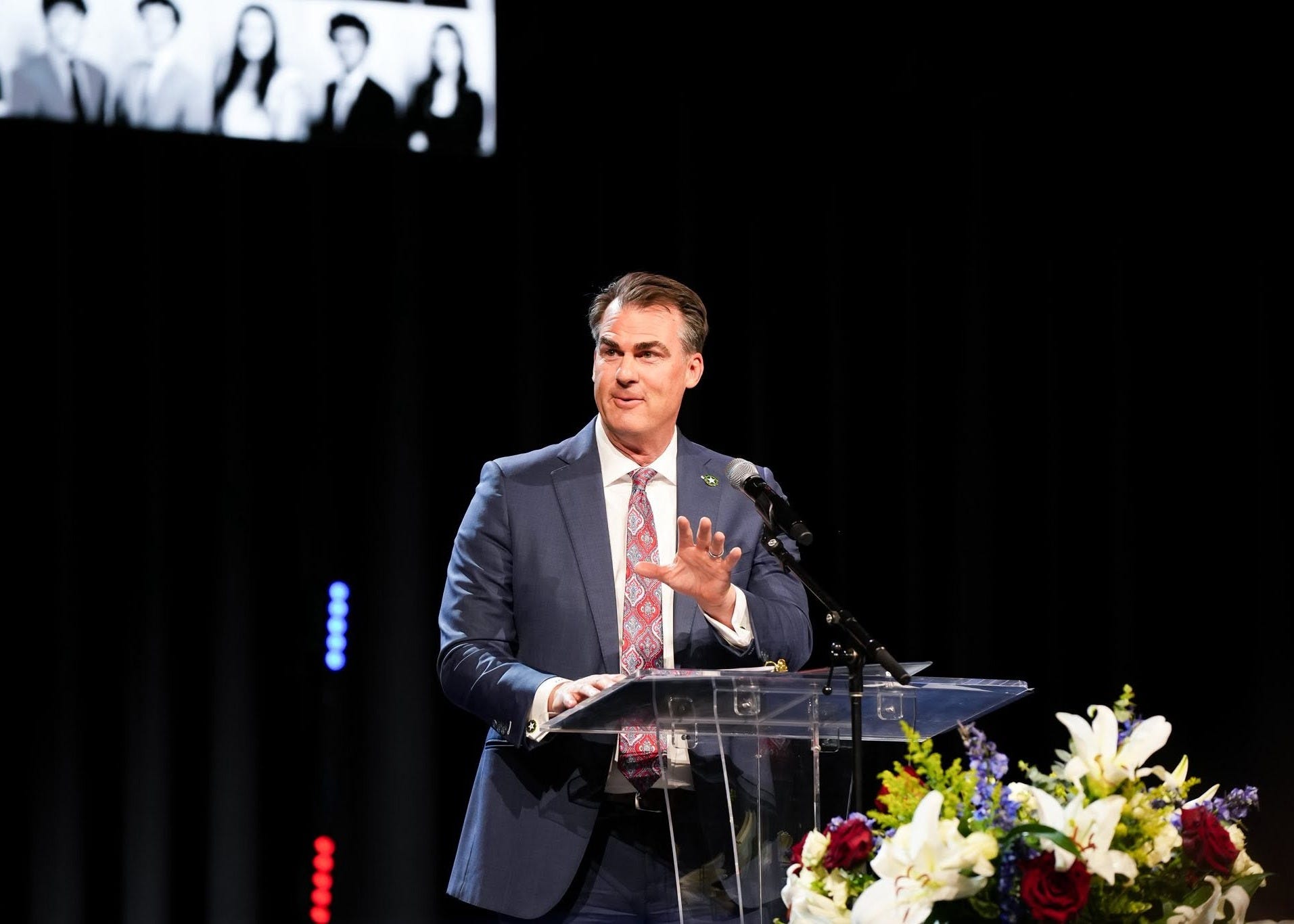
The dispute arose last month when Republican Gov. Kevin Stitt issued an executive order setting a springtime election. The governor argued his move was necessary because, while the state constitution requires that “the question of such proposed convention shall be submitted to the people at least once in every twenty years,” there has been no such vote since 1970.
The state legislature, despite various proposals over the ensuing 56 years, has always declined to place a constitutional convention referendum on the ballot. Stitt said that because lawmakers have failed to make good on their obligations, he would use the power of his office to call a vote.
Many of his fellow Republicans, though, say he doesn’t have any such power to do so.
Attorney General Gentner Drummond, who unsuccessfully sought the GOP nomination to replace the termed-out governor, said in a statement that for such a question to move forward, the legislature “must pass a bill or joint resolution that must be signed by the governor to be referred to a vote of the people.”
In response to Stitt’s move, former state Rep. Mark McBride filed a lawsuit in early September asking the Oklahoma Supreme Court to affirm that a referendum cannot happen without legislative action.
Yet even if voters decide in favor of constitutional conventions in either Michigan or Oklahoma, there would be more elections to come before either constitution changes.
Michigan voters would select convention delegates from each of the state’s 148 legislative districts (110 for the House and 38 for the Senate). These delegates would wield a great deal of power over what should be added to or excised from the constitution.
“It effectively gives the convention the ability to propose whatever changes they want to the constitution, including shredding it and starting over from scratch,” state constitutional law expert Quinn Yeargain told the Michigan Independent in April.
“I think the biggest risk is the risk of unknown, that I don’t know what the convention will be, who the convention delegates will be,” Yeargain continued. “Given that there is that unknown, it’s effectively asking voters to open up Pandora’s box, and there’s no guarantee of what’s in it, because there are no safeguards.”
Voters would ultimately decide whether to approve or reject the delegates’ work.
It’s less clear what would happen if Oklahoma, which crafted its constitution shortly before it became the nation’s 46th state in 1907, opts for a convention.
Stitt’s executive order created a nine-person Oklahoma Constitutional Convention Commission “to develop recommendations for a lawful, representative, transparent, orderly, and fiscally responsible framework under which a constitutional convention could be organized and conducted.” The governor ordered the body to release its report by the end of the year.
No state has held a convention since 1986, when Rhode Island delegates drafted what remains the nation’s newest state constitution. Voters across the country have otherwise rejected constitutional conventions whenever they’ve appeared on their ballot over the ensuing four decades—with one disputed exception.
In Hawaii, voters appeared to approve a constitutional convention in a tight 50.5 to 49.5 vote in 1996, but the event never took place. The state Supreme Court ruled that, because a decisive number of voters left their ballots blank, “yes” had not actually secured the requisite majority of the vote.
While bitter feelings over that decision lingered for years—a 2018 guest post on Civil Beat slammed it as “shoddy legal reasoning driven by political considerations”—Hawaii voters overwhelmingly selected the “no” option in a do-over held in 1998, then again in both 2008 and 2018.
Hawaii will vote on the issue once more in 2028, a year that will also see Connecticut and Illinois weigh in on the same topic.

Senate
AK-Sen
Republicans have begun airing ads attacking Democrat Mary Peltola over a New York Times story last week in which several former congressional and campaign staffers alleged she’d directed “angry and profane outbursts” at them and others.
“Mary Peltola had one of the highest staff turnover rates in Congress,” says the narrator for an affiliate of the Senate Leadership Fund called Last Frontier PAC. “Now we know why.”
The Times’ story attracted considerable attention, with Republican Sen. Dan Sullivan and his allies arguing it showed why Peltola shouldn’t represent Alaska in the Senate.
One of Sullivan’s most prominent allies, though, saw things differently. Sen. Lisa Murkowski expressed sympathy for Peltola in comments to CNN and critiqued the story, saying, “I think there are many parts of it that I find inflammatory.”
NE-Sen
A new ad in Nebraska stars a woman who was raped by her estranged husband slamming Republican Sen. Pete Ricketts for pardoning her attacker when he was governor in 2022.
In the spot, from a group supporting independent Dan Osborn called Nebraska Values PAC, Jody Snogren recounts the violent assault her then-husband, John Arias, inflicted on her in 1993.
“I have a story to tell about our senator Pete Ricketts,” Snogren begins. “On April 30th, 1993, John Arias broke into my home, tied me up with parachute cord, and violently raped me. My children heard everything that happened.”
“He was caught, pled guilty, and went to prison,” she continues. “He said I should watch my back for the rest of my life. Pete Ricketts cast the deciding vote to pardon this man.”
The spot then transitions to audio of Ricketts, who was serving as one of three members of the state’s Board of Pardons, casting a vote in favor of pardoning Arias.
“But with that, you’ve got your pardon,” he’s heard saying, before Snogren resumes.
“That pardon brought back all the nightmares,” she says. “I found out just totally by accident. I thought impossible that anyone would make that decision without contacting the victim.
“Because of Pete Ricketts, my attacker is now allowed to own a gun and had his name removed from the sex offender registry. I have no idea why Sen. Ricketts chose my rapist over me,” Snogren concludes.
At the time, Ricketts defended the pardon. In a statement he said that Arias, who was released from prison in 2008, “has shown to be remorseful” and praised him for his work with fellow veterans. The pardon sparked outrage, though, particularly from the state branch of the American Legion, which staged a protest at the state capitol.
Ricketts does not yet appear to have responded to the new ad.
TX-Sen
The Senate Majority PAC announced Tuesday that, for the first time, it would step in to help Democrat James Talarico in Texas, but it did not divulge how much it would spend. SMP, which set up an affiliate called Texas Forever last week, said it would run digital ads but has not yet announced plans to book any TV time.
SMP’s new spots hit a familiar theme by blasting Republican Ken Paxton as “dangerously corrupt.” The super PAC’s involvement, though, comes more than two weeks after its Republican counterpart, the Senate Leadership Fund, began what’s morphed into a nine-figure ad campaign. CNN, citing data from AdImpact, said on Tuesday that GOP groups have spent or booked $166 million on the airwaves, compared to $32 million for Democrats.
The article, though, notes that the GOP’s financial advantage isn’t as stark as it might appear because third-party groups need to spend considerably more than candidates to reach the same number of viewers. This has benefited Talarico, who massively outraised Paxton through June. (Updated fundraising disclosures covering the third quarter of the year are due Oct. 15.)
In the Dallas-Fort Worth area, for instance, CNN reports that Republicans spent five times as much as Talarico last week, but that outlay bought them less than twice as much ad time as the candidate. The article also notes that GOP groups have sometimes needed to pay as much as five times as Talarico has.
Polls so far don’t show the GOP’s offensive changing the trajectory of the race. An aggregate of surveys compiled by FiftyPlusOne gave Talarico a 47.6 to 44.7 advantage as of Tuesday, almost identical to his edge the day SLF began its spending spree.
House
AR-02
Well-funded groups on both sides are now spending in the race for Arkansas’ 2nd District, a constituency Republican Rep. French Hill first won in 2014.
Punchbowl News, citing data from AdImpact, reports that Democratic organizations have spent close to $600,000 to aid Chris Jones, a physicist and pastor. (The FEC, however, had not tracked any pro-Democratic independent expenditures on its site as of Tuesday evening.) Punchbowl says that most of the money has come from Ready for the Fight, a super PAC chaired by Illinois Gov. JB Pritzker.
The GOP, though, has deployed a larger $1.5 million since August to aid Hill, the chair of the influential Financial Services Committee. The FEC currently identifies two outfits involved here: Defend American Jobs, which is affiliated with the crypto sector, and Committee for American Leadership, which has only been active in this race.
Ballot Measures
MO Ballot, MO Redistricting
After spending virtually the entire election cycle unsuccessfully trying to block measures they oppose from appearing on the ballot, Missouri Republicans now have just a matter of weeks to campaign against them, and their efforts are not going well.
According to the Missouri Independent, party officials said “they would work this week to develop campaigns” to defeat the two measures at a meeting of the state GOP on Saturday—just 38 days before Election Day. The funds to do so, however, are sorely lacking.
“These things take money. We got to get things designed,” Chandler Haynes, the Republican Party’s political director, told attendees. “We can’t just, you know, like manna from heaven, say ‘please, you know we need palm cards.’ I wish we could. That’d be amazing. But we’ve got to actually allocate funds and raise funds.”
One proposal Republicans want to stop would protect the rights of citizens to pass future ballot initiatives without political interference. The other would repeal a gerrymandered congressional map that the GOP-dominated legislature approved last year.
Reformers signaled their intent to put forth both measures long ago, but Republicans spent their time and money seeking to prevent either plan from ever going before voters. Those efforts were dashed earlier this month, however, when the Missouri Supreme Court overturned decisions by Secretary of State Denny Hoskins rejecting both proposals and ordered that they be placed on the ballot.
Meanwhile, proponents of the two measures have been stockpiling funds and booking TV time.
People Not Politicians, the group backing the redistricting referendum, has reserved $800,000 on TV ads through the election, according to the Independent, while its opposite number, Put Missouri First, has reserved nothing.
The picture is similar for Amendment 6, the proposal to safeguard the initiative process. Even as backers have begun spending more than $900,000 on an ad campaign, there appears to be “no substantial effort” to oppose the amendment, the publication reports.
Republicans are also getting outgunned in the battle over a third measure—an amendment referred to the ballot by lawmakers that would reinstate the near-total abortion ban voters repealed in 2024.
The group organized to defeat the amendment, called Stop the Ban, has brought in $13 million, per the Independent. Their counterparts, a GOP-backed outfit called Her Health, Her Future, have by contrast raised less than $2 million.
Poll Pile
All polls must comply with The Downballot’s requirements.
MI-Sen: Cygnal/Beacon Research for the Michigan Enjoyer:
Abdul El-Sayed (D): 45, Mike Rogers (R): 40, all others 1% or less.
MI-Sen: Marist University:
El-Sayed (D): 51, Rogers (R): 44.
OH-Sen: Suffolk University for USA Today:
Sherrod Brown (D): 47, Jon Husted (R-inc): 44, Bill Redpath (L): 2, Greg Levy (I): 1.
TX-Sen: Pulse Decision Science for Ken Paxton:
Paxton (R): 48, James Talarico (D): 45.
MA-Gov: MassINC Polling Group for CommonWealth Beacon:
Maura Healey (D-inc): 54, Mike Minogue (R): 32.
MI-Gov: Cygnal/Beacon:
Jocelyn Benson (D): 45, John James (R): 38, Anthony Hudson (L): 3.
MI-Gov: Marist:
Benson (D): 53, James (R): 41.
NE-Gov: Lake Research Partners for Lynne Walz:
Walz (D): 40, Jim Pillen (R-inc): 40, Brett Lindstrom (America First Party): 9, Rick Beard (Legal Marijuana NOW Party): 4.
OH-Gov: Suffolk:
Amy Acton (D): 50, Vivek Ramaswamy (R): 41, Don Kissick (L): 3.
RI-Gov: Opinion Diagnostics for Ken Block:
Helena Foulkes (D): 41, Block (I): 24, Aaron Guckian (R): 19.
Block (I): 44, Foulkes (D): 39.
MT-01: Impact Research for Sam Forstag:
Forstag (D): 47, Aaron Flint (R): 44, Nick Sheedy (L): 2.
June: 44-44 tie.
WI-01: DCCC Analytics:
Mitchell Berman (D): 48, Bryan Steil (R-inc): 48.
MI-AG: Cygnal/Beacon:
Eli Savit (D): 39, Doug Lloyd (R): 37.
IA-SoS: Change Research for Ryan Peterman:
Paul Pate (R-inc): 42, Peterman (D): 40.
MI-SoS: Cygnal/Beacon:
Garlin Gilchrist (D): 41, Anthony Forlini (R): 38.
MA Ballot – Question 3 (institute top-two primary): MassInc:
Yes: 43, No: 36.
WA Ballot – Initiative 645 (repeal “millionaire’s tax”): DHM Research:
No: 57, Yes: 35 (when shown full ballot language)
No: 44, Yes: 40 (when shown partial ballot language)
Respondents in the first group were shown ballot language that reads, “This measure would decrease funding for public K-12 education, higher education (including universities and community colleges), and human services (primarily healthcare).” Those in the second group were not.
New Development in PA-01
Brian Fitzpatrick has paid a supporter, who was also at his wedding, to write inflammatory articles about Bob Harvie that the Fitzpatrick campaign has cited as sources in its negative ads against Bob. The Fitzpatrick supporter was also arrested for trafficking in protected turtles.
https://www.politico.com/news/2026/09/30/brian-fitzpatrick-attack-ads-01098450
NY-3, NY-4:
I’ve been seeing many, many ads attacking Tom Suozzi, and some attacking Laura Gillen lately. I’m getting nervous, because I am not seeing as much of the opposite, and Long Island has been trending rightward as of late. (For example, Bruce Blakeman won re election for Nassau County Exec in last year’s blue environment, and I recall it not being close.)
Could Suozzi and/or Gillen go down even in this environment, or is the environment too blue for them to lose? I do think if Gillen survives, she’ll lose in a more GOP-friendly year, maybe even 2028 depending on what the environment looks like, as she’s a weak candidate who if I recall correctly, bungled the congestion pricing response. Thoughts?