


Leading Off
SC-Sen
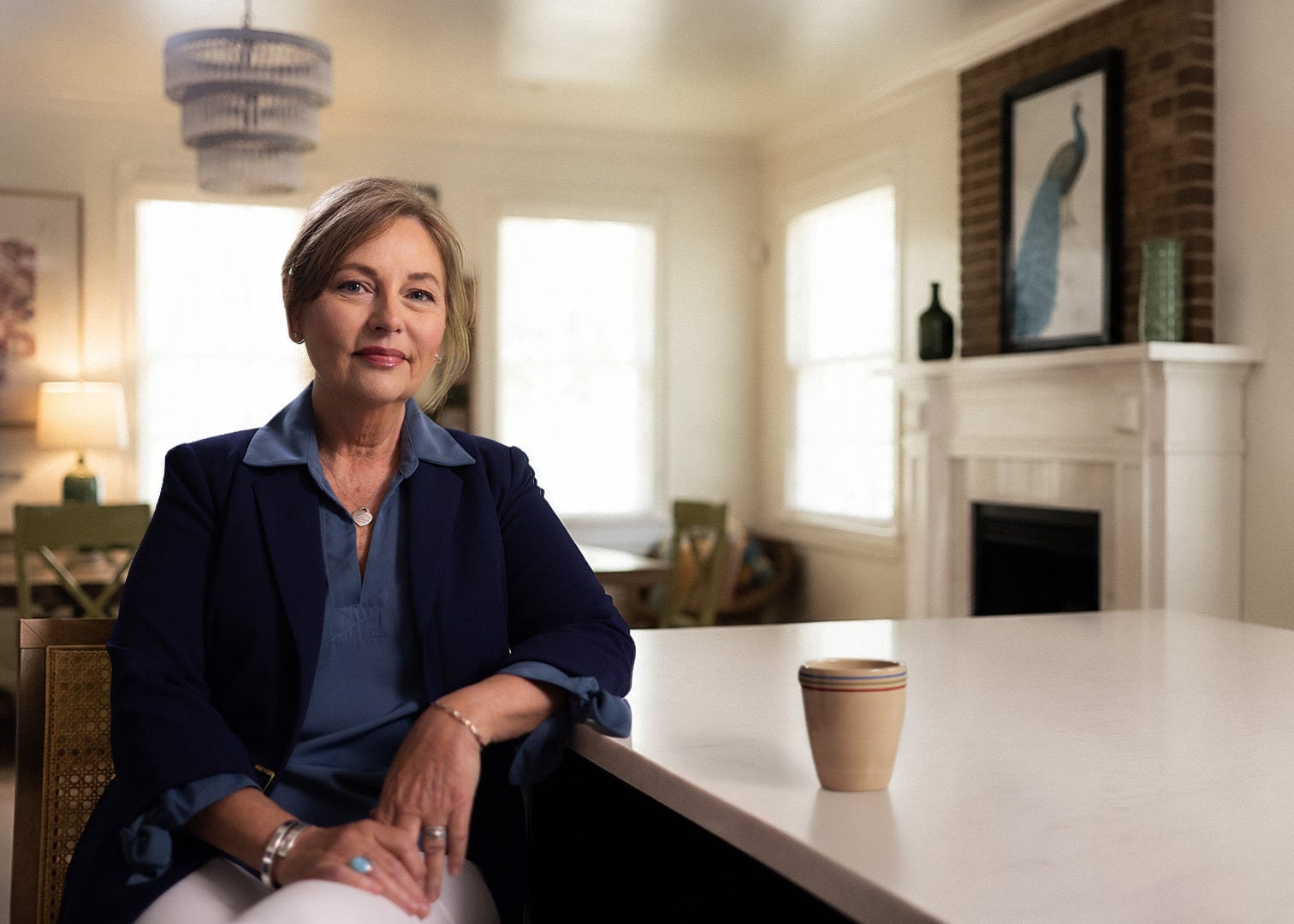
Donald Trump’s surprise choice to succeed Lindsey Graham in the Senate—his sister, Darline Graham—announced on Monday that she’d seek a full term, but other South Carolina Republicans are undeterred by her candidacy.
On Saturday, Rep. Ralph Norman became the first elected official to say that he’d run in next month’s special primary to pick a replacement nominee following Lindsey Graham’s death a week earlier. Then, on Monday morning, Rep. Russell Fry followed suit.
It was only after those twin developments that Darline Graham revealed her own plans in an interview on Fox News with Sean Hannity. Graham’s decision to run, though, was as unexpected as her brother’s death at the age of 71.
In originally urging Republican Gov. Henry McMaster to tap Graham a week ago, Trump himself said she should “serve as interim Senator.” That prompted media outlets to use similar language, with Politico describing her as an “interim caretaker” whose selection would spark “a wide-open race” to succeed the late senator.
On Friday, though, Trump urged Graham to run for a full six-year term, a move that blindsided many politicians, even McMaster. According to the Associated Press, the governor “never contemplated that [Graham] would run for the seat herself.”
Yet even if they were thrown for a loop, Norman and Fry wasted little time in getting ahead of Graham. The two, though, offer very different profiles.
Norman, a member of the far-right Freedom Caucus, is coming off a desultory third-place showing in last month’s primary for governor, in which he took just 17% of the vote despite self-funding almost $5.7 million. (The congressman, who made his fortune as a real estate developer, is worth an estimated $57 million, according to Quiver Quantitative.)
Fry, who entered Congress by unseating a Republican incumbent who’d voted to impeach Trump in 2022, doesn’t have the same baggage, but he faces a different issue.
While South Carolina law allows candidates to run for multiple offices simultaneously, if Fry were to win both the race for Senate and his bid for reelection, his House seat would immediately become vacant.
“I respect Russell Fry and I have enjoyed serving with him in the House, but the reality is, his candidacy could leave his seat vacant until May 18th,” Norman wrote on X. “This would leave his constituents unrepresented, jeopardize President Trump’s agenda, and put the House at risk of being led by a Speaker Hakeem Jeffries.”
Under a new law passed earlier this year, a special election would actually take place on April 6, but top Republicans nonetheless appear to be concerned about a possible vacancy in the House.
On Friday, the leaders of both chambers of the legislature issued a joint statement saying that the Senate race “has highlighted issues in South Carolina law.”
“Voters deserve a consistent and predictable process that also ensures continuity of representation and the broadest possible choice of candidates in an unforeseen special election,” they wrote. “In the coming weeks, we intend to address these important issues so that we can provide the best process available for our citizens.”
Lawmakers are on hiatus, but the legislature technically remains in a special session that McMaster originally called in May for a failed effort to redraw the state’s congressional map. They could therefore amend state law, either to shorten the election calendar in the event of a vacancy, or to allow Fry to be replaced on the ballot in his House race.
One potential candidate pulled her name from contention, though: Rep. Nancy Mace, who finished fifth in the GOP primary for governor, said on Monday afternoon that she would not run.
Whoever wins the special primary next month will take on physician Annie Andrews, the Democratic nominee, in November.
If you appreciate The Downballot’s one-of-a-kind coverage of overlooked elections, we’d be incredibly grateful if you’d consider becoming a paid subscriber. It works out to just $5 a month if you subscribe on an annual basis—or just 25 cents for each edition of the newsletter you’re reading right now. Thank you so much!

Senate
GA-Sen
The Atlanta Journal-Constitution’s Greg Bluestein reports in a new piece that “a measure of despair is seeping in” among Georgia Republicans over Rep. Mike Collins’ chances of unseating Democratic Sen. Jon Ossoff in the fall.
Collins, Bluestein explains, “trails in early polls, faces a massive fundraising disadvantage and carries the sort of political baggage that his rivals long warned could doom him in November against a rising Democratic star.”
Newly released fundraising reports collected by The Downballot show that Ossoff raised $19.6 million in the second quarter of the year and more than $88 million for his campaign to date. Collins, by contrast, brought in just $2.1 million from April through June—despite running in a contested primary and runoff—and overall has raised less than $6.5 million.
The gap between the two campaigns’ bank accounts is consequently immense: Ossoff has more than $42 million in his coffers while Collins has just $2 million on hand. The senator has also led in every public poll of the race this year.
House
IL-04
Election officials have recommended that a pair of Democrats running as unaffiliated candidates in Illinois’ 4th Congressional District not be allowed on the ballot, potentially setting up a one-on-one matchup between the hand-picked Democratic nominee and a third independent.
Last week, investigators concluded that Chicago Alderman Byron Sigcho-Lopez and political organizer Mayra Macias had failed to submit the requisite 10,816 valid voter signatures necessary to run in the general election as independents. The state’s Board of Elections is set to make a final decision on Tuesday.
Macias and Sigcho-Lopez are both longtime Democrats, but this was the only route left to them after Rep. Chuy Garcia engineered his retirement to ensure that only his chief of staff, Patty Garcia, could run in the Democratic primary for the chance to succeed him.
The maneuvering led to a major outcry among Chicago Democrats, since in the safely blue 4th District, winning the primary is normally tantamount to winning election. However, if Macias and Sigcho-Lopez are both barred from the ballot, that could actually make life much more difficult for Patty Garcia (who is not related to the congressman).
That’s because a third Democrat, Lyons Mayor Chris Getty, is also running, and his signatures were never challenged. In a head-to-head race against Garcia without any other left-leaning independents in the race, Getty would have a stronger chance of consolidating voters upset at the congressman’s attempt to hand off his seat to a top aide.
Getty also outraised the field in the second quarter of the year, taking in $188,000. Garcia, by contrast, brought in just $78,000, though she finished with more cash available, $186,000 to $132,000.
TN-05
A super PAC called the Invest in Tomorrow Coalition is spending almost $700,000 on positive ads to boost former state Agriculture Commissioner Charlie Hatcher as he seeks to oust Rep. Andy Ogles in next month’s GOP primary, reports Punchbowl’s Ally Mutnick.
The incumbent, who is seeking a third term representing Tennessee’s conservative 5th District, has been plagued by scandals and poor fundraising, and, as a result, Mutnick says that Republicans “are growing increasingly convinced Ogles could lose.”
Still, he’s getting some help from the political arm of the Freedom Caucus, which has spent a little over $280,000 on his behalf. The congressman also got an assist from Republicans in the state legislature, who not only made his constituency redder when they passed a new gerrymander in May but also moved the homes of all of his top opponents—including Hatcher and Democrat Chaz Molder—into other districts.
Hatcher, though, was undeterred, as was Molder, the mayor of Columbia, as both said they’d continue running in the 5th. Molder continues to dominate the field in fundraising and had more than $1.5 million on hand as of June 30, while Hatcher had a little over $180,000 and Ogles just $67,000.
Obituaries
Tim Murphy
Former Rep. Tim Murphy, a Pennsylvania Republican whose resignation following a stunning sex scandal opened the door for an astonishing Democratic upset in a 2018 special election, died on Saturday of an apparent heart attack at the age of 73.
Murphy, who was first elected to the House in the Pittsburgh area in 2002, saw his career collapse in the fall of 2017 after he admitted to an extramarital affair with a woman named Shannon Edwards.
Just a month later, the Pittsburgh Post-Gazette reported on an explosive text message Edwards had sent to the married congressman, who had long advocated for harsh restrictions on abortion rights.
“And you have zero issue posting your pro-life stance all over the place when you had no issue asking me to abort our unborn child just last week when we thought that was one of the options,” Edwards wrote.
Murphy, claiming he “winced” when he saw the statements posted on his official Facebook page, blamed his staff for the messages. The same day the Post-Gazette’s story came out, Murphy voted in favor of a 20-week ban on abortion.
The day after, though, he announced he would not seek reelection, and the day after that, he said he’d resign from office early. That triggered a special election in the 18th District, a carefully gerrymandered constituency in the Pittsburgh suburbs that had voted for Donald Trump by a daunting 58-39 margin.
But with Trump deeply unpopular and Democrats overperforming in special elections across the country, Democrat Conor Lamb engineered a stunning 49.9 to 49.5 victory over Republican Rick Saccone. The win heralded the 40-seat gain Democrats racked up that fall, allowing them to retake control of the House.
Poll Pile
FL-Sen: University of North Florida:
Ashley Moody (R-inc): 50, Alex Vindman (D): 40; Moody: 50, Angie Nixon (D): 42
MI-Sen (D): Tulchin Research for Fighting for Michigan:
Abdul El-Sayed: 56, Haley Stevens: 40
Fighting for Michigan is a super PAC supporting El-Sayed.
FL-Gov: UNF:
Byron Donalds (R): 46, David Jolly (D): 41
FL-Gov (R): Cygnal:
Donalds: 43, James Fishback: 12, Jay Collins: 11, Paul Renner: 2
FL-24 (D): St. Pete Polls:
Oliver Gilbert: 27, Shev Jones: 24, Kendrick Meek Jr.: 10, all others 1% or less
ME-02: Tulchin Research for Matt Dunlap:
Dunlap (D): 49, Paul LePage (R): 48
MI-10 (D): Hart Research for EMILYs List:
Christina Hines: 42, Eric Chung: 19, Tim Greimel: 16
EMILYs List has endorsed Hines.
Correction: Our Georgia Senate item misidentified the Republican candidate. He is Mike Collins, not Doug Collins.
GA-Sen: Mike, not Doug Collins, is running against Jon Ossoff. They are not related, though Doug ran for the other seat in 2020 and Mike's father Mac ran for it in 2004.
ME Sen Poll: Jackson 49%-Collins 46% (UNH Poll). https://scholars.unh.edu/survey_center_polls/981/
Net Favorable: Jackson +5 (pretty unknown); Collins -18.