



Leading Off
TX-Sen
Texas Gov. Greg Abbott is airing ads ahead of Tuesday’s primaries that ostensibly attack Rep. Jasmine Crockett but are actually aimed at helping her win the Democratic nomination for Senate—and give Republicans the opponent they want to face in the general election.
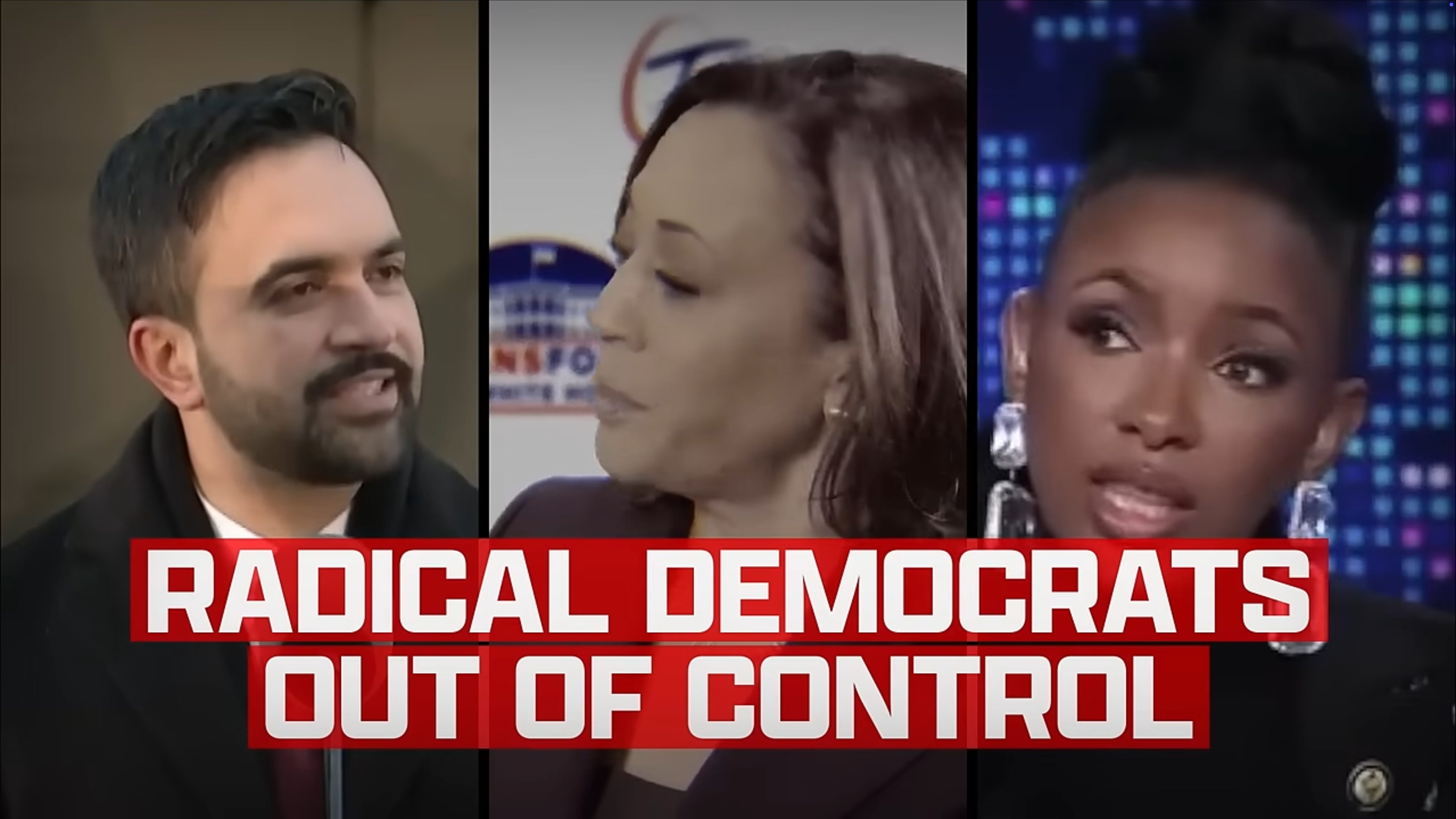
Abbott, who has no serious opposition in his own primary, nonetheless began running commercials just before Valentine’s Day linking Crockett to prominent liberals like former Vice President Kamala Harris, Sen. Bernie Sanders, Rep. Alexandria Ocasio-Cortez, and New York City Mayor Zohran Mamdani.
Notably, even though the governor is up for reelection this fall and is spending funds from his own campaign coffers—which tipped the scales at $105 million—his ads don’t mention his own race. They also don’t have anything to say about Crockett’s main primary rival, state Rep. James Talarico, or the three Republicans running for Senate.
Dave Carney, Abbott’s top strategist, told the New York Times that the media offensive—reportedly backed by a $3.4 million buy—is meant to encourage conservative voters to show up in the general election more than eight months from now.
“You vote for us Republicans, or you get this: AOC and Mamdani and Crockett,” he said.
Carney, though, acknowledged that he believes Crockett would be a weaker opponent for the GOP’s eventual nominee than Talarico would be—a belief that many other prominent Republicans share.
Sen. John Cornyn celebrated Crockett’s entry into the race in December by telling Semafor, “Am I hiding my glee? I’ll try to wipe the smile off my face, I would say it’s a gift.” Donald Trump has also called Crockett’s campaign “a gift to Republicans.”
Crockett has pushed back on the idea she’d cost Democrats a rare pickup opportunity in Texas by arguing she can mobilize voters her party has failed to turn out in the past. Republicans like Abbott, however, remain convinced that Democrats would be doing the GOP a favor by selecting her on Tuesday.
The governor, though, isn’t just rooting for that outcome—he’s actively trying to make it happen by pretending to attack the GOP’s preferred candidate while actually hoping to boost her with Democrats.
Both parties have long used this tactic, though Democrats have been far more aggressive and successful with it. The most famous practitioner is former Missouri Sen. Claire McCaskill, a Democrat who employed it to devastating effect during her 2012 reelection campaign.
McCaskill, as she later explained in her 2015 memoir, believed that the hardline Rep. Todd Akin would be a considerably weaker general election foe than his two main intraparty rivals. She therefore spent close to $2 million during the final four weeks of the GOP primary on ads calling Akin “[t]he most conservative congressman in Missouri”—a message calculated to make Republicans like him more.
Akin won the nomination and then promptly self-destructed with his notorious “legitimate rape” comments. Just months earlier, McCaskill had looked like the underdog in conservative Missouri, but she wound up securing a second term in a 55-39 landslide even as Mitt Romney was carrying her state 54-44.
Abbott is utilizing the same strategy as McCaskill—albeit in a different race than the one he’s competing in—but he’s executing it very differently.
While McCaskill’s ads 14 years ago were focused solely on swaying Republican primary voters, Abbott is trying to do three things at once. Not only does he want liberals to vote a certain way in the Senate primary, he’s also trying to rally his conservative base for the fall and convince GOP primary voters to back one of his endorsed candidates in a third race.
Another of Abbott’s spots features sinister music as the narrator warns that AOC, Sanders, and Crockett want to bring about a litany of horrors: “Open borders, tax hikes that crush families, easy bail for violent criminals.”
The narrator then implores viewers to for a pair of “proven conservative champions”: Abbott and Texas Comptroller Kelly Hancock, who faces a challenging primary next week.
The Republican voters Hancock needs to win over would readily describe Crockett and her fellow Democrats the same way the narrator does, but no Democratic politician would ever say they want to institute anything like “tax hikes that crush families.”
McCaskill, by contrast, called Akin “a crusader against bigger government,” a description that just about any Republican would be happy to use themselves. While some Democratic voters might view Crockett more favorably thanks to Abbott associating her with popular progressives like AOC and Mamdani, none are voting for “easy bail for violent criminals.”
Abbott’s intervention comes at a moment when Talarico otherwise enjoys a huge advertising advantage over Crockett. AdImpact reports that Talarico and his allies have spent or booked over $21 million worth of ads—more than four times what Crockett’s side has deployed.
Polls, however, have still largely placed Crockett ahead, with FiftyPlusOne’s polling average showing her up 47-41 as of Wednesday. Almost all of these surveys, though, were conducted in December or January, before Talarico and his supporters began advertising in earnest.
The University of Texas also made news on Wednesday when it released a survey in partnership with YouGov showing Crockett defeating Talarico 56-44, while Talarico quickly countered by publicizing his own internal poll placing him ahead 47-43.
But while Talarico’s survey found a crucial 9% of Democrats were still undecided, UT did not allow respondents to say they hadn’t made up their minds—a decision that makes it difficult to understand the state of the race.
And while these were the first two polls anyone has released that were in the field this month, they’re both already several weeks old. Talarico’s poll from Impact Research was conducted from Feb. 10-12, which was right in the middle of UT’s long 15-day field period from Feb. 2 to the 16th.
Such an extended timeframe makes it tough to assess the impact of any major events, including one that occurred on the final evening UT’s survey was in the field.
Comedian Stephen Colbert generated outsized attention on Feb. 16, when he told his audience that CBS refused to air his interview with Talarico due to pressure from Trump’s FCC.
Talarico, in turn, benefited enormously. The video of the interview has received almost 9 million views on YouTube, which, according to LateNighter, is more than three times the number of people who typically watch Colbert on television. Talarico also announced he had raised $2.5 million during the 24 hours after “his censored The Late Show appearance.”
All of this unfolded as early voting began on Feb. 17, giving Talarico valuable publicity and a major cash infusion at perhaps the best possible time for him. As of Wednesday, though, no polls have been released that measure whether Talarico’s fateful interview with Colbert or any subsequent developments have impacted the race going into the final days of the primary.
Primary season finally starts on Tuesday! That marks the start of a six-month marathon in which both parties will pick candidates for (quite literally) tens of thousands of political offices across the country.
To make sure you can stay on top of it all, we encourage you to bookmark our 2026 election calendar, which includes dates for every candidate filing deadline, primary, and runoff. And if you appreciate our commitment to producing clean, easy-to-understand, and accurate resources like this one, then we hope you’ll consider upgrading to a paid subscription.
The Downballot Podcast
Primary season is here!
At long last, the 2026 primaries are upon us! On this week’s episode of The Downballot podcast, David Nir and guest host Joe Sudbay preview some of Tuesday’s most important races, including both parties’ primary for Senate in Texas, a scandal-plagued GOP congressman’s desperate bid for reelection in San Antonio, an early test for House Democrats facing upstart primary challengers in North Carolina, and more.
Also joining us is Chris Melody Fields Figueredo, who explains how her organization, the Ballot Initiative Strategy Center, helps make sure progressive ballot measures succeed and anti-democracy efforts fail. Fields Figueredo walks us through the entire life cycle of an initiative, which doesn’t end at passage—implementation is critical, too. And she spotlights some of the most important measures voters across the country will get to weigh in on this year.
The Downballot podcast comes out every Thursday morning everywhere you listen to podcasts. Click here to subscribe and to find a complete transcript!
Redistricting Roundup
MD Redistricting, VA Redistricting
Candidate filing for Maryland’s June 23 primary closed on Tuesday, though Democratic Gov. Wes Moore is stressing that filing could be reopened if the state were to adopt a new congressional map.
“I think that these are artificial deadlines that are put together by politicians, and I think politicians can adjust in any way that they see fit,” he told Fox45 News on Monday.
Indeed, lawmakers in neighboring Virginia did just that. In anticipation that voters might approve new congressional districts in an April 21 vote, the legislature just passed legislation pushing the state’s filing deadline for House candidates from April 2 to May 26. It also delayed the primaries for all offices from June 16 to Aug. 4.
But Maryland Senate President Bill Ferguson remains implacably opposed to a remap, telling reporters that “any deadline that exists in law exists because it was an act of the legislature and signed by the governor. And so they’re not arbitrary. They’re set by law.”
New reporting from the Baltimore Banner shows just how unlikely Ferguson is to budge. The outlet asked all 47 members of the Senate, which Democrats control 34-13, where they stand on mid-decade redistricting. Just five Democrats said they were in favor, while 10 were outright opposed. The rest either did not offer a firm answer or any answer at all.
A complete list of Maryland candidates can be found here.
Governors
ID-Gov
Idaho Gov. Brad Little finally confirmed this week that he’d seek a third term—more than eight months after Donald Trump endorsed him for reelection. Unlike four years ago, when Little turned aside a Trump-backed challenger in the Republican primary, the governor faces no serious opposition.
House
IL-09
Political commentator Kat Abughazaleh is airing her first negative TV ads ahead of next month’s Democratic primary in Illinois’ 9th District, while two new polls show her locked in a battle for second place.
Abughazaleh’s new spot attacks her two chief rivals, Evanston Mayor Daniel Biss and state Sen. Laura Fine, over AIPAC’s involvement in the race. The candidate charges, “One of my opponents is drowning in AIPAC money. The other tried to cash the same checks and then lied about it.” She doesn’t reference either by name, but an image of Fine, along with her name, appears on screen first, followed by the same for Biss.
Biss, however, has occupied the top spot in every public poll of the race, including two new surveys, though they differ on the size of his lead.
One, conducted by Public Policy Polling on behalf of Evanston RoundTable, a local news site, finds Biss taking 24% of the vote, while Abughazaleh edges out Fine 17-16. The other, for CAIR Action, which has endorsed Abughazaleh, shows Biss at 31%, with Fine narrowly ahead of Abughazaleh this time, 14-13. It was taken by Community Pulse, a polling firm, and Molitico, a consultancy.
In both surveys, no other candidate clears single digits.
MD-05
Maryland’s filing deadline passed without much drama on Tuesday, but two prominent Democrats who had been eyeing possible bids for the open 5th Congressional District both wound up making it official.
State Sen. Arthur Ellis, who had said he was considering the race, submitted paperwork a few days before the deadline. Former Prince George’s County Executive Rushern Baker, meanwhile, hadn’t spoken publicly about his intentions but filed on the final day.
Baker ran for governor in both 2018 and 2022 but lost in the primary the first time and dropped out the second. He went on to compete in last year’s special election for his old post as executive, but he lost the Democratic primary 46-19 to State’s Attorney Aisha Braveboy, who went on to win the general election.
Ellis and Baker join a very crowded field that includes at least eight other notable Democrats vying to succeed retiring Rep. Steny Hoyer, who has endorsed Del. Adrian Boafo.
Poll Pile
IA-Sen (D): GQR (D) for Zach Wahls: Zach Wahls: 42, Josh Turek: 24.
IL-Sen (D): Public Policy Polling (D) for the DLGA (pro-Juliana Stratton): Raja Krishnamoorthi: 29, Juliana Stratton: 27, Robin Kelly: 13. (Early Feb.: 34-23 Krishnamoorthi)
PA-Gov: Quinnipiac University: Josh Shapiro (D-inc): 55, Stacy Garrity (R): 37. (Sept.: 55-39 Shapiro)
WI-Gov (D): Marquette University Law School: Francesca Hong: 11, Mandela Barnes: 10, Sara Rodriguez: 6, others 3% or less, undecided: 65.
WI-Gov (R): Marquette: Tom Tiffany: 35, Andy Manske: 2, undecided: 63.
AZ-01 (D): Highground Public Affairs: Amish Shah: 33, Marlene Galan-Woods: 11, others 2% or less, undecided: 49. Highground, which says it does not have a client, is run by a longtime Republican strategist who has also donated to Democrats.
Correction: This Digest incorrectly described the results of a poll commissioned by CAIR in Illinois’ 9th District. Laura Fine leads Kat Abughazaleh 14-13 for second place, not 14-3.
Editor’s note: In the previous Digest, we incorrectly said that Donald Trump won Virginia’s 17th Senate District in 2024. It was won by Kamala Harris.
Also in the previous Digest, we failed to note that the Detroit Regional Chamber, which commissioned a poll of the Michigan governor’s race, previously endorsed one of the candidates, independent Mike Duggan. We regret the omission.
In the Digest published on Feb. 24, 2026, we incorrectly stated that Virginia’s 2026 primary and candidate filing deadline would only be delayed contingent on a vote in favor of Democrats’ proposed redistricting amendment. Both dates have already been delayed, and the changes are not contingent on any future development. In addition, the filing deadline for U.S. House candidates is now May 26, not May 25.
Texas Democrat here. I am a typical Texan, which means I didn't read anything else here except the Texas part. Some thoughts on Abbott's political gambit.
1. Dave Carney and Greg Abbott may be making a fatal error here. These are the kind of ads that motivate their elderly, Fox-viewing Republican base. Democratic voters may be more independent minded than that. And they aren't Fox News folks, either. And, the younger generation (who is voting Democratic in this primary right now) are a lot more savvy about media manipulations than the elderly.
2. Texas is an open primary state. Therefore, that lack of affiliation can make it difficult to categorize the views of the party members. Carney and Abbott may be vastly over-estimating how enticing AOC, etc. actually is. In other words, it is quite possible Texas Democrats are not carbon copies of Massachusetts Democrats.
3. And to the extent Democratic voters are very liberal, Talarico is actually the more populist choice. He has embraced Mamdani and Sanders, etc.
GA-Gov:
https://www.ajc.com/politics/2026/02/democratic-lawmaker-quits-race-for-georgia-governor/
State Rep. Ruwa Romman is out - running for State Senate instead (specifically the seat of fellow progressive Nabilah Parkes, who is running for Insurance Commissioner in GA).