



Leading Off
MA Ballot
Massachusetts just held its party primaries using the same rules familiar to most American voters, but a fall ballot measure would bring the top-two system to the Bay State.
The approval of this plan, known as Question 3, would require the state to follow the same approach as California and Washington. In the primary, all candidates from all parties would compete on a single ballot rather than in separate partisan contests. The two contenders with the most votes, regardless of party, would then advance to the general election.
Question 3, which would take effect on Jan. 1, 2028, would apply to races for the U.S. House and Senate as well as state-level posts like governor and the legislature. The top-two rules would not, however, apply to elections for president.
The plan’s proponents argue that it would introduce more competition to a liberal state where Democratic primaries are almost always tantamount to election.
“Right now, too many legislators face meaningful political pressure only from party insiders or a narrow segment of primary voters, and too many legislators fear competition more than inaction,” Danielle Allen, a prominent Harvard University professor who chairs the group behind Question 3, wrote in a March essay for the Boston Globe.
Allen, who unsuccessfully sought the Democratic nomination for governor in 2022, also argued that Massachusetts residents are already used to holding elections this way. Many cities, including Boston, require candidates for mayor and other municipal offices to run on a single ballot, though in these contests, contenders aren’t listed by party affiliation.
But while there’s never any question that anyone who wins a general election to lead dark-blue communities like Boston will identify as a Democrat, the proposal’s critics point out that the top-two primary has led to negative consequences elsewhere.
“California ran this experiment. The results are terrible,” Democratic state Rep. Andres Vargas said last week in a statement released by Voter Rights MA, a coalition urging a “no” vote. “In one race, four Democrats split the vote in a majority-minority district Obama won by sixteen points. Yet, because of the top two system, those voters spent November choosing between only two Republicans.”
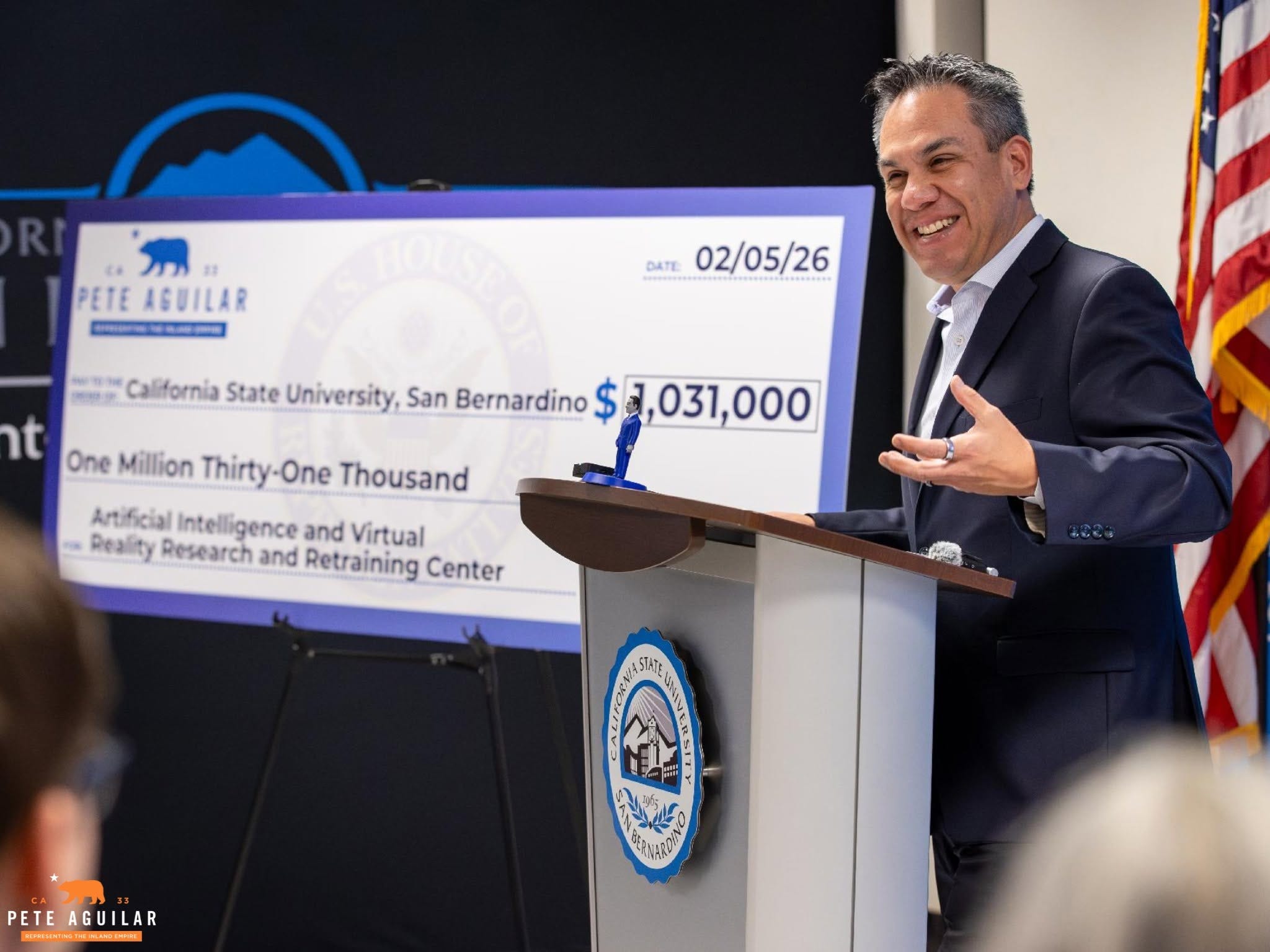
That nightmare scenario occurred in 2012 in California’s 31st District, a largely Latino constituency that Democrat Pete Aguilar seemed poised to win. The presence of three minor Democrats on the primary ballot, however, resulted in none of them moving forward.
Instead, GOP Rep. Gary Miller took first with 27%, while state Sen. Bob Dutton, the only other Republican on the ballot, edged out Aguilar 25-23 for the crucial second-place spot. Miller went on to defeat Dutton that fall even though Barack Obama carried the 31st District by a wide 57-41 margin against Mitt Romney.
Democrats were determined to avoid a repeat two years later after Miller opted to retire rather than try his luck again, but Aguilar still came close to getting left out in the cold. This time, though, he narrowly secured second place before prevailing in the fall. He continues to represent the district to this day and is now the third-ranking Democrat in the House.
But this experience and other near-misses in the Golden State over the ensuing decade—plus a 2016 debacle in Washington that saw two Republicans advance in the race for state treasurer—have left California Democrats fearful about any chance of a lockout. A prominent Democratic consultant is now spearheading a 2028 amendment to repeal the top-two primary, a campaign that began this spring amidst a chaotic race for governor.
Stress over the top-two primary dominated June’s contest as Democrats fretted that their huge field of hopefuls could divide the state’s large liberal-leaning bloc enough for the two leading Republicans, former Fox News host Steve Hilton and Riverside County Sheriff Chad Bianco, to move forward.
While it was always unlikely that such a lockout could come to pass, the very idea dominated conversation and strategy about the race for months. The anxiety grew so intense that the chair of the Democratic Party, Rusty Hicks, even released an open letter in March urging any Democrat who didn’t “have a viable path” not to place their name on the ballot—a move that sparked a backlash.
“There are people who are calling for candidates to get out of the race,” former state Attorney General Xavier Becerra, a Democrat who hovered around 5% in the polls at the time, said at a debate. “Isn’t it interesting that the candidates they are asking to get out of the race are the candidates of color?”
Hicks’ intervention failed to convince almost any low-polling candidates—including Becerra, who was hoping to become the first Latino to be elected governor—to drop out of the race. Two major events in April, however, dramatically altered the playing field.
The first came when Donald Trump endorsed Hilton, a move that helped the candidate consolidate Republican voters who might have otherwise backed Bianco. Then, less than a week later, Rep. Eric Swalwell, one of the leading Democrats, dropped out of the race after multiple women accused him of sexual assault.
Becerra, once an afterthought, benefited from the chaos and soon surged in the polls. Ultimately, it was Republicans who almost wound up on the wrong side of a lockout: Becerra took first with 28% while Hilton edged out billionaire Tom Steyer, the other top Democrat, just 25-22.
But while California’s primary didn’t produce the disaster Democrats feared—Becerra is now all but assured of defeating Hilton in the fall—Voter Rights MA is framing the contest as a warning for voters in Massachusetts.
“[California] voters were pressured to abandon their candidate of choice in order to get behind the most well-funded candidates in order to not spoil the election for their party, with a billionaire almost buying his way into the general election,” the group says on its website.
The organization, however, has work to do to convince voters ahead of the general election. A poll conducted in mid-August by UMass Amherst and YouGov showed 51% of voters in support of Question 3, with only 32% against. No other polling has been released all summer.
Question 3’s detractors, though, may have reason to be optimistic that voters will ultimately balk at making major changes to their elections. In 2020, the last time Massachusetts had such an opportunity, voters rejected a proposal to institute ranked-choice voting by a 55-45 margin.
And last cycle, voters in seven other states spurned ballot measures that would have changed their election systems in various ways, including implementing ranked-choice voting and replacing party primaries with top-four or top-five primaries. A plan to bring ranked-choice voting to Washington, D.C., though, did pass overwhelmingly.
Unlike some very shady political influencers who secretly accept money in exchange for endorsing candidates—and yes, this really happens—The Downballot is always completely transparent about our sponsors. We’ve worked hard over many years to earn your trust, and we know we can lose it in an instant.
If you appreciate our deep commitment to transparency while we deliver our unique coverage of overlooked elections, then we hope you’ll consider upgrading to a paid subscription today. Every word we write is because we believe in it, not because someone is lining our pockets on the sly.
The Downballot Podcast
How Democratic ‘spam PACs’ victimize vulnerable seniors
We’ve all been bombarded with those histrionic text messages making over-the-top requests for donations, but they’re more than just annoying—there are hidden victims of these hyper-aggressive fundraising practices.
On this week’s episode of The Downballot podcast, Stanford political scientist Adam Bonica discusses his deep investigation into the ways Democratic organizations are deploying these frenzied messages, which end up exploiting many senior citizens—some of whom have responded by donating literally thousands of times.
But the harm runs even deeper. As Bonica explains, even as these techniques rake in huge sums from the elderly, they’ve alienated many other donors. That’s created a serious risk of a broader crash in grassroots fundraising that could seriously undermine Democrats, something Republicans have already experienced thanks to their own slash-and-burn approach.
Co-hosts David Nir and David Beard also recap Tuesday’s primaries in Massachusetts and preview next week’s contests in New Hampshire and Rhode Island. Finally, they make sense of the chaos in Alaska, where a deadline for candidates to drop out following the state’s unique top-four primary prompted a reshuffle of the November ballot in all of the top races.
Senate
SC-Sen
Rep. Ralph Norman put out a statement Wednesday pledging to “support our Republican nominee” for Senate, a move that came two days after he advised undecided voters, “Vote for Ralph Norman.”
Last week, Norman narrowly lost a runoff to appointed Sen. Darline Graham, whom Donald Trump ardently backed. Graham faces Democrat Annie Andrews this fall.
Poll Pile
KS-Sen: GSG for People Over Politics Action Fund (anti-Roger Marshall)
Adam Hamilton (D): 44, Marshall (R-inc): 43, David Graham (L): 5.
TX-Sen: Overton Insights for the Texas Public Policy Foundation:
James Talarico (D): 44, Ken Paxton (R): 43.
TX-Gov: Overton:
Greg Abbott (R-inc): 47, Gina Hinojosa (D): 46.
AZ-02: GBAO for Jonathan Nez:
Eli Crane (R-inc): 46, Nez (D): 44.
A GBAO poll conducted for Nez in June showed Crane leading 44-41. However, that survey included Libertarian Curtis Goodwin, who took 7%. The release for this new poll did not mention Goodwin.
NH-01 (D): Tavern Research:
Maura Sullivan: 33, Stefany Shaheen: 27, Carleigh Beriont: 12, all others 4% or less.
TX-35: Normington, Petts & Associates for House Majority PAC:
Carlos De La Cruz (R): 45, Johnny Garcia (D): 44.
Hi guys! I decided to pay the subscription. I've never talked about this on here, but I have Autism, high functioning. Its hard to see the corruption, the price increases, the awfulness in our country. But I believe in America. Our country has went through moment of crisis far more volatile than this. But that does not mean we get complecent. For a better environment, for a Public Option, for $25 minimum wage, for so much more..I believe.
Let's kick ass in November guys!
The Missouri Supreme Court ruled the state constitution permits a referendum on a congressional redistricting map passed by the legislature.
The 2022 congressional map governs the November 2026 election. HB 1 takes effect only if voters approve it.
I guess Cleaver’s seat is saved.