



Leading Off
Seattle, WA Mayor
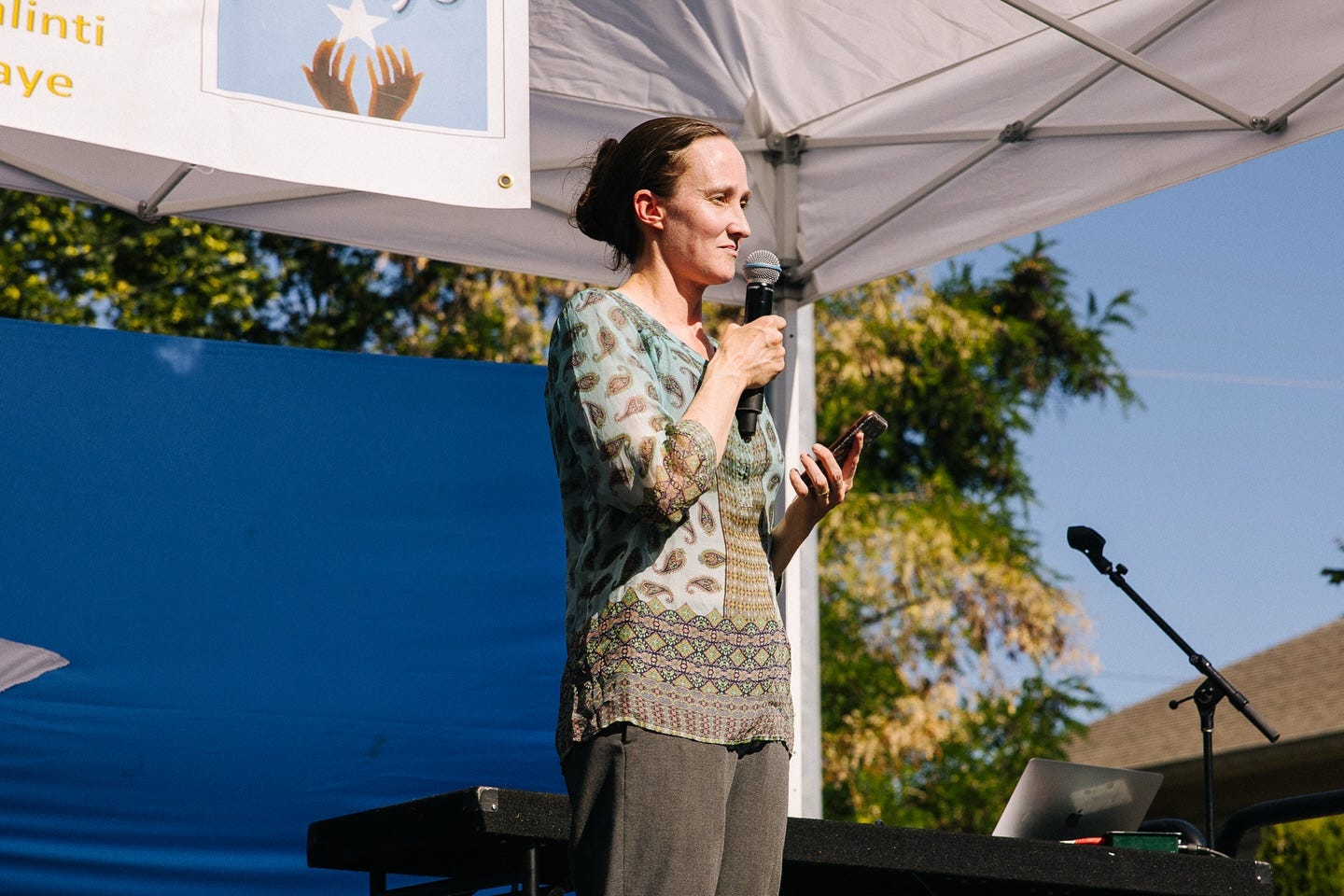
Progressive organizer Katie Wilson on Tuesday received the backing of the largest union in Washington for what had, just months ago, seemed like a long-shot campaign to unseat Seattle Mayor Bruce Harrell.
But Wilson accepted the endorsement of UFCW 3000, which represents grocery and other retail workers, as the new frontrunner in the Nov. 4 race to lead the Emerald City.
Wilson achieved that status by outpacing Harrell, a fellow Democrat, by a wide 51-41 margin in the Aug. 5 top-two primary. It took several days of tabulations for the magnitude of Wilson's lead to become clear—she led by a 48-43 spread among the ballots tabulated on election night—but her advantage widened as more votes were counted.
While Seattle does not allow candidates to win outright if they take more than 50% of the vote in the first round, Wilson's achievement underscored just how much trouble Harrell is in.
The mayor, though, has reason to hope the voters who cast ballots this fall will be more supportive than the electorate that rejected him earlier this month. In 2021, Harrell led his opponent, Lorena Gonzalez, 34-32 in the first round before beating her in a 59-41 rout three months later.
Other observers don't share that optimism.
"It's so rare for someone who tops 50% in the primary to lose," political consultant Crystal Fincher told Axios' Melissa Santos, describing the results as "horrible" for Harrell.
Another operative, Ben Anderstone, also predicted to Santos that, while the mayor would gain some votes from supporters of the six minor candidates, his deficit was so wide that "you can't really just hope things reshuffle in your favor."
Any favorable reshuffle grew even less likely for Harrell on Wednesday, when businessman Joe Mallahan, who took a distant third place with 4%, endorsed Wilson.
"Something needs to change" for the incumbent, Anderstone added, if he wants to win a second term. UFCW 3000's leadership, though, doesn't anticipate this will happen. The union's secretary-general said Tuesday that his organization decided to abandon its neutrality in part because of how well Wilson performed in the primary.
Few observers anticipated that Harrell would find himself in such a rough place when Wilson launched her campaign in March. At that juncture, Harrell, who is seeking to become the first Seattle mayor to win reelection in two decades, seemed to have succeeded in his effort to deter any strong opponents from taking him on by consolidating support from one-time antagonists.
Even though he was elected four years ago as a pro-business candidate, Harrell later won over several prominent labor groups that had previously opposed him. The powerful MLK Labor coalition, which supported Gonzalez last time, gave Harrell its sole endorsement after bestowing him its "Best Elected Official" Labor Oscar—an award that comes with its own statuette.
Harrell also picked the endorsement of Rep. Pramila Jayapal, a nationally prominent progressive who had clashed with him in the past.
Such a show of force made Harrell the favorite even after voters overwhelmingly sided against him in a February special election to determine how to pay for the city's social housing program. But Wilson, who successfully urged Seattle to institute a new business tax rather than support Harrell's rival proposal to use an existing tax, saw an opening.
Wilson, as we wrote before the primary, has argued that Harrell has failed to do enough to address the rising cost of living or homelessness, saying voters "are tired of weak, ineffective leadership from the mayor's office."

She's also cast Harrell as part of an unwelcome national phenomenon.
"Part of the reason why we have Trump at the White House is the failure of a certain brand of Democratic Party leadership," Wilson told David Kroman of the Seattle Times ahead of the primary. "And frankly, I don't think that Harrell breaks that mold."
Harrell has pushed back by arguing that crime has fallen under his watch as police hiring has risen and attacking Wilson as too inexperienced to lead the city.
Harrell is still hoping that, despite August's unhappy election results, he can still portray his tenure as a success. This week, the mayor announced that Uber Eats would pay a $15 million settlement to 16,000 Seattleites for allegedly violating local gig-worker protection laws.
But while the incumbent, who touted himself as "the labor candidate in this race," has notched more union endorsements than his opponent, he may soon find himself on the defensive on that front.
Kroman writes that UFCW's support of Wilson gives her a chance to secure a dual endorsement from MLK Labor next month. Kroman notes that UFCW and several other unions didn't vote when the MLK coalition gave Harrell its sole support and could move for a new vote.
Independent journalism is more critical than ever, and downballot elections are more important than ever. Support the former and get your fix of the latter by upgrading to a paid subscription today!
The Downballot Podcast
Holy s**t! The biggest Dem special election flip yet
Democrats have turned in a lot of remarkable performances in special elections this year, but Tuesday's win in Iowa was the biggest by far—and we explain why on this week's episode of The Downballot podcast. Not only did progressive organizer Catelin Drey flip a deep-red district, but by doing so, she broke the GOP's supermajority in the state Senate. It's also the latest sign that the political environment for Iowa Republicans is pug-ugly—not something they want with much bigger races on the line next year.
Co-hosts David Nir and David Beard also delve into the big new legal decision out of Utah, where a judge just ruled that Republicans were not permitted to gerrymander the state's congressional map and would have to draw a new one. It's a major victory for direct democracy, and it also means a new Democratic seat—likely in time for the 2026 midterms.
The Downballot podcast comes out every Thursday morning everywhere you listen to podcasts. Click here to subscribe and to find a complete transcript!
Redistricting Roundup
FL Redistricting
A special committee recently formed by Florida Republicans for the purpose of redrawing the state's congressional lines will begin work "as early as the week of Oct. 6," reports CBS.
The network adds that unnamed sources expect that a new map "would be added onto the docket" for the session of the legislature slated to start in January, though they caution that the "situation is fluid." Republicans have signaled that they intend to further gerrymander Florida's congressional map, which already heavily favors the GOP.

IN Redistricting
Indiana Republicans still sound unconvinced about pursuing a mid-decade gerrymander after lawmakers met with Donald Trump at the White House on Tuesday.
"While redistricting did come up and members were able to ask questions, we spent the bulk of our afternoon discussing issues like energy, immigration and preventing waste and fraud in government," said Rodric Bray, the top-ranking Republican in the state Senate, in a statement.
Bray's counterpart in the state House offered similar remarks.
"A wide range of topics were discussed including education, energy, immigration, fiscal responsibility and redistricting," said Speaker Todd Huston in a separate press release.
A couple of attendees were more pumped in remarks to Politico, but their comments were offered before legislative leaders issued their statements and came off sounding like they were trying to make fetch happen.
"It feels like the tide is starting to turn as Indiana Republican legislators are starting to understand they can deliver a huge win that Trump and his team will not forget," said one nameless GOP lawmaker.
"You could see the room coming around to the idea hearing from the vice president. Some real movement from it," added an anonymous White House official. It seems that neither Huston nor Bray, though, has been swept up just yet.
Election Recaps
Special Elections
In addition to flipping a Republican-held seat in Iowa, Democrats also outperformed in several other special elections on Tuesday, albeit much less dramatically.
In California's 63rd Assembly District, later-arriving ballots are still being counted, but Republican Natasha Johnson currently leads Democrat Chris Shoults 54-46 and declared victory on Tuesday night. Donald Trump carried the district 55-42 last year, so Shoults will likely have run slightly ahead of the top of the ticket when the final tally is known.
In Alabama's 11th House District, meanwhile, Republican Heath Allbright defeated Democrat Alex Braswell 89-11. This ultra-red district, however, backed Trump by a 91-9 margin, making this the reddest seat we've ever tracked in a special election dating back to 2016. Braswell was also the first Democrat to run here in 20 years.
Finally, the race for Georgia's 21st Senate District will head to a Sept. 23 runoff after no one secured a majority in the first round. Former attorney Debra Shigley, the only Democrat running, led all comers with 40% of the vote, while two Republicans were neck-and-neck for the all-important second slot.
At the moment, investment firm owner Jason Dickerson holds a 17.4 to 17.1 edge on businessman Steve West, a difference of just 65 votes. Dickerson declared victory, but the Atlanta Journal-Constitution notes that West could seek a recount, though he doesn't appear to have commented one way or another.
Trump won this Alpharetta-based district 67-33, so Shigley faces daunting odds next month, but a showing similar to the one she turned in on Tuesday would still represent a sizable overperformance.
Senate
LA-Sen
State Rep. Julie Emerson confirmed this week that she's interested in challenging Sen. Bill Cassidy in next year's Republican primary, though she told the Shreveport Times she's still waiting to see if a "major candidate" runs.
While Emerson did not specify who that person might be, Republicans in Louisiana and nationally are watching closely to see whether Rep. Julia Letlow will jump in. The congresswoman recently told the paper, "I'm praying about it, but I don't have a deadline."
The state, though, does have a deadline: Potential candidates have until Jan. 16 to decide—far earlier than in previous years. Party primaries will follow on April 18, with a runoff a month later if no one earns a majority in the first round.
Cassidy, who voted to convict Donald Trump following the Jan. 6 riots, already faces intraparty opposition from state Treasurer John Fleming, state Sen. Blake Miguez, and Public Service Commissioner Eric Skrmetta.
ME-Sen
Democratic Gov. Janet Mills informed reporters on Wednesday that she'll make a decision about whether to challenge Republican Sen. Susan Collins "maybe [in] November, mid-November." In July, Mills declined to offer a timetable.
Governors
VA-Gov
A new survey of Virginia's statewide elections from a GOP pollster shows Democrat Abigail Spanberger increasing her lead over Republican Winsome Earle-Sears since the firm's last look at the race.
According to co/efficient, which said its poll was "[n]ot sponsored by any candidate or candidates committee," Spanberger holds a 48-43 advantage over Earle-Sears.
In early June, however, co/efficient gave Spanberger a narrower 46-43 lead in a survey conducted for a group run by a former official in Republican Gov. Glenn Youngkin's administration.
The pollster also finds the race for lieutenant governor tied at 43 apiece between Democrat Ghazala Hashmi and Republican John Reid, while Democrat Jay Jones has a skinny 45-44 lead over Republican incumbent Jason Miyares in the battle for the attorney general's post.
Co/efficient's last poll was released before Hashmi and Jones won their respective primaries, and the firm did not ask about either Democrat.
House
MI-07
Climate activist William Lawrence, who co-founded the Sunrise Movement, announced Tuesday that he was entering the Democratic primary to oppose GOP Rep. Tom Barrett in Michigan's swingy 7th District.
Lawrence, who is seeking office for the first time, joins three other notable Democratic candidates: former Ambassador to Ukraine Bridget Brink, education policy professor Josh Cowen, and retired Navy SEAL Matt Maasdam.
PA-08
Scranton Mayor Paige Cognetti informs the Times Leader she'll announce whether she'll oppose GOP Rep. Rob Bresnahan "within the next few weeks," as the paper puts it.
Cognetti said she's still "seriously considering," but columnist Bill O'Boyle writes that she already "sure sounds like a candidate for Congress." The New York Times recently reported that Cognetti's fellow Democrats also anticipate she'll run and are "enthusiastic" about her potential campaign for Pennsylvania's 8th District.
TX-31, VA-03
NOTUS's Em Luetkemeyer checks in on the oldest members of the House and finds, much as Axios did earlier this year, that most are planning to run for reelection.
A few, however, are hedging. Republican Rep. John Carter, who is 83, told Luetkemeyer that he still enjoys his job but added, "I'm waiting on my wife's seal of approval" on whether to seek a 13th term representing Texas' conservative 31st District.
Likewise, Democratic Rep. Bobby Scott said that he'll make up his mind "when it's reelection time."
"This is not an election year," the 17-term incumbent said. "You can assume that incumbents are running for reelection unless they give an indication otherwise." The 78-year-old Scott may be waiting until after Virginia holds statewide elections this fall before deciding whether to run for the safely blue 3rd District again.
Three much bigger names are also undecided: Nancy Pelosi, Steny Hoyer, and Jim Clyburn, who until 2023 were the House Democrats' top-ranking leaders and are all in their 80s. All three declined to share their plans with NOTUS, but in remarks to the Wall Street Journal earlier this year, Clyburn reacted angrily when asked whether Democrats should be cultivating younger members.
"Nancy left her seat. Steny left his seat. I left my seat. What the hell I'm supposed to do now?" he told the paper. "What do you want—me to give up my life?"
Prosecutors & Sheriffs
Douglas County, NE Attorney
Prosecutor Makayla Danner has announced that she'll seek the Democratic nomination to oppose Douglas County Attorney Don Kleine, a five-term incumbent who left the Democratic Party for the GOP in 2020.
Danner, who works for the Omaha City Prosecutor's Office, joins former county prosecutor Amy Jacobsen in next year's primary.
Editor's note: In a recent Morning Digest previewing this week's special election in Iowa's 1st Senate District, as well as in an article reporting the results, we incorrectly stated that the Iowa Senate must confirm the governor's judicial picks. The Senate does not play a role in judicial nominations.
NBC news covered The Downballot.
In Tuesday’s special election victory, Democrat Catelin Drey won a Sioux City-area district with 55% of the vote to Republican Christopher Prosch’s 45%, according to unofficial results with all precincts reporting. That’s a 22-point shift from the margin the presidential election last year, when Harris lost the district by 12 percentage points, according to data crunched by The Downballot, a left-leaning political site.
Democrats recorded double-digit improvements in three other special legislative elections in Iowa earlier this year. In April, Democrats held a seat in a special legislative election in a reliably blue Cedar Rapids district but expanded on Harris’ margin of victory by 26 percentage points, according to The Downballot’s analysis.
https://www.nbcnews.com/politics/elections/special-election-win-spurs-excitement-iowa-democrats-republicans-are-c-rcna227519
Public Policy Polling shows Ernst edging out Wahls 43-42, while she leads Des Moines School Board Chair Jackie Norris by a slightly larger 45-42 spread. Two other Democrats, military veteran Nathan Sage and state Rep. Josh Turek, trail Ernst 45-41.
I think this is more a product of name recognition than anything else. Wahls is known for his 2011 speech describing his experience growing up with two mothers during a gay marriage ban hearing, LGBTQ+ activism and was the Senate minority leader till 2023 while the other three are mostly unknown. Josh Turek is a huge election overperformer, has a compelling life story and should also be a good moderate candidate.