



Leading Off
OK Ballot
GOP infighting has stalled a drive by top Oklahoma Republicans to excise Medicaid expansion from the state Constitution this summer, but they’ve devised a new plan to accomplish their goal in November.
The leaders of the state House and Senate are now backing a proposed referendum that would repeal an amendment expanding Medicaid that voters narrowly passed in 2020. The amendment would be reenacted as a statute, but lawmakers could freely alter or repeal that reconstituted law.
The new amendment would also authorize lawmakers to stop paying for Medicaid expansion if the federal government ceases to cover at least 90% of the costs.
Republicans originally planned to promote the two proposals—one repealing expansion, the other allowing the state to stop paying for it—as separate amendments on separate dates.
Voters would have first been asked on Aug. 25, the date the state set aside for primary runoffs, if they wanted to delete Medicaid expansion from their constitution. If—and only if—this amendment failed to pass, the amendment to allow legislators to stop paying for the program would have appeared on the Nov. 3 general election ballot.
The Democratic minority in the legislature ardently objected to both proposals.
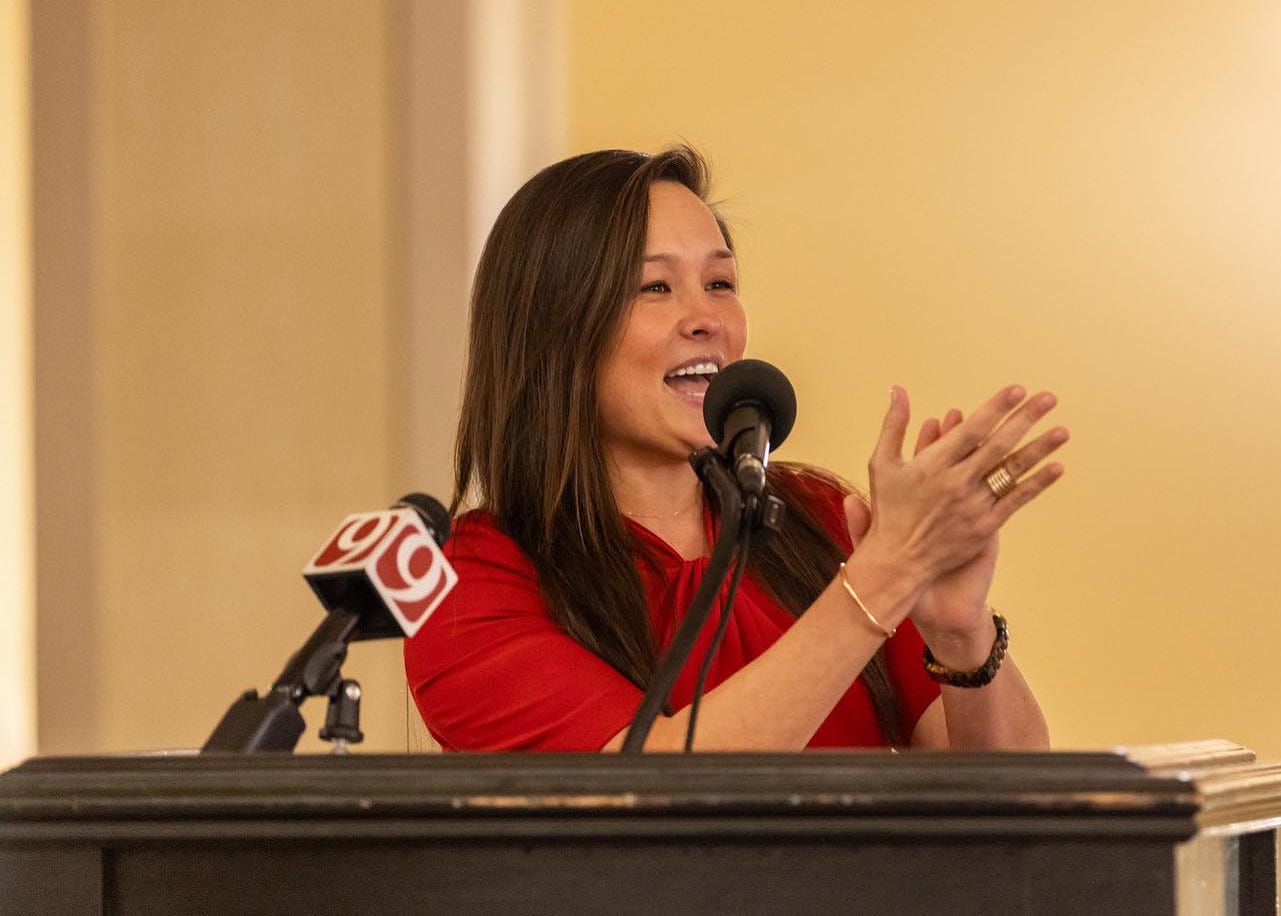
“Maybe the people wanted our hands tied,” House Minority Leader Cyndi Munson, the leading Democrat running for the state’s open governorship, told her colleagues in March. “They wanted more power over the future of their health care.”
Munson further charged that Republicans wanted to hold the first vote in August because they believe turnout will favor them. Nine Republicans are competing in the June 16 primary for governor, and it’s unlikely that one of them will take the majority of the vote necessary to avert a runoff. Munson, by contrast, has a good chance to win the first round outright.
But while Democrats in the legislature lack the numbers to stop the GOP’s drive on their own, an unlikely group of Republicans shared their skepticism about holding referendums this summer.
Senators belonging to the state’s branch of the far-right Freedom Caucus joined with Democrats last month to prevent the passage of an emergency clause that would have allowed the election to take place in August instead of November. That special clause needed a 32-vote supermajority in the 50-member chamber but failed to achieve one.
The vote to block that emergency proviso reprised a similar showdown in April, when Democrats and Republican hardliners united to stop the legislature from putting a measure to give the GOP more power over judicial elections on the August ballot.
At the time, Freedom Caucus chair Shane Jett told The Oklahoman that he agreed with Democrats that voters should have their say during the general election, not in mid-summer. And while Jett held out the possibility that his bloc could reverse itself, both Medicaid amendments remain on track to go before voters in the fall.
Republican leaders now say that, given the circumstances, they would prefer to place one omnibus Medicaid amendment on the November ballot rather than two separate proposals. Both chambers of the legislature will need to act soon, though, as the Senate has voted to adjourn on May 14.
GOP leaders argue that their amendments are necessary to address the state’s budget issues. Gov. Kevin Stitt, who cannot seek a third term this year, implored legislators to act earlier this year in a speech, arguing that Medicaid expansion has led to “massive spending growth while enabling waste.”
Opponents, however, have emphasized just how much the program has helped Oklahomans gain access to healthcare. Statistics from the state show that more than 230,000 adults are enrolled in Medicaid thanks to expansion.
“[W]e are dismayed as physicians that the legislature and the governor want to undo what’s already been done and what’s working,” Sumit Nanda, the former president of the Oklahoma State Medical Association, recently told WOSU.
Unlike a political campaign, which goes away after Election Day, The Downballot will still be here the next day—to start covering the next election.
So if you want to help build up critical infrastructure for the long term, there’s no better way to do so than by upgrading to a paid subscription. Plus, we’ll never spam you or blow up your phone with annoying texts!

Redistricting Roundup
MS Redistricting
Republican Jason White, the speaker of the Mississippi House, announced the creation of a new committee this week that would study redistricting with the aim of taking action when lawmakers reconvene next year. However, Gov. Tate Reeves has suggested that he could expand the agenda of an upcoming special session devoted to redrawing Mississippi’s Supreme Court map to also include congressional redistricting.
TN Redistricting
Both chambers of Tennessee’s GOP-dominated legislature passed a new congressional map that dismantles the state’s majority-Black 9th District on Thursday, and Republican Gov. Bill Lee quickly signed it into law.
One Republican, state Sen. Brent Taylor, immediately said he’d run for the overhauled 9th, which now stretches from South Memphis all the way to the Nashville suburbs, some 200 miles away. Taylor launched his bid with the support of both of the state’s U.S. senators, Marsha Blackburn and Bill Hagerty.
Democratic Rep. Steve Cohen, who’s represented the 9th since 2007, recently said he’d run again despite the GOP’s new gerrymander, which has now transformed the district from safely blue to a deep shade of red. Just before the map passed, Cohen said he’d challenge it in court on the grounds that it violates the First Amendment, though there’s little chance of such a suit succeeding.
Cohen’s high-profile primary opponent, state Rep. Justin Pearson, has yet to address his plans, though he led a protest against the map at the state capitol on Thursday.
Republicans are separately advancing a bill that would reopen candidate filing for House races, giving new contenders until May 15 to submit paperwork. In addition, the measure suspends the normal requirement that county election officials notify voters of changes to their districts by mail and allows them to simply post a notice on the website—if they have one.
According to data from the secretary of state, 14 of Tennessee’s 95 counties do not have a website, eight of which were just shifted to a new district.
Immediately after the map’s passage, the state branch of the NAACP filed a lawsuit in state court arguing that the legislature violated a ban on mid-decade redistricting. That ban is statutory in nature, and lawmakers voted to repeal it during their still-ongoing special session.
However, the Tennessee Constitution also specifies that, during special sessions, legislators “shall enter on no legislative business except that for which they were specifically called together.” Plaintiffs argue that because Lee’s proclamation for the special session didn’t specifically address repealing the mid-decade redistricting ban, lawmakers overstepped their authority.
House
NE-02, PA-07
Republicans appear to be meddling in a pair of Democratic primaries taking place later this month in two of the most competitive House races in the nation.
Punchbowl News reports that an obscure new group called Lead Left PAC is spending $200,000 on an attack ad hitting state Sen. John Cavanaugh ahead of Tuesday’s contest for Nebraska’s open 2nd District.
The group is likewise spending $500,000 in Pennsylvania’s 7th District on another negative spot boosting former Northampton County Executive Lamont McClure over two rivals: Bob Brooks, the president of the Pennsylvania Professional Firefighters Association, who has the support of Gov. Josh Shapiro and the DCCC; and former federal prosecutor Ryan Crosswell.
Lead Left’s messaging argues that Cavanaugh, Brooks, and Crosswell are too close to Republicans, but the organization itself seems to have one big tie to the GOP.
Punchbowl’s Ally Mutnick flags that while the PAC’s website has no information about who is behind the group, the site’s metadata has a link to the GOP fundraising platform WinRed.
The Congressional Leadership Fund, the largest pro-GOP super PAC in House races, also did not confirm or deny its involvement. A spokesperson snidely told Mutnick, “We hate to see these Democrat primaries devolve into the wokelympics but the office popcorn machine has been going nonstop.”
In the case of McClure, though, ideology doesn’t seem to be at issue. While Republicans have often tried to elevate Democratic candidates they believe are too liberal for their districts, McClure’s biggest weakness is his poor fundraising. In the most recent fundraising quarter, he reported bringing in just $20,000.
Cavanaugh’s situation is more complex. Last month, a group affiliated with CLF began airing digital ads that claimed the senator was “sponsoring Trump’s MAGA agenda.” But in January, the conservative Washington Examiner circulated a list, drawn up by anonymous GOP operatives, of Democratic House candidates who supposedly might cost their party winnable races by being too progressive. One of the names on it was Cavanaugh’s.
Lead Left’s foray, though, buttresses the argument that Republicans would rather not face Cavanaugh in November. Some deep-pocketed Democratic groups are also trying to stop him, though undoubtedly for very different reasons.
To date, outside groups have spent more than $1.8 million attacking Cavanaugh, led by the political arm of the New Democrat Coalition and a group called Fight for Nebraska that’s backing his chief rival, political strategist Denise Powell. At the same time, Powell has benefited from nearly $3 million in spending, chiefly from Fight for Nebraska and the Congressional Hispanic Caucus’ PAC.
By contrast, under $400,000 in outside money has shown up to help Cavanaugh, with most of that coming from the Congressional Progressive Caucus’ PAC. Cavanaugh has tried to turn his disadvantage around, though, by airing an ad that slams his opponent as “Dark Money Denise.”
The race in Pennsylvania’s 7th has been much quieter in terms of third-party spending. Various groups have spent nearly $1 million so far, but nearly all of it has gone toward boosting Brooks. The biggest player to date has been a pro-Brooks super PAC called Stronger Together PA.
There’s been no recent polling in the Nebraska contest, but a survey last month for Brooks’ allies at the Progressive Caucus found him leading McClure 24-17.
OK-01
Donald Trump on Thursday endorsed Jackson Lahmeyer, an evangelical pastor who is competing in the busy June 16 Republican primary for Oklahoma’s open 1st District in the Tulsa area.
Lahmeyer badly lost a 2022 bid to deny renomination to Sen. James Lankford, whom the challenger said “caved like an absolute coward” by voting to recognize Joe Biden’s victory. But while Lahmeyer’s pitch to “Vote for Christian Nationalism today” didn’t resonate four years ago, he’s since become a prominent far-right figure in Oklahoma.
Lahmeyer’s church has played host to notables like FBI director Kash Patel and Trump’s daughter-in-law Lara Trump. Lahmeyer himself went on to co-found “Pastors for Trump,” which MAGA’s master commended him for in his endorsement message.
Lahmeyer is now one of 12 Republicans competing to replace GOP Rep. Kevin Hern, who has Trump’s backing for the state’s open Senate seat, in a constituency Trump carried 60-38 in 2024. Candidates need to win a majority of the vote to avert a runoff on Aug. 25.
Attorneys General
OH-AG
Ohio Attorney General Dave Yost announced Thursday that he would resign next month to take a new job with a conservative Christian group, an early departure that could shake up multiple elections.
It will be up to Gov. Mike DeWine, a fellow Republican, to appoint someone to fill out the remaining months of Yost’s term, which comes to an end in January. While DeWine could pick a caretaker who won’t be on the ballot this fall, he could instead choose state Auditor Keith Faber, who won the GOP primary for attorney general without opposition on Tuesday.
Tapping Faber, however, would create a new vacancy that could set off a domino effect impacting as many as three other statewide races.
That’s because Faber, who faces attorney John Kulewicz in November, is one of several Republicans playing a game of electoral musical chairs as they, like Yost, hit the two-term limit that bars them from seeking reelection.
The race to replace Faber as auditor pits Secretary of State Frank LaRose against Democrat Annette Blackwell, the mayor of the Cleveland suburb of Maple Heights. Treasurer Robert Sprague and Democratic state Rep. Allison Russo, likewise, are running for the open post of secretary of state.
The contest for treasurer, finally, is a duel between former state Rep. Jay Edwards, who won a nationally watched GOP primary this week, and Democrat Seth Walsh, a member of the Cincinnati City Council.
In other words, if DeWine picks Faber to replace Yost, he could then name LaRose to fill Faber’s job, appoint Sprague to LaRose’s post, and install Edwards in place of LaRose. Even in such a scenario, though, all of these new hypothetical incumbents would still have to continue their campaigns for a full term in November.
Yost himself was eager to get in on the musical chairs action early last year when he announced he would run to replace DeWine, but for him, the music stopped early.
The attorney general’s campaign ended last spring when he finally accepted that he couldn’t defeat businessman Vivek Ramaswamy, who had Donald Trump’s endorsement, in the primary. Ramaswamy is now going up against Democrat Amy Acton, the state’s former health director.
Ballot Measures
AZ Ballot
Arizona Democrats formally kicked off a campaign this week to qualify a measure for the November ballot that would guarantee the right to vote by mail—a popular practice that Republicans have sought to undermine.
Organizers must gather about 384,000 signatures by July 2 to send the measure before voters and say they’ve already collected 50,000.
For years, many Arizonans have chosen to automatically receive ballots by mail every election. The Democratic proposal would enshrine that right in the state Constitution, allowing citizens to request that they be added to a mail voter list just once and remain on it indefinitely.
The initiative would also bar the legislature from reducing early voting hours; guarantee the right to vote in-person at county-wide voting centers; mandate that the state recognize tribal IDs; and require the state to provide a form of free identification to any qualified voter who doesn’t have a driver’s license, among other things.
Mayors & County Leaders
Charlotte, NC Mayor
Charlotte Mayor Vi Lyles unexpectedly announced Thursday that she would resign at the end of next month. Lyles, a 73-year-old Democrat who was first elected in 2017 to lead North Carolina’s most populous city, did not give a reason for her decision beyond expressing a desire to “spend time with my grandchildren.”
The City Council, which has a large Democratic majority, will be tasked with choosing Lyles’ successor for the remainder of the new two-year term she won last November. The post will next be on the ballot again in 2027. (Charlotte is the second-largest city in the nation with two-year terms for its mayor, behind only Fort Worth, Texas.)
Lyles became the first Black woman to hold the job following her victory in the 2017 Democratic primary over incumbent Jennifer Roberts.
Roberts, who was the fourth person to serve as mayor in the four years after Anthony Foxx resigned to join Barack Obama’s Cabinet, spent her sole term battling the Republican-dominated state legislature over the GOP’s transphobic “bathroom bill” known as HB2.
Roberts, who approved the nondiscrimination ordinance that legislators cited as their pretense for passing HB2 in 2016, later signed a repeal of the city’s measure. Following a national firestorm, lawmakers partially repealed HB2 the following year, and the law was fully repealed in 2020 thanks to a sunset clause.
Lyles, a City Council member who was serving as mayor pro tem at the time, argued that Roberts had not been an effective leader during the HB2 crisis. Lyles also charged that Roberts hadn’t worked well with the City Council during the unrest following the death of Keith Scott, a 43-year-old Black man who was fatally shot by the police the previous year.
Lyles defeated Roberts 46-36 before easily prevailing in the general election. She soon proved to have considerably more staying power than her predecessors and never struggled to win reelection.
Poll Pile
KS-Sen: GQR for Patrick Schmidt:
Roger Marshall (R-inc): 49, Patrick Schmidt (D): 45.
The release did not mention any other Democratic candidates.
MA-Sen (D): Emerson College:
Ed Markey (inc): 37, Seth Moulton: 32, other candidates 1% or less.
TX-Sen (R): Peak Insights for Texans for a Conservative Majority (pro-John Cornyn):
John Cornyn (inc): 47, Ken Paxton: 46.
April: 44-43 Cornyn.
TX-Sen (R): Remington Research Group for Lone Star Liberty PAC (pro-Paxton):
Paxton: 47, Cornyn (inc): 36.
AK-Gov (top-four primary): Dittman Research for Dave Bronson:
Tom Begich (D): 21, Dave Bronson (R): 7, Click Bishop (R): 6, Bernadette Wilson (R): 6, Treg Taylor (R): 5, Jonathan Kreiss-Tomkins (D): 5, Matt Claman (D): 5, Adam Crum (R): 4, other candidates 2% or less, undecided: 35.
CA-11 (top-two primary): Lake Research Partners for Connie Chan:
Scott Wiener (D): 47, Connie Chan (D): 20, Saikat Chakrabarti (D): 17, David Ganezer (R): 5, other candidates 4% or less.
TX-38 (R): Pulse Decision Science for the Club for Growth (pro-Jon Bonck):
Jon Bonck: 47, Shelly deZevallos: 16.
The VA state Supreme Court ruled 4-3 to strike the redraw because it was done in too-compresed of a timeline: https://webdev.vacourts.gov/dynamic/scndex.htm
CT Democrats passed House Bill 5001 along party lines (25-11) in the state Senate on Wednesday. Once signed by Gov Lamont, it will allow any registered CT voter to vote by mail.
https://ctmirror.org/2026/05/06/voting-by-mail-to-be-a-universal-option-in-connecticut/
Also includes a provision for a nine-member task force to study efforts to achieve 100% voter participation in the state by January 1, 2030.