



Leading Off
TN-07
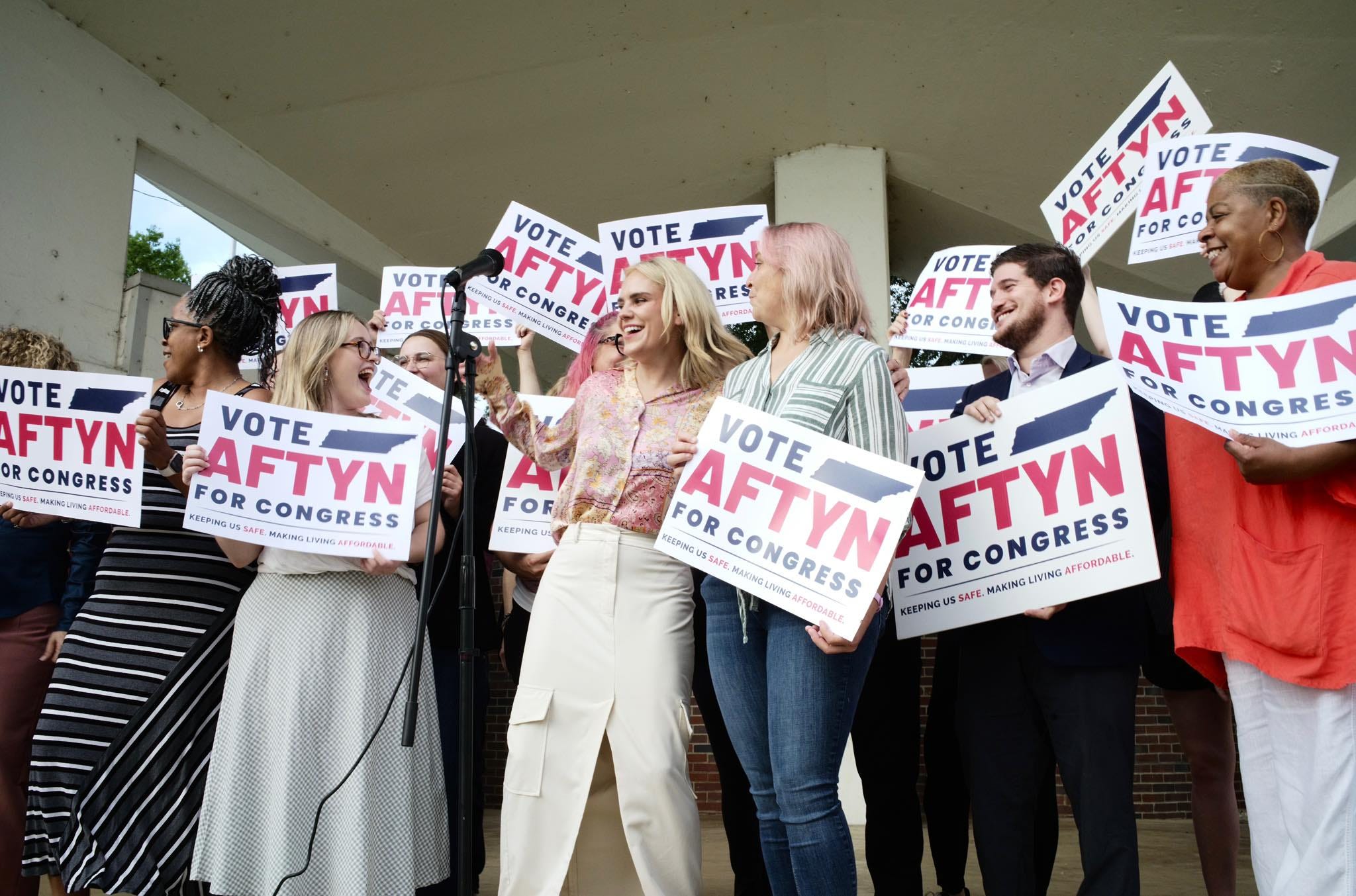
The House Majority PAC, which is the largest Democratic spender in House races, announced Friday that it was deploying $1 million on advertising ahead of the Dec. 2 special election for Tennessee’s 7th District. The move marks a significant escalation in the contest for this dark-red district that Republicans are fretting about losing.
“Matt Van Epps wants three things,” says the narrator in HMP’s new TV ad. “Cuts to healthcare benefits. More tariffs driving up costs. Tax breaks for billionaires.”
“Afton Behn wants one thing—to lower your costs,” the voiceover continues. “She fought to end the grocery tax. In Congress, she’ll stand up to both parties to make life more affordable.”
HMP’s offensive comes a week after GOP groups began scrambling to aid Republican Matt Van Epps against Democrat Aftyn Behn in a constituency that Donald Trump carried by a dominant 60-38 margin just last year.

The Associated Press reports that a trio of conservative organizations—MAGA Inc., Conservatives for American Excellence, and the Club for Growth—have together invested close to $2 million to aid Van Epps.
He could use the help, because new disclosures show that Behn nearly lapped Van Epps in fundraising during the most recent reporting period. Between Oct. 1 and Nov. 12 (a period that included both parties’ Oct. 7 primaries), Behn brought in just over $1 million, while Van Epps was well behind with a $591,000 haul.
Since the primary, Behn outspent Van Epps by around $500,000 to $400,000. She also had more than twice as much cash left over for the stretch run, with a stockpile of more than $520,000, versus a little over $230,000 for Van Epps.
This is not even the first time this year, though, that Republicans have panicked about a special election for a House seat they shouldn’t otherwise have needed to worry about.
This spring, third-party groups spent more than $3.7 million to aid Florida state Sen. Randy Fine in the 6th Congressional District as his fellow Republicans griped that he wasn’t doing enough to defend a seat Trump had carried by an even wider 65-35 spread.
Gov. Ron DeSantis, who had long despised Fine, even predicted one week ahead of the April special election that the GOP nominee would post a considerable underperformance. DeSantis, though, spoke for many in his party when he spun the upcoming result as a referendum on Fine rather than a problem for Republicans.
“That is not a reflection of President Trump,” the governor said. “It’s a reflection of a specific candidate running in that race.”
Deep-pocketed Democratic groups, by contrast, did not devote any serious resources to the contest. Fine ended up prevailing 57-43, which, while not close, was still a dramatic drop from Trump’s 30-point win five months earlier.
But while Fine was only the latest of a long line of House candidates whom Republicans have preemptively blamed for jeopardizing their chances in a special election they should have zero trouble winning, they haven’t shown any such public bitterness toward Van Epps. If anything, just the opposite.
Politico reported earlier this month that Republicans found it “encouraging” that Van Epps was campaigning across Tennessee’s 7th District and holding events. NOTUS, likewise, wrote that Republicans “emphasize that Van Epps is running a competitive campaign.”
This doesn’t mean, though, that Republicans are ready to publicly acknowledge that they have much bigger problems that can’t be confined to one single congressional district or candidate. GOP sources have instead blamed the calendar for any problems Van Epps might have in turning out voters, since the election will take place just days after Thanksgiving.
Democrats, by contrast, have always understood that any upset will require pumped-up liberal voters to want to cast ballots in the midst of the holiday season, a time when they might otherwise not be concerned with politics. HMP is now devoting a serious sum of money to give Behn a boost in the hopes that the enthusiasm gap between the parties will give her a narrow shot at victory.
The Downballot flagged Tennessee’s 7th as a race to watch long before almost everyone else. If you like being the first to know about compelling special elections, we hope you’ll consider upgrading to a paid subscription to support our work!

Redistricting Roundup
TX Redistricting
Justice Samuel Alito temporarily paused a federal court ruling that blocked Texas’ new congressional map from taking effect in an order on Friday evening, issuing what’s known as an administrative stay while it considers the state’s request for a longer-term stay as it appeals the lower court decision.
Alito also directed the plaintiffs to file a response to Texas’ request for a longer-term stay by 5 PM ET on Monday. Election law expert Rick Hasen said in response that he would “not read too much into” Alito’s decision to grant an administrative stay, but he also said he thinks the Supreme Court is more likely than not to freeze the district court ruling while the appeal proceeds.
Texas’ candidate filing deadline is Dec. 8, but that deadline, as well as the schedule for primaries and runoffs, could be delayed by either the legislature or the courts.
Senate
GA-Sen
The House Ethics Committee announced on Friday that it was investigating Republican Rep. Mike Collins and his chief of staff, Brandon Phillips, though as is often the case, the committee did not reveal what it’s looking into.
The likeliest possibility, though, involves allegations that Phillips hired his girlfriend for an essentially no-show job as an intern that paid her more than $10,000, a story that first appeared in July in the Daily Mail, a British tabloid.
One unnamed Collins staffer told the paper that Phillips “consistently engaged in unhinged behavior,” adding that the congressman “made aware that his office’s revolving door of staff was due to the unhealthy environment Brandon fostered.”
Phillips’ “unhinged behavior” has long been well-known. In 2022, he was arrested for allegedly kicking and injuring a dog, and in 2016, he resigned from his job as Donald Trump’s state director in Georgia after his criminal past came to light.
That history included charges that he had injured a man and slashed his tires, as well a separate incident in which he was accused of pulling a gun on a woman. Neither incident, both of which took place in 2008, resulted in jail time.
Collins, who is competing in next year’s Republican primary for U.S. Senate, responded to the Ethics Committee’s announcement by calling the investigation “frivolous” and “bogus,” saying without evidence that it was “a desperate and baseless attack by Rep. Collins’ political opponents.”
Governors
MN-Gov
Private equity investor Mike Newcome, a conservative-leaning third-party candidate, has joined the race for governor in Minnesota under the “Forward Independence” banner. The party is an affiliate of former Democratic presidential candidate Andrew Yang’s Forward Party.
Newcome told Minnesota Public Radio that he’s already put $100,000 of his own money into his campaign and “would likely make more sizable infusions next year.” Whatever impact he might have on next year’s race, though, it’s hard to say whether he’d be more likely to hurt Democratic Gov. Tim Walz, who’s seeking a third term, or the eventual Republican nominee.
OH-Gov
Former Rep. Tim Ryan announced on Friday that he would not seek Ohio’s open governorship next year, leaving former state health director Amy Acton as the only notable Democrat in the race. Acton is likely to face off against businessman Vivek Ramaswamy, who likewise has the Republican primary largely to himself.
House
AZ-01
Wealthy businessman John Trobough has filed paperwork with state election authorities as he prepares to enter the Republican primary for Arizona’s swingy 1st District, Jakob Thorington reports in the Arizona Capitol Times.
While Trobough had not publicly expressed interest in running to replace GOP Rep. David Schweikert, who is leaving this seat behind to run for governor, Thorington’s sources anticipate he’ll announce by Dec. 1. Trobough, who served as CEO of a cybersecurity company that was later acquired by Boeing, also reportedly plans to self-fund at least $1 million.
Trobough would face Gina Swoboda, the chair of the Arizona Republican Party, in the Aug. 4 primary. Swoboda entered the race last month with Donald Trump’s endorsement, but that MAGA stamp of approval hasn’t silenced one prominent far-right critic.

“It’s insanity that the AZGOP Chairwoman continues to trip all over herself to UNDERMINE election integrity & defend the literal socialist Pima County Recorder,” state Sen. Jake Hoffman, a founder of the state Freedom Caucus, tweeted earlier this month. “Gina Swoboda is a Democrat.”
CA-14
Rep. Eric Swalwell’s decision to run for governor of California means that, for the first time in over a century, no incumbent will be running for the seat he now holds.
Several of Swalwell’s fellow East Bay Democrats are now looking at pursuing this extremely rare opportunity to get to Congress without needing to defeat a sitting representative.
Alameda County Supervisor David Haubert was among them, telling the San Francisco Chronicle’s Joe Garofoli just ahead of Swalwell’s announcement that he wasn’t ruling out running for the 14th Congressional District.
Garofoli additionally reports that state Sen. Aisha Wahab, who would be the first Afghan American member of Congress, is considering. Wahab campaigned for the 14th in 2019 when Swalwell launched his brief presidential campaign, but she dropped out after the congressman decided to seek reelection.
Veteran Democratic operative Matt Ortega also expressed interest in running right after Swalwell began his new effort.
Ortega, who was Hillary Clinton’s digital communications director for her 2016 presidential campaign, wrote on Bluesky, “The country is faced with a lawless and corrupt administration that threatens our rights, our health care, and our ability to provide for our families. As a student of history, I want to be able to look back and say I did everything I could and so I am giving serious consideration to run in #CA14.”
It’s possible that two Democrats will advance out of the June 2 top-two primary for this constituency, which includes the communities of Fremont and Hayward. Kamala Harris would have carried the revamped version of the 14th District by a 65-31 spread last year.
Next year’s race, though, will mark the first time since Warren Harding’s presidency that an incumbent isn’t seeking reelection here.
The saga starts with Republican Rep. John Arthur Elston, who represented many of the cities Swalwell serves now, as well as other communities to the north like Oakland and Berkeley, when he drowned in what appears to have been a suicide in 1921. Another Republican, James MacLafferty, won the 1922 special election to replace Elston in what was then numbered the 6th District, but he narrowly lost the GOP primary two years later to Albert Carter.
Carter’s victory in the 1924 general election on a ticket headed by President Calvin Coolidge—who had succeeded the deceased Harding the previous year—made him the first of three congressmen who would serve for decades but ultimately lose reelection.
During the ensuing century, the boundaries—and the numbering—of the district would change, but it’s always been centered in Alameda County and included communities south of Oakland. The area’s partisan leanings, though, permanently shifted in 1944 when Democrat George Miller unseated Carter as Franklin Roosevelt was winning his fourth and final term as president.
Miller’s own lengthy career came to an end following his 1972 primary loss to Pete Stark, a 40-year-old challenger who contrasted himself with the 81-year-old incumbent and ran himself as the candidate opposed to the ongoing Vietnam War.
Stark eventually lost reelection just days before his own 81st birthday in November of 2012 to Swalwell, who was about to turn 32. The race took place in the first election cycle that saw California utilize the top-two primary system in place of partisan primaries, leading to an all-Democratic contest in the general election that Swalwell won 52-48.
Now, though, Swalwell has decided to run for governor rather than try to emulate his three predecessors and spend his entire political career in the House.
FL-20
Former Broward County Commissioner Dale Holness announced Friday morning that he would seek another rematch against Rep. Sheila Cherfilus-McCormick, a fellow Democrat who was indicted two days earlier for allegedly using stolen federal funds to finance her victorious campaign against Holness four years ago.

“The latest news will probably have an impact in that people become more aware of the financial issues that surround what she did, how she raised the funds, and how she got the funds to beat me in the first race by five votes,” Holness told the South Florida Sun-Sentinel, referring to their ultra-close special election primary in 2021.
But Holness, who went on to badly lose a second bout against Cherfilus-McCormick the following year, added that he’d already decided to run for a third time several months before the congresswoman was charged. The former commissioner informed the paper that he’d begun campaigning shortly after he filed paperwork with the FEC in August but said he “didn’t do a big, splashy announcement.”
Holness, whose entry this summer attracted virtually no media attention, raised just over $45,000 from donors before the end of the third quarter in September. The challenger, who had some money left over from his last campaign, ended the month with $64,000 in the bank.
Holness, a member of South Florida’s large Jamaican American community, was one of the 11 Democrats who competed in the 2021 special election to succeed the late Rep. Alcee Hastings in the safely blue 20th District.
At the outset, Cherfilus-McCormick, who had waged two little-noticed primary campaigns against Hastings in 2018 and 2020, looked like she’d once again be a minor factor. However, she unexpectedly vaulted into the top tier after self-funding close to $5 million.
Cherfilus-McCormick ended up outpacing Holmes by all of five votes—a spread of 23.76 to 23.75. Her subsequent general election victory made her the second Haitian American member of Congress.
Holmes, who unsuccessfully tried to overturn the primary results with a lawsuit alleging that Cherfilus-McCormick tried to bribe voters by proposing $1,000 monthly payments to most adults as a universal basic income, decided to challenge her in 2022 for a full two-year term. Their second bout, though, was far less suspenseful, as the new congresswoman beat him 66-29.
GA-14
Rep. Marjorie Taylor Greene announced Friday evening that she would resign from Congress, effective Jan. 5.
“I refuse to be a battered wife hoping it all goes away and gets better,” Greene said in a video released one week after Donald Trump offered to back “the right person” in a Republican primary against her.
“If I’m cast aside by the president and the MAGA political machine and replaced by neocons, big pharma, big tech, military industrial war complex, foreign leaders and the elite donor class that can never, ever relate to real Americans then many common Americans have been cast aside and replaced as well,” she added.
Once Greene, whose departure will occur one day after her pension vests, officially gives up Georgia’s dark red 14th District early next year, Republican Gov. Brian Kemp will be able to schedule the special election to succeed her. A local GOP chair tells Atlanta News First that they anticipate the contest will take place in March.
All candidates from all parties will face off on a single ballot rather than in separate party primaries. If no one wins a majority of the vote, the two with the most votes, regardless of party, will advance to a special election runoff that would take place 28 days after the first round.
There’s a good chance that two Republicans advance. Trump carried this constituency, which is based in the northwestern part of the state, 68-31 last year, according to calculations by The Downballot.
Regularly scheduled primaries for a full two-year term are set for May 19, with a potential runoff on June 16. This means that voters in Georgia’s 14th District could go to the polls as many as four times next year before the November general election for this seat.
NJ-11
Following Gov.-elect Mikie Sherrill’s resignation from Congress, Gov. Phil Murphy has called a special election to fill her seat for April 16, with a primary on Feb. 5. Candidates must file by Dec. 1.
That primary will likely be dispositive, since Democrats will be heavily favored to hold the left-leaning 11th district in northern New Jersey, and potential entrants don’t have much time left to decide.
Two newcomers, though, joined the race toward the end of last week: progressive activist Analilia Mejia, who has the support of Newark Mayor Ras Baraka, and attorney J-L Cauvin, who is also a comedian known for his impersonations of Donald Trump. They’re now part of a crowded Democratic field that includes more than 10 notable names.
NY-07
State Sen. Julia Salazar and New York City Councilmember Tiffany Caban both say that they’re interested in running to succeed Rep. Nydia Velazquez, a fellow Democrat who is retiring after 17 terms in Congress, in New York’s safely blue 7th District.
“I’m eager to talk to the congresswoman and see what her vision is and talk to anyone interested in the seat before I consider I myself,” Salazar told Politico.
Caban, likewise, said she “would definitely be open” to running to replace Velazquez, whom she called a “fucking legend rockstar.”
City & State also reports that City Councilmember Julie Won is considering.
City & State mentions several other local politicians as possible contenders, as does Politico. The long list includes former City Councilmember Rafael Espinal; state Sen. Kristen Gonzalez; Brooklyn District Attorney Eric Gonzalez; New York City Councilmembers Jen Gutierrez, Sandy Nurse, and Lincoln Restler; and Brooklyn Borough President Antonio Reynoso.
NY-08
City Councilman Chi Osse said Saturday that he was likely to abort his planned primary campaign against House Minority Leader Hakeem Jeffries after a committee of the New York City chapter of the Democratic Socialists of America voted against recommending an endorsement.
“I have no intention of running this race without the support of NYC-DSA, of which I am proud to be a member,” Osse told the New York Daily News.
The adverse vote for Osse came after Mayor-elect Zohran Mamdani advocated on Jeffries’ behalf on Wednesday.
“The choice is not whether to vote for Chi or Hakeem at the ballot box, the choice is how to spend the next year,” Mamdani told fellow DSA members, according to the Daily News’ account of the meeting. “Do we want to spend it defending caricatures of our movement, or do we want to spend it fulfilling the agenda at the heart of that very same movement?”
Poll Pile
FL-Gov (R): The Tyson Group (R) for The American Promise: Byron Donalds: 43, Paul Renner: 2, Jay Collins: 1, James Fishback: 1. (Sept.: Donalds: 40, Renner: 2, Collins: 2.) Only Donalds and Renner were running when this poll was conducted.
NV-Gov: Emerson College: Joe Lombardo (R-inc): 41, Aaron Ford (D): 41. Pollster did not test Alexis Hill, who is also seeking the Democratic nomination.
IL-09: Data for Progress (D) for The Justice Coalition Action: Daniel Biss: 18, Kat Abughazaleh: 18, Laura Fine: 10, Mike Simmons: 6, Bushra Amiwala: 6, Hoan Huynh: 5, others 1% or less.
Correction: This piece incorrectly said that Sheila Cherfilus-McCormick is the first Haitian American member of Congress. Mia Love’s 2014 election made her the body’s first Haitian American member, while Cherfilus-McCormick is the second.
Quite enjoyed reading about the history of what is now CA-14 over the past century. A welcome addition to the Digest.
https://x.com/JakeSherman/status/1992972604521562595
Some House Republicans consider retiring in the middle of the term and following MTG's footsteps.