



Leading Off
NC-04
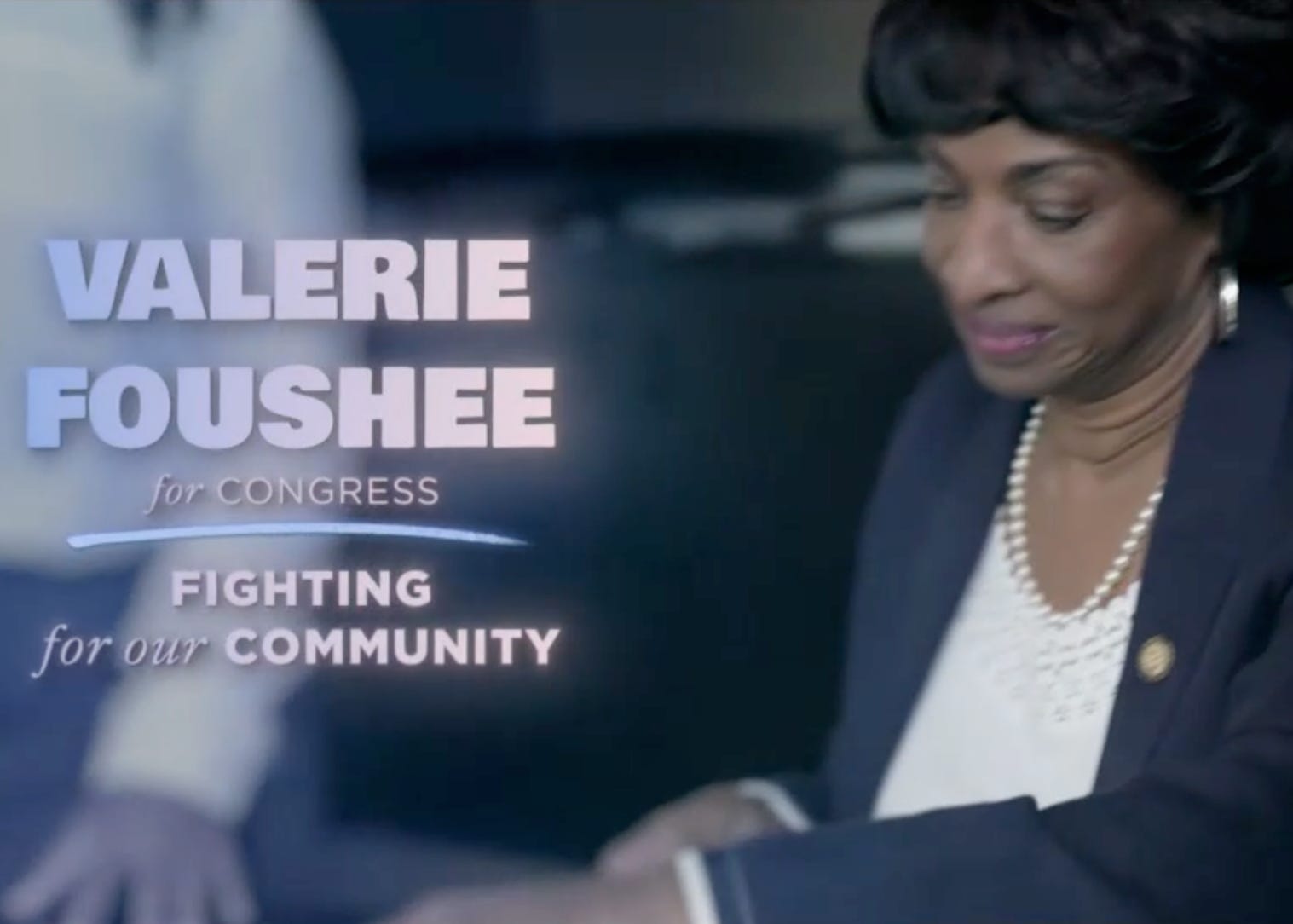
An unexpected infusion of late money in a hotly contested Democratic primary in North Carolina has tilted the spending picture in favor of Rep. Valerie Foushee, but the congresswoman also just saw one of her ads pulled from the airwaves in a move that appears to violate federal law.
Less than a week ago, Foushee and her supporters were getting badly outspent by allies of Durham County Commissioner Nida Allam. But a super PAC called Jobs and Democracy, which has ties to the AI company Anthropic, just poured in another $1.3 million to boost Foushee in Tuesday’s election, on top of the nearly $300,000 it had already spent to help her.
Unlike other major players in the industry, Anthropic had positioned itself as a supporter of AI “safety.” Just this week, however, the company abandoned a key plank of its safety platform, saying it had hampered its ability to remain competitive with rivals.
In addition, a mysterious group called Article One PAC, which hadn’t previously been involved in the race, jumped in with a late $600,000 ad buy. The PAC’s only prior expenditure came last month, when it deployed $350,000 on behalf of former Lt. Gov. Tahesha Way’s unsuccessful special election bid for New Jersey’s 11th District.
Overall, Foushee is now the beneficiary of nearly $2.4 million in outside aid, compared to $1.3 million that Allam’s backers have laid out to help her. As far as the campaigns themselves, Allam has narrowly outraised Foushee, but the incumbent enjoyed a $120,000 spending edge according to recent fundraising reports, thanks to a relatively small sum of cash she had stockpiled before Allam entered the race in December.
Whether the cavalry’s last-minute arrival will be enough to save Foushee remains an open question, however, especially since the incumbent just experienced a hard-to-explain setback in sharing her message with voters.
In a new attack ad, Foushee charged that Allam “has refused to file a legally required financial disclosure, hiding how she’s paid and potential conflicts of interest.” Allam fired back, calling the spot “false and defamatory” because she had filed the disclosure form—required of all federal candidates—at the time Foushee’s ad began airing, albeit almost three weeks after it was due.
Allam then sent a letter to Foushee’s campaign demanding that she stop running the ad. She also asked TV stations to do the same, and one, a local affiliate of CBS, complied.
However, that decision almost certainly runs afoul of a long-standing federal law adopted as part of the Communications Act of 1934, which expressly prohibits broadcast television and radio stations from rejecting or censoring ads by candidates for public office.
Normally, broadcasters can be sued for airing defamatory material—even advertising created by others—since stations are regarded as “publishers” of any such advertisements. A 1959 Supreme Court case, however, gave broadcasters immunity when it comes to candidate ads.
Three years earlier, a North Dakota TV and radio station, WDAY, had allowed the Democratic and Republican candidates running for the U.S. Senate to both air speeches shortly before Election Day. An independent candidate, Arthur Townley, then demanded—and received—the same opportunity.
In his address, Townley charged that his rivals “take orders from Communist controlled Democrat Farmers Union” and claimed the organization wanted to “establish a Communist Farmers Union Soviet right here in North Dakota.”
The Farmers Union then sued both Townley and WDAY for defamation, but WDAY argued that because it was obligated to give Townley equal time under the Communications Act, it could not be held liable. The Supreme Court ultimately agreed, setting a nationwide precedent that holds to this day.
(Townley, incidentally, never responded to the lawsuit and won less than 1% of the vote.)
Ads from third parties don’t enjoy similar immunity and are regularly taken down by broadcasters to avoid defamation claims, but stations have virtually no leeway with spots from candidates. In one memorable example from 2018, a station in New Mexico even had to run a spot—without any bleeping—that began with a long-shot Democratic candidate declaring, “Fuck the NRA.”
Nonetheless, CBS 17, which serves the Raleigh-Durham area and is owned by the Trump-friendly media giant Nexstar, acceded to Allam’s demand, according to her campaign. The station, however, “declined to comment” when asked about the dispute by the News & Observer. Two other channels that were also copied on Allam’s letter to the Foushee campaign, ABC11 and WRAL, do not appear to have taken down the ad but did not respond to the paper.
Foushee, meanwhile, is now airing a new version that instead says Allam failed to file her financial disclosure “on time, filing it just days before the election.”
The Downballot is now 13th on Substack’s list of “rising” U.S. politics publications! We’re in some pretty darn good company, though many of our peers are one-person outfits, while The Downballot couldn’t exist without both of our two staff members.
So if you value the extremely hard work we put in to deliver the Morning Digest to you five days a week, we hope you’ll consider becoming a paying subscriber.

Senate
IL-Sen
As the Democratic primary for Illinois’ open Senate seat grows ever nastier, a crypto-backed group is reportedly spending heavily to prevent Lt. Gov. Juliana Stratton from winning the nod.
In its new spot, Fairshake doesn’t mention cryptocurrency at all but rather attacks Stratton as “corrupt criminal Mike Madigan’s hand-picked politician.” That’s a reference to the former speaker of the state House who ruled the legislature with an iron fist for more than three decades but was convicted on federal corruption charges last year. In October, he began serving a seven-and-a-half-year prison sentence.
It’s not clear what Fairshake’s beef with Stratton might be, since, as Politico notes, she “appears to have a limited record on crypto policy.” She has, however, enjoyed heavy financial support from Gov. JB Pritzker, who signed two consumer protection bills into law last year that were opposed by the crypto industry.
Fairshake has yet to file disclosures with the FEC, but Politico reports that the new ad is part of “a multimillion-dollar ad campaign” that’s ramping up with less than three weeks to go before the primary.
Governors
GA-Gov
State Rep. Ruwa Romman has dropped her bid for Georgia’s open governorship, saying she could no longer see a path to victory in the Democratic primary and would instead run for an open seat in the state Senate.
Romman told the Atlanta Journal-Constitution she decided to quit the race “after learning well-financed outside groups were lining up behind former Lt. Gov. Geoff Duncan,” in reporter Greg Bluestein’s words, and support she was expecting from “grassroots networks” did not materialize.
Romman, an outspoken progressive, did not endorse any of the other Democrats in the race, though she charged that nominating Duncan, a former Republican, would amount to a “nightmare scenario,” arguing that he “doesn’t have crossover appeal.”
In addition to Duncan, several other candidates are still vying for the party’s nod, including former Atlanta Mayor Keisha Lance Bottoms, former state Sen. Jason Esteves, state Rep. Derrick Jackson, and former DeKalb County CEO Michael Thurmond.
House
GA-11
Woodstock Mayor Michael Caldwell, who’d been mentioned as a possible GOP candidate for Georgia’s open 11th District, has instead endorsed Rob Adkerson, the longtime chief of staff to retiring Rep. Barry Loudermilk, who recently entered the race with his boss’ support.
VA-07
Attorney Dorothy McAuliffe, the wife of former Virginia Gov. Terry McAuliffe, is “likely” to join the Democratic primary for the proposed 7th Congressional District, both Virginia Scope and Punchbowl report.
McAuliffe has not run for office before. However, almost a decade ago, during her husband’s final year as governor, she considered a bid for the 10th District against Republican Rep. Barbara Comstock, though she ultimately passed. (State Sen. Jennifer Wexton easily won the Democratic nomination and ousted Comstock in a landslide in the 2018 midterms.)
Two notable Democrats have already said they’d run for the 7th District should voters pass an amendment in an April 21 special election that would allow a new map to come into play: Del. Dan Helmer and former federal prosecutor J.P. Cooney. The proposed district would favor Democrats and lack an incumbent.
Poll Pile
IL-Sen (D): Tulchin Research (D): Raja Krishnamoorthi: 42, Juliana Stratton: 26, Robin Kelly: 10. Capitol Fax says the poll was “commissioned by someone not affiliated with that race.”
NC-Sen (R): Harper Polling (R) for the Carolina Journal: Michael Whatley: 38, Don Brown: 8, Michele Morrow: 2, undecided: 50.
TX-Sen (D): Public Policy Polling (D) for Lone Star Rising PAC (pro-James Talarico): James Talarico: 48, Jasmine Crockett: 42.
TX-Sen (D): Blueprint Polling (D): Talarico: 52, Crockett: 40.
TX-Sen (R): Blueprint: Ken Paxton: 42, John Cornyn (inc): 30, Wesley Hunt: 14.
TX-Sen (R runoff): Blueprint
Paxton: 49, Cornyn (inc): 36.
Paxton: 53, Hunt: 29.
Cornyn (inc): 42, Hunt: 37.
CA-Gov (top-two primary): Public Policy Institute of California: Steve Hilton (R): 14, Katie Porter (D): 13, Chad Bianco (R): 12, Eric Swalwell (D): 11, Tom Steyer (D): 10, others 5% or less, undecided: 10.
NM-Gov (D): Change Research (D) for Sam Bregman: Deb Haaland: 46, Sam Bregman: 25. (Unreleased Jan. poll: 50-23 Haaland)
NY-Gov: Marist University: Kathy Hochul (D-inc): 50, Bruce Blakeman (R): 33.
TX-Gov (D): Blueprint: Gina Hinojosa: 61, Chris Bell: 4, others 3% or less.
TX-AG (R): Blueprint: Chip Roy: 30, Mayes Middleton: 26, Joan Huffman: 11, Aaron Reitz: 11.

Correction: In our last Digest, we incorrectly described the results of a poll commissioned by CAIR in the Democratic primary for Illinois’ 9th Congressional District. Laura Fine leads Kat Abughazaleh 14-13 for second place, not 14-3.
"New poll: Democrats' real problem isn't being too liberal — it's being seen as too weak
Americans, including swing voters, see the Republican Party as 20 points more extreme than Democrats — and the Democrats as weak and ineffective."
https://www.gelliottmorris.com/p/new-poll-democrats-real-problem-isnt
It’s pretty freaking clear to this reader what Fairshake’s beef with Stratton is - her name is not Raja Krishnamoorthi! The crypto industry has already spent millions securing a candidate who’s totally in the bag for them, and now they’re just trying to ensure a win