


The biggest election night from now until November is on Tuesday, with no fewer than five states holding primaries ahead of key contests this fall.
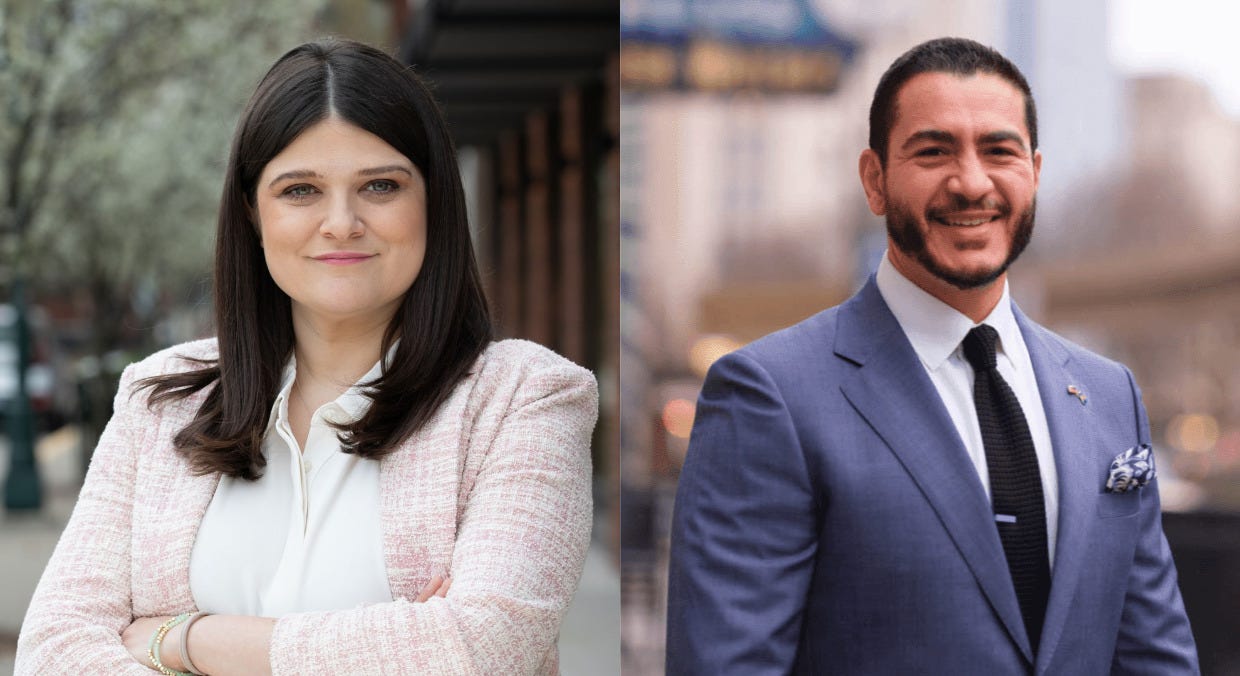
The Democratic primary for U.S. Senate in Michigan takes center stage, as Abdul El-Sayed goes into his long-awaited showdown with a sizable polling lead against Haley Stevens, a congresswoman and favorite of party leaders.
Both parties will also choose nominees in a closely watched race for governor, as well as in House races across the state.
But there’s much more to watch on yet another coast-to-coast election night.
Tuesday marks the first time that Missouri will use its new Republican-drawn congressional map, though opponents still hope to overturn it this fall. Voters in Kansas, Virginia, and Washington are also voting in primaries.
But some of the night’s biggest contests aren’t even primaries at all. Kansas will decide on a ballot measure that the GOP hopes will move the state Supreme Court to the right, while Republicans in Missouri are pushing a proposal that would make it all but impossible for citizens to amend their constitution again.
Below is our guide to the major races in all five states. When it’s available, we’ll tell you about any reliable polling that exists for each contest, but if we don’t mention any numbers, it means no recent surveys have been made public.
You can find The Downballot’s calculations for 2024 presidential results for each congressional district updated to reflect the boundaries that will be used this fall in each state. You can also find interactive congressional district maps from Dave’s Redistricting App for Kansas, Michigan, Missouri, Virginia, and Washington linked to each state’s name.
The first polls close at 7 PM ET in Virginia. Please join The Downballot on our private Discord server to chew over the election returns with fellow community members as they come in. You can also bookmark our cheat-sheet listing all of these contests, which we’ll update as each race is called.
Michigan
Polls close at 8 PM ET in the portion of the state located in the Eastern time zone, where almost all Michiganders live, and an hour later in four small counties in the Upper Peninsula along the state’s western border with Wisconsin.
MI-Sen (D) (50-48 Trump)
Rep. Haley Stevens faces Abdul El-Sayed, the former health director of Detroit’s Wayne County, in an intensely watched—and ultra-expensive—Senate primary in this perennial swing state.
Stevens is pitching herself as the strongest candidate to take on former Rep. Mike Rogers, a Republican who is running without intraparty opposition two years after narrowly losing the general election for the state’s other Senate seat.
Prominent state and national Democrats have consolidated behind Stevens as the best option to win in the fall. This roster includes Sen. Gary Peters, who is not seeking reelection; Senate Minority Leader Chuck Schumer; and Gov. Gretchen Whitmer, who defeated El-Sayed in the 2018 primary for governor.
But El-Sayed, who is once again campaigning as an ardent progressive, argues that both the Democratic establishment and Rogers himself are wrong to view him as the weaker option.
El-Sayed, a vociferous critic of Israel’s government, has also sought to make Stevens’ support from AIPAC, which has poured over $30 million into the race, into a liability for his opponent. He’s also emphasized his opposition to data centers, while Stevens has called for them to be built in Michigan.
The congresswoman and her allies have spent about $64 million on ads through Friday, according to data from AdImpact, compared to just over $7 million from El-Sayed’s side.
Despite this massive imbalance, though, polls show El-Sayed well ahead. An average of all public polling compiled by FiftyPlusOne shows him leading Stevens 52-39.
MI-Gov (D & R) (50-48 Trump)
Both parties have contested primaries to replace Whitmer, who cannot seek a third term as governor, but there’s a heavy favorite on each side.
The likely Democratic nominee is Secretary of State Jocelyn Benson, whose strong fundraising and early polling lead helped convince other candidates to drop out or not run at all. Genesee County Sheriff Chris Swanson decided to go ahead with his campaign despite the tough odds, but polls show him trailing by as much as 60 points.
Rep. John James, meanwhile, reemerged as the Republican frontrunner after a turbulent spring that threatened his campaign. While Donald Trump was one of the many Republicans who took issue with James giving up his competitive House seat, he finally endorsed his bid for a promotion in late June.
Wealthy businessman Perry Johnson is the one Republican still opposing James, and he’s poured over $30 million of his fortune to make his case that conservatives should support him. Polls taken in late July, though, show James well ahead.
MI-01 (R) (60-39 Trump)
GOP Rep. Jack Bergman is the favorite to win renomination against Matthew DenOtter, a businessman who has loaned his campaign close to $2 million, but some prominent Republicans in northern Michigan would be happy to see him falter.
Bergman, who was first elected in 2016 to represent the Upper Peninsula and the northern reaches of the Lower Peninsula, attracted attention in February when state Sen. Ed McBroom and two fellow lawmakers withdrew their endorsements for his reelection campaign.
