



Leading Off
NJ-Gov
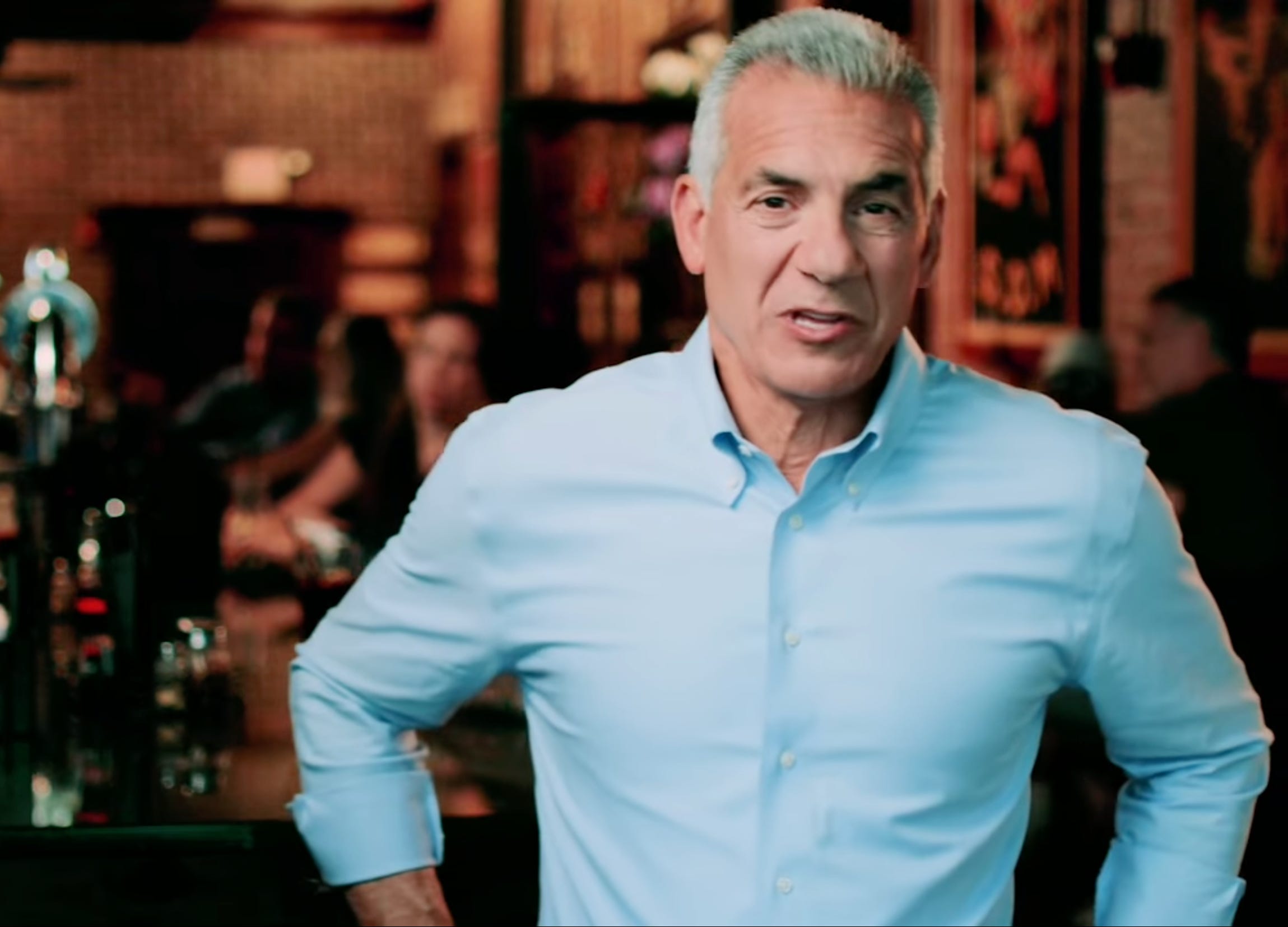
National Republicans are finally running ads to help Jack Ciattarelli in the Nov. 4 race for governor of New Jersey, but new data from AdImpact shows that Democrats continue to enjoy a massive advantage on the airwaves.
While Ciattarelli has spent or reserved just over $3 million in advertising compared to around $2 million for Democrat Mikie Sherrill, her allies are more than making up for it.
Outside groups, led by the Democratic Governors' Association, have deployed an enormous $19 million, while the Republican Governors’ Association and other conservative organizations have committed just over $2 million so far. That latter figure, though, is still infinitely better for Ciattarelli than the $0.00 in reservations that AdImpact had tracked as of just a few weeks ago. (As you can see, we meant "infinitely" literally.)

Republicans hope their attacks on Sherrill over the cost of living will resonate more than the better-funded Democrats' commercials tying Ciattarelli to Donald Trump.
The RGA's Restore New Jersey, which debuted its opening ad on Friday, claims that Sherrill's agenda will make the state's soaring energy costs permanent.
Ciattarelli, meanwhile, argues in a pair of new ads that his Democratic foe doesn't have any plan for solving the state's many problems, including high property taxes and rising electric bills.
The GOP's messages come a week after both Sherrill and the DGA debuted their opening ads for the general election.
In her first foray on the airwaves, Sherrill pledged to utilize "emergency powers to end these rate hikes and drive down your bills." The DGA, which dubbed Ciattarelli the "Trump of Trenton," in its ad, also deployed audio of the Republican saying, "I support the president wholeheartedly, and my job is to help him."
Republicans, though, have publicized a new poll arguing that the Democrats' well-funded opening ad campaign hasn't yet produced the results they want—though it acknowledges that Sherrill is still ahead.
National Research shows Sherrill edging out Ciattarelli 47-44 in a survey conducted from Sept. 8 to 10, which was days after Democrats began airing their ads. (Two third-party candidates on the ballot take a combined 1%.) The memo notes that Sherrill enjoyed a similar edge in the firm's prior polls.
It remains to be seen, though, whether these numbers encourage the RGA to invest more in a race where every publicly released poll has shown Sherrill ahead.

Redistricting Roundup
IL & MD Redistricting
Democrats in two blue states that could pursue mid-decade redistricting before the midterms sound unenthused about the prospect, according to a pair of new reports.
"I don't think redistricting is happening in Illinois," Democratic Rep. Lauren Underwood told Politico, which adds that legislative leaders have also "been hesitant to embrace" the idea.
One difficulty is the fact that the current map already reflects an aggressive Democratic gerrymander. In each of the last two elections for the House, the state has sent 14 Democrats and just three Republicans to Capitol Hill. At least one incumbent is mindful of that backdrop.
"We have to look out and protect who we have because we fought hard to get them in," Democratic Rep. Robin Kelly, who is running for Senate, added. "I'm not a mapmaker, but it seems like it will be very difficult."
Maryland Democrats, who, like their counterparts in Illinois, have the power to draw new lines unfettered by a redistricting commission, also seem hesitant.
"I don't think there was any resolution to do anything right now," Democratic Rep. Jamie Raskin informed Punchbowl News' Ally Mutnick following a meeting of the state's congressional delegation.
Mutnick sums matters up by saying that Democrats "aren't fully sold yet" on redrawing Maryland's map, though she adds that members intend to "meet again soon for further discussion."
The lack of action comes despite a broad push for new districts by House Minority Leader Hakeem Jeffries—though Jeffries may not be pushing all that hard, or that well
Even though he's publicly spoken in favor of Democrats responding to Republican gerrymanders with new maps of their own, Politico says he's "stuck to his low-key, conciliatory leadership style" and offered "deference" to state-level Democrats and members of his caucus.
Jeffries and his team have also harbored unrealistic expectations, according to an unnamed legislative staffer in New York, where amending the state Constitution to give power over redistricting back to lawmakers would be a multi-year process.
"They were pushing Hochul with no real clear understanding of what to do," the aide told Politico, referring to Democratic Gov. Kathy Hochul.
MO Redistricting, MO Ballot
Republicans in the Missouri Senate passed a new congressional gerrymander on Friday, following their counterparts in the House who took the same action earlier in the week.
The plan, which dismantles the Democratic-held 5th District, now goes to Republican Gov. Mike Kehoe for his signature—which is guaranteed, because he proposed the new map in the first place.
Lawmakers also approved an amendment that would make it all but impossible for citizens to amend the state constitution in the future. Voters, though, must first weigh in on the measure, which the Missouri Independent says will appear on the ballot sometime next year.
Campaigns to defeat both the map and the amendment are already revving up.
Just hours after the map's passage, a group of voters backed by the ACLU and the Campaign Legal Center filed a lawsuit in state court attacking the plan on several grounds. In particular, the suit argues that the Missouri Constitution forbids mid-decade redistricting. It also says the map violates a constitutional requirement that districts be compact.
Separately, a group called People Not Politicians says it plans to collect signatures for a veto referendum that could block and ultimately repeal the new districts from taking effect.
"While politicians scheme behind closed doors, People Not Politicians is taking action," said a spokesperson in a statement on Friday. "Today, we will file a referendum with the Secretary of State’s office to put this deeply flawed map before Missouri voters. We now have 90 days to gather 116,000 signatures — and given the groundswell of outrage across the state, we are confident the people will rise to meet this moment."
Organizers must gather those signatures in six of the state's eight congressional districts to qualify their referendum for the ballot (the exact amount varies depending on which districts they target). If they do, the new map would be suspended until a vote can take place. If a majority of voters back the referendum, the map would be repealed permanently.
Others are preparing to defeat the new amendment, which would require that any voter-backed initiatives to amend the constitution receive a majority of the vote not only statewide but in every one of Missouri's eight congressional districts.
According to the Missouri Independent, that rule would allow as little as around 5% of the electorate to thwart any proposals. Notably, amendments referred to the ballot by the legislature would not be subject to this new requirement.
Both organized labor and the real estate industry, says STLPR, have opposed similar measures in the past and may work together to thwart this one.
"My phone's been ringing off the hook. My emails are constant," Missouri AFL-CIO President Jake Hummel told the station. "And quite frankly, I look forward to calling [the Missouri Association of Realtors] and having a discussion about beating this at the ballot."
Senate
TX-Sen
Sen. John Cornyn leads Attorney General Ken Paxton 32-26 in the March 3 Republican primary for Senate, according to a newly released poll.
The survey, conducted by the Democratic firm Slingshot Strategies for the nonpartisan group Texas Public Opinion Research, is the first publicly released poll to show Cornyn ahead by more than a single percentage point. But the senator, who still trails in most polls, is still far below the majority of the vote he'd need to avert a runoff on May 26.
Cornyn, though, seems to be performing well enough to quiet the once-persistent talk that he might retire so that a stronger candidate might halt the scandal-ridden Paxton—an idea that Cornyn himself briefly entertained in June before saying he would keep running.
Well-funded Republican groups are giving his reelection campaign a huge vote of confidence: Axios, citing data from AdImpact, reports that pro-Cornyn organizations have spent or reserved about $14 million in ad time over the last two and a half months.
The first notable pro-Paxton outside spending, by contrast, came Friday when a group called Lone Star Liberty PAC launched what Axios calls a "six-figure digital ad buy." The opening spot charges that the senator has "trampled on our conservative values and Second Amendment rights."
Governors
MN-Gov
Republican state Sen. Julia Coleman tells WCCO she's still contemplating whether to run for governor of Minnesota next year in an interview that comes two months after she first strongly hinted at her interest.
Coleman, the daughter-in-law of former Sen. Norm Coleman, would join what's currently a three-way primary to take on Democratic Gov. Tim Walz, who has signaled that he'll seek a third term.
WI-Gov
Missy Hughes announced Friday that she was leaving Wisconsin Gov. Tony Evers' cabinet, a move that comes as the Milwaukee Journal-Sentinel says comes ahead of an "expected run" to replace her fellow Democrat.
The paper anticipates that Hughes, whose resignation as head of the Wisconsin Economic Development Corporation takes effect on Sept. 19, will join the race "in the coming weeks." Milwaukee County Executive David Crowley and Lt. Gov. Sara Rodriguez are already competing in next August's Democratic primary for the post that Evers is leaving behind.
House
CO-08
Former Rep. Yadira Caraveo dropped out of the busy Democratic primary for Colorado's swingy 8th District on Friday, a decision that forestalls a rematch against Republican Rep. Gabe Evans.
Caraveo, who entered the race in April just months after she narrowly lost reelection to Evans, was the subject of a devastating story by the Colorado Sun's Jesse Paul weeks later reporting that she had "twice appeared to attempt suicide in situations witnessed by staffers." One of those aides told Paul they had chosen to speak out because they did not "want other staff to be put in this position."
Caraveo, who said she was "deeply sorry" for the toll her mental health struggles had taken on her subordinates, nonetheless insisted that she would remain in the race, and she even released a poll weeks later showing her leading in the primary. Paul, though, noted on Friday that the ex-congresswoman had trouble raising money or securing "any major endorsements" before ending her comeback effort.
Caraveo said she was leaving the race because she had "faced very strong resistance to my candidacy this cycle due almost entirely to the stigmatization of mental health in America." In response, reporter Kyle Clark of 9News said that Caraveo was "rewriting history a little bit" because she had "faced very serious questions about how she treated the people around her."
Five notable Democrats remain in the June 30 primary to face Evans: state Reps. Shannon Bird and Manny Rutinel, former Colorado Education Association head Amie Baca-Oehlert, Marine veteran Evan Munsing, and state Treasurer Dave Young.
Whoever emerges will compete in what will be one of the most closely watched House races in the country. Calculations by The Downballot show that Donald Trump carried the 8th District, which is based in the northern Denver suburbs and the Greeley area, by a narrow 50-48 spread last year.
IL-08
Former Democratic Rep. Melissa Bean, who was last on the ballot in 2010, just announced a comeback bid for Illinois' open 8th Congressional District.
Bean joins an exceptionally crowded primary for the constituency held by Democratic Rep. Raja Krishnamoorthi, who is running for Senate. The district has also changed considerably since Bean's day, both geographically and politically.
When Bean first unseated Republican Rep. Phil Crane in an upset in 2004, the 8th District hugged the state's northern border with Wisconsin. That same year, George W. Bush carried the district by a 56-44 margin, making Bean's accomplishment all the more remarkable. Six years later, though, she was washed out in another upset—this time at the hands of Republican Joe Walsh—in the 2010 GOP wave.
In the intervening years, Bean spent her time in the financial industry. Her old district, meanwhile, moved further south and west, coming to occupy suburbs nearer to Chicago. It's shifted sharply to the left: Under the current lines, the 8th supported Kamala Harris by a 53-46 margin last year, according to calculations from The Downballot.
NY-10
Former Assemblymember Yuh-Line Niou has informed supporters that she intends to seek a rematch against Rep. Dan Goldman in next year's Democratic primary for New York's 10th Congressional District, Matthew Kassel reports in Jewish Insider. Kassel adds that Niou "declined to comment on the record" when asked about her plans.
Goldman and Niou faced off in 2022 in a packed nomination contest for the 10th, which is based in Lower Manhattan and northwestern Brooklyn. Goldman edged out Niou 26-24, then easily won the general election for this safely blue seat.
TX-08
Attorney Jessica Hart Steinmann, who serves as general counsel for a think tank called the America First Policy Institute, just became the first prominent Republican to announce a bid for Texas' newly open 8th Congressional District in the Houston area.
Steinmann will be sure to have company before long, however: The 8th came open just days ago when two-term GOP Rep. Morgan Luttrell unexpectedly announced his retirement.
Republicans revamped the district as part of their new gerrymander, though it would remain solidly red. Donald Trump would have carried the redrawn constituency by a 63-36 margin, which is only a little to the left of his 66-32 showing under the current lines.
TX-10
Rep. Michael McCaul announced Sunday that he would retire after 11 terms representing Texas' conservative 10th District, a constituency that snakes from the Austin area to include rural areas outside of Houston. The move made McCaul the second Texas House Republican to call it quits in less than a week, following Rep. Morgan Lutrell in the neighboring 8th District.
Donald Trump would have taken the revamped 10th, which also includes College Station, 60-38 last year, just a slight shift to the left from his 62-37 showing under the prior boundaries. Party primaries are scheduled for March 3, though candidates need to win a majority to avert a runoff on May 26.
McCaul, who had worked as a federal prosecutor, claimed the GOP nomination in a 2004 runoff after his fellow Republicans upended precedent to pass a new congressional map in the middle of a decade. That infamous "Delaymander" yielded a dark-red 10th District that did not have an incumbent, and McCaul was one of eight Republicans who competed for it.
(Rep. Lloyd Doggett, an Austin Democrat who had won the previous incarnation of the 10th, successfully claimed the revamped 25th District. Doggett had been part of a long line of Democrats representing versions of the Austin-based 10th District that included Lyndon Johnson, who first won that seat in a 1937 special election and held it until he joined the Senate a little over a decade later.)
McCaul stood out in the packed field thanks to his extensive connections. His father-in-law was Lowry Mays, the founder and CEO of Clear Channel Communications (now iHeartMedia). McCaul had also been a top aide for John Cornyn when Cornyn was state attorney general. (At the time of McCaul's House bid, Cornyn had recently been elected to the Senate.)
Mortgage banker Ben Streusand initially led the primary field with 28% as McCaul narrowly outpaced a third candidate 24-21, but the second round of voting looked very different.
McCaul had the support of Cornyn, fellow Sen. Kay Bailey Hutchison, Gov. Rick Perry, and former President George H.W. Bush. McCaul won the runoff 63-37. He had no trouble winning the general election, since Democrats did not even field a candidate.
The congressman, whose wife's inheritance made him one of the wealthiest members of Congress throughout his long tenure, by and large became entrenched back home, though he did have to sweat reelection a couple of times.
In 2018, McCaul held off Democrat Mike Siegel, a city attorney for Austin whose campaign attracted little outside attention, by a narrow 51-47 margin. Their rematch received more notice two years later, but McCaul turned in a stronger 52-45 win.
Soon enough, he'd no longer have to worry about voter discontent. In 2021, Republican lawmakers passed a new gerrymander to ensure that future races for the 10th would not be competitive, and McCaul had no trouble securing his final two terms. The GOP hopes their newest map will also keep the 10th from going anywhere.
In the race for the open NC U.S. Senate seat, former governor Roy Cooper still enjoys a 7-point lead over TACO's lapdog Michael Whatley, according to Carolina Forward's recent polling.
https://carolinaforward.org/blog/the-september-carolina-forward-poll/
Between the lack of any urgency to counterbalance GOP gerrymandering, the attempted "gotcha" about Chris Van Hollen, and the general "wait and see" approach to fighting Trump's agenda, I gotta borrow a question from the great Bianca del Rio:
"Hakeem Jeffries, what do you do successfully...quickly."